

More
Checking your session
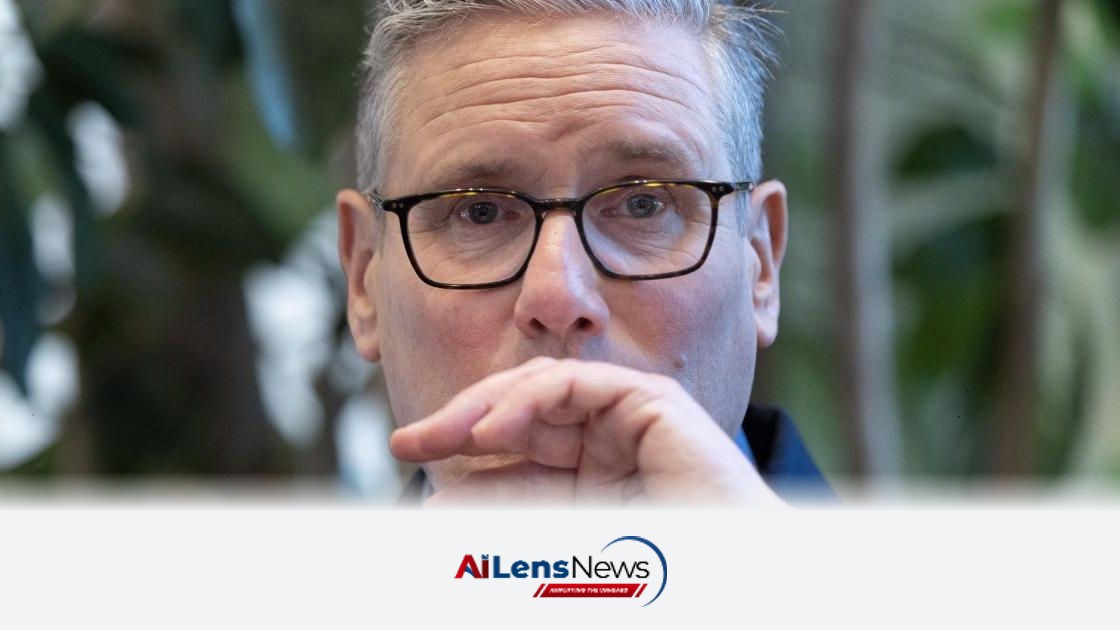



The BBC is under scrutiny for not reporting on Keir Starmer's £94,000 travel costs for sporting events, contrasting with extensive coverage of John Swinney's trip.
London, United Kingdom Aug 30, 2026 ALN: The BBC has been urged to explain why it has “never” reported the cost of Keir Starmer’s flights to sporting events after covering the controversy around John Swinney’s World Cup junket extensively.
An official complaint has been sent to the broadcaster demanding to know why the costs of former prime minister Starmer’s lavish trips to Europe in the first year of his premiership did not get the same scrutiny as the First Minister’s jaunt to the US.
Figures from the UK Government showed that Starmer’s three trips to sporting events in 2024 cost the taxpayer around £94,293 all in.
The costs associated with Swinney’s trip to the US – which included £45,000 on business-class flights for him and two senior aides – were covered in an online news story, an interview with Justice Secretary Neil Gray and a separate interview with Economy Secretary Stephen Flynn.
The complaint, shared with the Sunday National, outlined the cost of Starmer’s travel, which included one trip to Berlin for the Euro 2024 final, where England lost 2-1 to Spain, costing taxpayers £41,512 “on flights alone”.
These costs do not appear to have ever been reported on by the BBC.
The complainer went on: “There were no BBC stories regarding the flight costs of the prime minister to these events – some of which were with his close family – yet there was coverage of the First Minister’s flights on the BBC website (in prominent showing) and on TV.
“Why did the BBC fail to provide the context of the prime minister’s flight costs in the clear attack on the First Minister?
“Further, why has there never been coverage of the prime minister’s flights to sporting events?”
The complainer further asked how the BBC considered its reporting on Swinney’s World Cup trip “reasonable and carefully reached, with due impartiality” if there was “nowhere near the same level of coverage for the prime ministerial flights”.
The BBC responded to the complainer directly, saying: "In choosing which stories to cover each day and the extent to which they're covered, our editors base their decisions on the editorial merits of all the stories at hand, looking at a variety of factors. We accept that not everyone will agree with each decision.
"We reported that the First Minister John Swinney had defended the use of more than £45,000 of public funds on business-class flights for him and two senior aides to the World Cup and subsequent trade talks in Kentucky. We included details of Mr Swinney responding to the criticism he had received about this.
"This was a newsworthy development, and we are satisfied that it was appropriate for inclusion in our output."
Swinney previously defended the cost of his trip to the US, which totalled £98,442, saying the Scottish Government had sought to minimise the costs.
He told BBC Scotland: “Obviously, when flights have got to be booked, when there's intense pressure on the time involved, then the costs are likely to be higher.”
He added: “We tried to minimise those costs.”
He travelled to the US to watch Scotland’s first World Cup match in 28 years – a 1-0 victory against Haiti – and to Kentucky to lobby for the Scotch whisky industry and said ahead of the trip: “My visit to Kentucky aims to build on both that shared heritage and Donald Trump’s commitment to remove the tariff for whisky, in a very important overseas market for Scotch.”
Hailing Scottish and American whisky’s “genuinely symbiotic” relationship, he said: “Scotch whisky and Kentucky bourbon share a deep, long-standing connection – they’re two of the world’s great spirits and of high value to their respective economies.
“Every year, millions of used bourbon barrels make their way from Kentucky to Scotland, where they’re used to age some of the world’s finest Scotch whiskies.”
Ministers also defended the costs, with Flynn telling the BBC: “If we want our politicians to go and sit in row 46 beside the toilets and then land in Boston and then go and engage with US government officials having done so, we'll get exactly what we deserve as politicians.”
Earlier this year, the BBC rejected two complaints alleging bias against Scottish independence.
Executives disagreed with one complainant who claimed that pro-independence viewpoints had received insufficient representation during an episode of Debate Night broadcast the week after the Holyrood election.
The show featured four Unionist voices – a Reform MSP, a Tory MSP, a Labour MSP and a journalist at the conservative Spectator magazine – but only the SNP’s Paul McLennan represented the independence side.
In a separate incident, the BBC also knocked back a complaint about a Radio Scotland broadcast in May, which saw former SNP minister Alex Neil ask whether a second referendum would deliver a result that was not “what the Yes side are after”.
Back in 2022, the BBC was criticised for the perceived paucity of its coverage of then first minister Nicola Sturgeon’s trip to the US.
Stewart Easton, BBC Radio Scotland's former head of news and current affairs, said the lack of coverage was a "bad decision" and hit out at the “noticeably and wrongly absent” coverage.
Sturgeon’s meeting with then-house speaker Nancy Pelosi and her discussions on the “constitutional future of the UK” with a senior member of the US foreign ministry featured on the front pages of newspapers including The National, The Herald, The Telegraph, and The Express.
However, the same year also saw the BBC accused of being “slavishly biased in favour of the SNP”, by Alistair Bonnington, the broadcaster’s former in-house lawyer.
The lawyer, who worked for the BBC from 1992 to 2008, told the Daily Mail: “If a ‘breach of the duty of impartiality’ case were brought against the BBC in the Scottish courts tomorrow, I would expect the BBC to lose, and lose comprehensively.
“That's because BBC Scotland is so obviously partial in its political news output today [and because it is] slavishly biased in favour of the SNP who now form the devolved Holyrood government.”
He claimed the BBC’s coverage of an incident when then SNP Westminster leader Ian Blackford was kicked out of the Commons chamber for calling Boris Johnson a liar had been “reverential”.
The BBC was approached for comment.
To learn more about the latest developments in Politics, stay updated with our exclusive reports and analyses on AILensNews.
Lebanon president says agreement with Israel 'does not legitimise' occupation
OBC groups are urging the government to implement mandatory caste coding in the …
Tom Tugendhat is set to take over as shadow foreign secretary from Priti Patel a…

Kolkata Police have issued a summons to Derek O’Brien in connection with the rem…
British far-right commentator Milo Yiannopoulos has been deported back to the UK…