

More
Checking your session
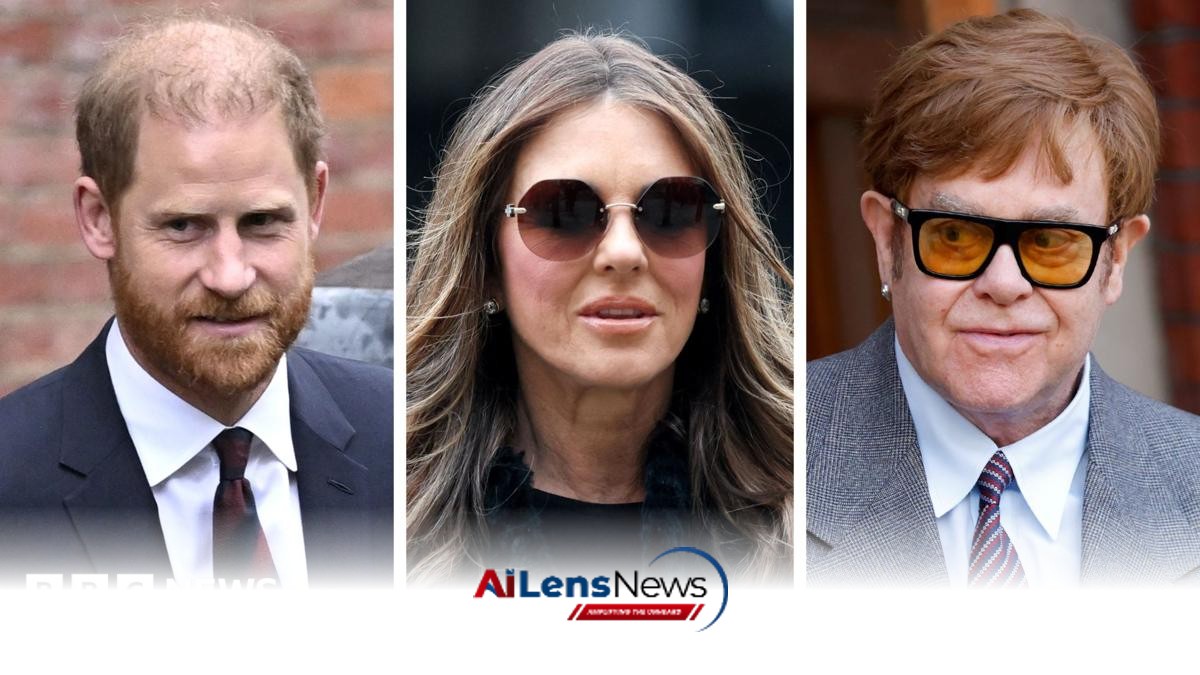



Prince Harry and six other claimants face a £34.5 million legal bill after losing a privacy case against the Daily Mail publisher, with an initial payment of £9.54 million due soon.
New Delhi, India Aug 21, 2026 ALN: Prince Harry and six other public figures face paying up to £34.5 million to the publisher of the Daily Mail after a High Court judge imposed an exceptional order for legal costs over their failed privacy case.
The seven claimants, also including Sir Elton John and Liz Hurley, must pay an initial £9.54 million by Friday of next week to Associated Papers Limited (ANL). This ruling has significant implications not only for the individuals involved but also for the broader landscape of privacy rights and media practices in the UK.
The judge ruled that the case was a rare one in which the claimants should have to pay far in excess of the costs that had been agreed before trial, criticising how they presented their claims as "unreasonable to a high degree." This marks a notable moment in legal proceedings involving high-profile figures and raises questions about the extent to which public figures can seek legal redress for perceived invasions of privacy.
On 7 July, Judge Mr Justice Nicklin dismissed the claims of unlawful information-gathering, which ANL denied. The case revolved around allegations that the publisher engaged in illegal practices to obtain private information about the claimants. The dismissal of these claims signals a significant setback for the claimants, who had hoped to establish a precedent regarding the protection of personal privacy against aggressive journalistic practices.
The Duke of Sussex and the other six claimants have until 2 October to attempt to launch an appeal. This timeline is critical as it provides the claimants an opportunity to reassess their legal strategies in light of the recent ruling. The implications of this case extend beyond the immediate financial burden; they may also influence future litigation involving privacy claims against media entities.
Those other claimants are Sir Elton John and his husband David Furnish, former Liberal Democrat deputy leader Sir Simon Hughes, racial justice campaigner Baroness Lawrence, and actresses Sadie Frost and Liz Hurley. Each of these individuals has their own public profile and history of engaging with media, which complicates the narrative surrounding privacy and public interest.
They had insurance to cover up to £16.2 million of Associated Papers' costs in the event of losing the case - but Friday's ruling means the paper group could now try to recover up to the £34.5 million that it said it had to spend to defend itself. This means the duke and others could face a bill of some £18 million, a substantial financial liability that could deter other public figures from pursuing similar legal actions in the future.
Justice Nicklin stated, "I regard a claim for costs in excess of £34 million as, on its face, excessive and as giving rise to real concerns as to whether all of the costs now claimed by Associated were reasonably incurred and are reasonable in amount." This statement underscores the complexities involved in assessing legal costs in high-profile cases, particularly those that involve multiple claimants and extensive media coverage.
However, he added he had "decided not to impose a ceiling on Associated's recoverable costs," as it would "be too broad-brushed, would risk unfairness, and would be vulnerable to the charge that it was arbitrary." This decision reflects a nuanced approach to legal costs that balances the interests of the parties involved with the overarching principles of justice and fairness.
The judge also ruled that ANL's costs should be determined on an indemnity basis, which is more favourable to the publisher in terms of the amount it can recover, aside from where orders had already been made. This ruling could set a precedent for how costs are handled in future cases involving media entities, potentially leading to more stringent standards for claimants seeking to challenge media practices.
He added it was "striking" that "not a single allegation of serious wrongdoing was voluntarily withdrawn" by the group of seven claimants. This observation raises critical questions about the burden of proof in cases involving allegations of serious misconduct. He said: "That matters. Serious allegations of criminality or grave impropriety cannot properly be left hanging over individuals in that way." This emphasis on the need for clarity in legal claims highlights the importance of responsible litigation, particularly when serious allegations are involved.
In a statement released on Friday, the publisher called the ruling "a devastating critique of an attempt to destroy a paper and the reputations of its journalists, editors and executives." This reflects the ongoing tensions between public figures and the media, particularly in an era where privacy is increasingly contested.
Friday's decision comes just days after Prince Harry and Meghan announced their plan to return to the UK, with their children Prince Archie, seven, and Princess Lilibet, five, enrolled to start school in September. Their return to the UK amid ongoing legal battles adds another layer of complexity to their public image and relationship with the media.
During the trial, dozens of people gave evidence including Prince Harry and the other claimants. The Duke of Sussex flew in from the US to attend court in person, demonstrating the personal stakes involved in this legal battle. Many current and former Associated Papers journalists and executives gave evidence denying illegal activity, which further complicates the narrative surrounding media ethics and accountability.
Sir Simon Hughes told the BBC he was "disappointed" by the judgement. "I am now taking the time necessary to consider both the substantive and the costs judgment and whether to pursue appeals against decisions in either judgment or both," he added. This statement indicates that the claimants are still weighing their options and the potential for further legal action.
In a joint statement following the judge's ruling last month, Prince Harry and Baroness Lawrence, who became a public figure after her son Stephen was murdered in 1993, said: "We came to court seeking justice and accountability. But we have received neither." Their declaration of disappointment reflects broader concerns about the effectiveness of the legal system in addressing issues of privacy and media accountability.
"It is a complete and obvious whitewash, but sadly not altogether unexpected," the pair added. This sentiment resonates with many who have followed the case and raises questions about the balance of power between public figures and the media, especially in a landscape where media practices are under increasing scrutiny.
The financial implications of this ruling are significant, as they may discourage other public figures from pursuing similar claims against media outlets in the future. The complexity of the costs hearings that are set to begin now will likely involve detailed examinations of the expenses incurred by ANL during the legal proceedings. This could lead to further legal disputes over what constitutes reasonable costs in high-profile cases.
The outcome of these hearings will not only affect the claimants financially but could also set important precedents regarding the legal responsibilities of media companies and the rights of individuals to protect their privacy. As society grapples with the intersection of privacy, public interest, and media ethics, this case may serve as a critical touchstone for future legal battles in this arena.
To learn more about the latest developments in Crime & Law, stay updated with our exclusive reports and analyses on AILensNews.


As the wine harvest season begins in Austria, locals indulge in Sturm, a sweet, …
In a significant operation, Assam Rifles and DRI seized meth tablets valued at R…

A private vehicle belonging to an Assam Police jawan was set ablaze near the Ass…
The Food Corporation of India has initiated a probe into a viral video featuring…