

More
Checking your session
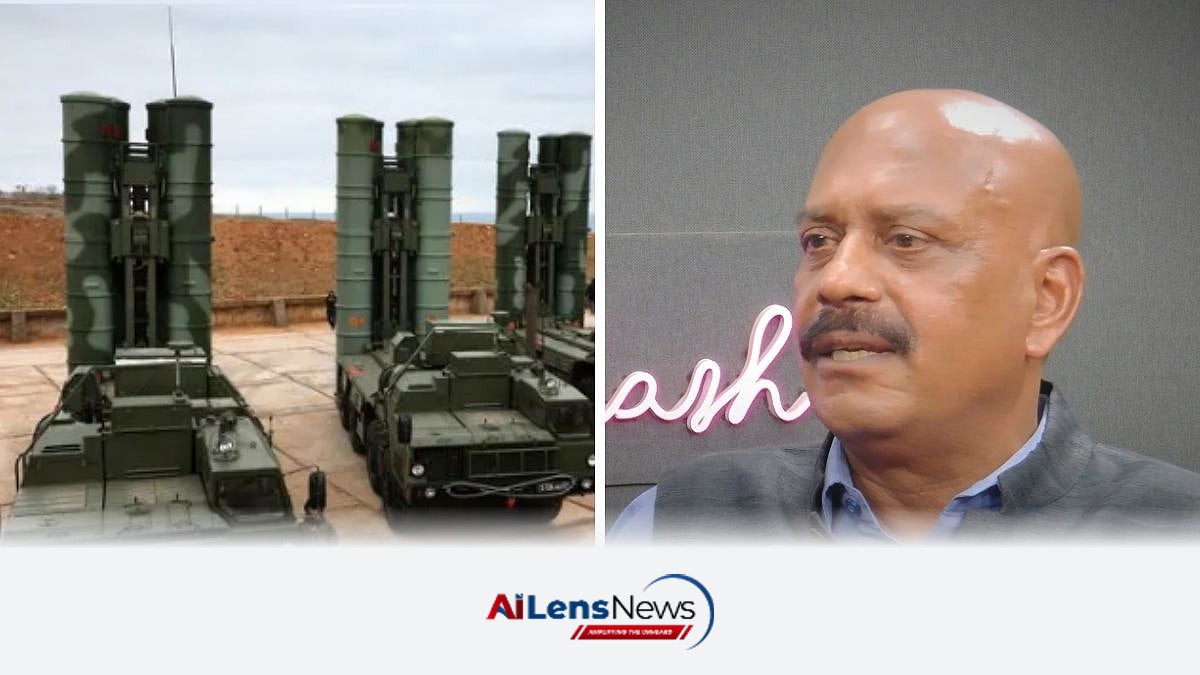



Retired Air Marshal Jeetendra Mishra discusses how Pakistan attempted to locate India's S-400 air defense systems during Operation Sindoor, employing spies and satellite support.
New Delhi, India Aug 28, 2026 ALN: Retired Air Marshal Jeetendra Mishra has made significant claims regarding the effectiveness of the Russian-made S-400 air defense system in deterring Pakistani fighter jets during Operation Sindoor. He highlighted that this advanced military technology was crucial in maintaining a secure airspace over India, preventing hostile aircraft from coming within 200 kilometers of the border. This assertion underscores the strategic importance of the S-400 system in India's defense capabilities and its role in regional security dynamics.
Mishra characterized Pakistan's efforts to locate India's S-400 systems as "desperate," indicating the lengths to which Islamabad was willing to go in order to ascertain the positions of these advanced defense assets. He pointed out that Pakistan employed a variety of tactics, including espionage and intelligence-gathering operations, to achieve this goal. Mishra noted that Pakistan's strategies were not limited to domestic resources; the country also sought satellite assistance from other nations, indicating a broader geopolitical context in which these military operations unfolded.
While Mishra refrained from naming specific countries providing satellite support, it is widely recognized that Pakistan has historically relied on its close relationship with China, often referred to as its "all-weather friend." This partnership has fostered military cooperation, with China supplying various forms of military technology and intelligence. Deputy Chief of Army Staff Lieutenant General Rahul R. Singh had previously asserted that China was indeed providing Pakistan with real-time information about key Indian military assets, further complicating the regional security landscape.
During Operation Sindoor, the S-400 system emerged as a primary concern for Pakistani military strategists. Mishra detailed how the system effectively intercepted multiple attempts by Pakistani aircraft to penetrate Indian airspace. He emphasized that the S-400 was perceived as a significant threat, prompting Pakistan to activate espionage networks and sleeper cells within India to gather intelligence on the system's deployment. This illustrates the high stakes involved in air defense and the lengths to which nations will go to secure their military advantages.
The S-400, known in India as the "Sudarshan Chakra," is a sophisticated mobile, long-range surface-to-air missile system developed by Russia. It is designed to detect and engage a wide array of aerial threats, including aircraft, drones, and ballistic missiles. The system's advanced radar capabilities enable it to form a layered air-defense shield over strategically important areas, enhancing a nation's ability to protect its airspace from potential incursions.
Operation Sindoor was executed in response to the tragic Pahalgam terror attack, which resulted in the deaths of 25 Indian tourists. The operation, which took place during the night of May 7-8, 2025, involved a series of precision strikes aimed at eliminating terrorist threats while minimizing civilian casualties. Mishra noted that the Indian armed forces were granted considerable operational freedom during this mission, with explicit directives to avoid collateral damage. This reflects a broader military strategy aimed at maintaining moral high ground in conflict situations.
The emphasis on minimizing civilian harm indicates a conscious effort by the Indian government to balance military objectives with humanitarian considerations. Mishra reiterated this point by stating, "We don't want common citizens to be affected. Only terrorists and their handlers are to be punished. We are not a war-mongering state." This perspective aligns with India's stated policy of conducting targeted operations rather than engaging in full-scale warfare, which can lead to widespread destruction and loss of life.
Mishra also recounted a specific incident involving an S-400 operator who sought permission to engage an airborne target. The operator was able to track a target through airborne radar and, upon receiving authorization, successfully engaged it at a remarkable distance of 314 kilometers. This engagement is noted as the longest surface-to-air kill in military history, showcasing the S-400's capabilities and the proficiency of Indian operators in utilizing this advanced technology.
India's investment in the S-400 system is significant, with a $5.43 billion agreement signed in 2018 for the acquisition of five units. This procurement not only enhances India's air defense capabilities but also serves as a strategic deterrent against potential adversaries. The S-400's deployment has implications for the balance of power in South Asia, as it alters the operational calculus for both India and Pakistan, and by extension, influences regional security dynamics involving other major powers such as China and the United States.
In conclusion, the revelations by retired Air Marshal Jeetendra Mishra regarding Pakistan's espionage tactics and the effectiveness of the S-400 system provide critical insights into the current state of military affairs in South Asia. As geopolitical tensions continue to evolve, the role of advanced military technology in shaping strategic outcomes will remain a focal point for both defense planners and policymakers in the region.
To learn more about the latest developments in Crime & Law, stay updated with our exclusive reports and analyses on AILensNews.


Nicole Brenecki warns that discussing the Lindsay Clancy case at work could lead…

A recent case highlights the contrasting approaches of India and China towards b…

Typhoon Saudel has made landfall in Zhejiang, leading to widespread flight cance…
The Delhi Police Special Cell has arrested a couple linked to a Pakistan-backed …