

More
Checking your session
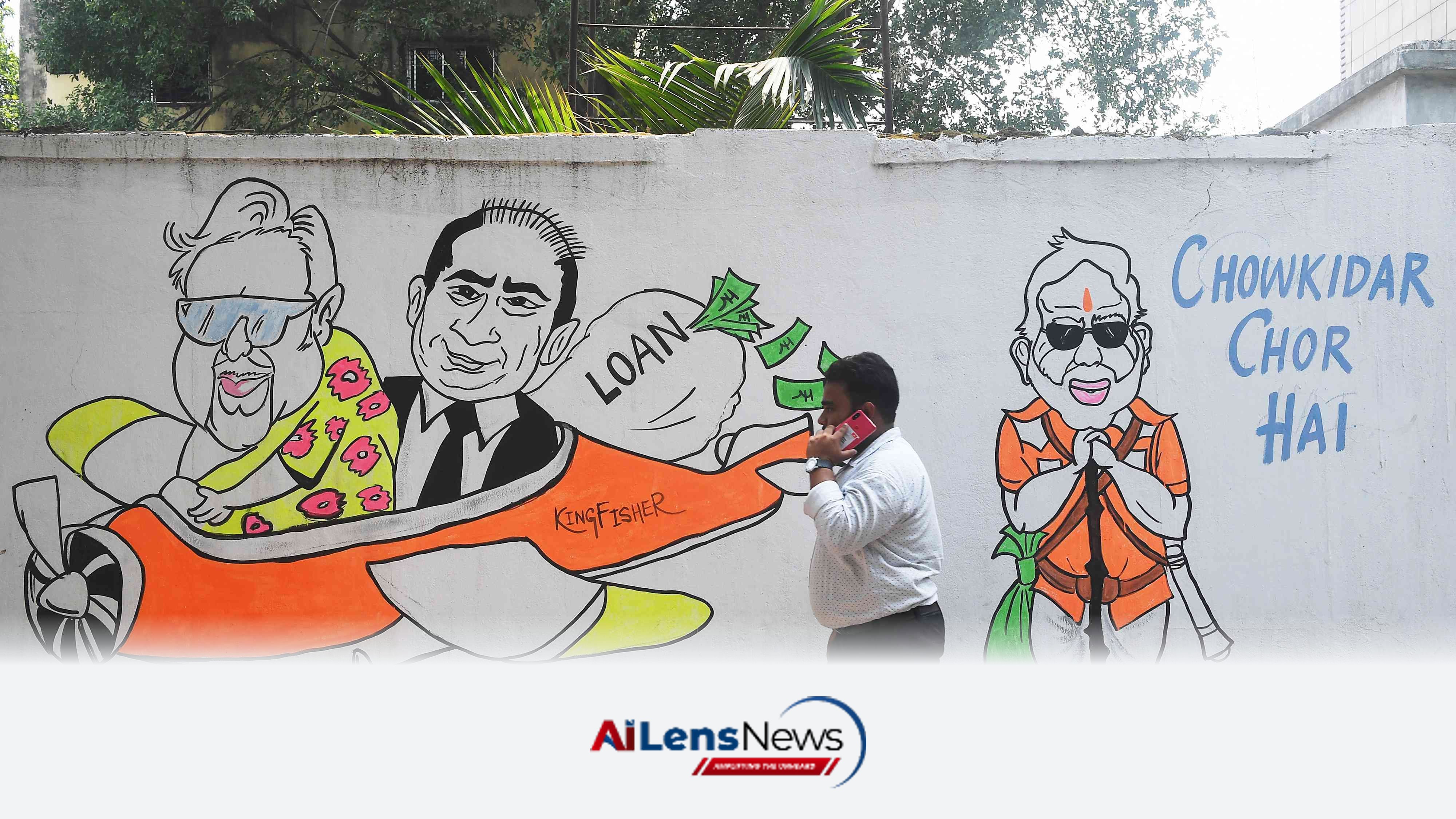



A recent case highlights the contrasting approaches of India and China towards billionaires facing legal troubles, raising questions about economic implications.
New Delhi, India Aug 28, 2026 ALN: Welcome to The India Fix by Shoaib Daniyal. A newsletter on Indian politics.
As always, if you’ve been sent this newsletter and like it, to get it in your inbox every week, here (click on “follow”).
Hui Ka Yan was once China’s richest person. On August 20, the Shenzhen Intermediate People's Court sentenced him to life in prison for bribery, swindling public funds and fraud, among other charges. The order also confiscated all of Yan’s personal property, levied fines of more than $2 billion on corporations once controlled by him and sentenced five other senior executives, including Hui’s two sons, to prison terms ranging from six to 18 years.
A week later, a tribunal in India passed an order on another disgraced billionaire. Unlike China, though, India was much softer. Zee TV founder Subhash Chandra owed his creditors, including state-owned firms, Rs 22,007 crore ($2.3 billion). But the National Company Law Tribunal approved a plan that allows Chandra to pay back only a little more than Rs 6 crore – 0.03% of what he owed.
Angry creditors say there are infirmities in the process, alleging links between people voting for this plan and Chandra. They also claim that Chandra has managed to significantly underreport his assets. But now that the tribunal has given its stamp of approval on this absurdly small recovery amount, there might be little they can do. The money, including those from taxpayer-funded, state-owned firms, that Chandra has borrowed might be lost for good.
China and India are neighbours with much in common, including almost identical population sizes. Yet, their dissimilar approaches towards billionaires might partly explain why their economic fortunes have diverged so much over the past decade.
China regularly targets and even jails billionaires. So much so that Ruchir Sharma in the Financial Times writes that it might be “dangerous” to be too rich in a country whose government’s stated goal currently is “common prosperity”.
As the contrast between Hui and Chandra shows, there is no such fear south of the Himalayas. In India, billionaires accused of fraud rarely face criminal action. In fact, there have been prominent examples of billionaires being allowed to comfortably escape India and, hence, legal action. On Thursday, Vijay Mallya, now living in London, even congratulated his “friend Subhash”, pointing out that he had, in fact, done a better job of paying back his debts than the media tycoon.
Indian social media has been outraging over the absurd unfairness of what happened. The leniency shown to Chandra would be unthinkable when it came to a regular Indian citizen. Thousands of Indian farmers die by suicide every year, a major reason for which is inability to pay off their debts. Worse, a large chunk of this money lent to billionaires has been siphoned off from public sector banks, meaning the government has to eventually foot the bill – an egregious crime in a poor country like India which struggles to garner funds for development and welfare.
Moreover, this leniency shown to billionaires in India is more than just a moral failure: it points to a feature of the political economy that has harmful economy-wide effects. Billionaires have so much power over the Indian state it might be end up stifling economic growth itself.
Indians can plainly see oligopolies develop in major sectors. Data shows that aviation, telecom, cement, steel, and tyres saw market concentration hit unprecedented levels. It’s so bad that even the Indian government has flagged the “oligopolistic nature” of the country’s aviation sector.
Economists Arvind Subramanian and Josh Felman cheekily call this India’s “2A model”, referencing what appear to be the Modi government’s two favourite billionaires: Gautam Adani and Mukesh Ambani. The “generous and extensive favours granted to big business houses (especially Adani and Ambani)”, they write, “allowed them to prosper at the expense of other investors, domestic and foreign”.
In theory, a free market should see firms add value and create wealth. But, as a book co-authored by Subramanian points out, if all it takes to succeed in the market is “regulatory favours” as a result of being “seen close to the government”, it can actually be at the “cost of wealth creation by other less-connected firms”.
The result, Subramanian and Felman argue, has been a “non-level playing field” that has “extracted a toll, discouraging overall investment in the industrial sector”.
It’s so bad that former Reserve Bank of India Deputy Governor Viral Acharya has even proposed breaking up India’s five biggest industrial firms to end the investment freeze and lower inflation. He calls the current dominance an example of “crony capitalism” arising out of “political connections”.
Recently, commerce minister Piyush Goyal highlighted this difference between how India and China treat billionaires, in a pitch to Japanese investors. “You don’t have to worry that if you make money in India, if you are a successful businessman, you may disappear one day, and end up coming out as a professor in a Japanese university,” he said. “That risk doesn’t happen in India.”
Goyal was referring to Jack Ma, one of China’s richest people, who rarely appeared in public between October 2020 and January 2021 as the Chinese government conducted a regulatory crackdown on his businesses.
Unfortunately, such a simplistic understanding of the drivers of the economy is possibly why India’s net foreign direct investment has practically dropped to zero over the past few years.
To learn more about the latest developments in Crime & Law, stay updated with our exclusive reports and analyses on AILensNews.


Anantnag Police have filed a case against Aabid Hussain Nengroo for allegedly pr…

Murmur, located in Aljada, is Sharjah's first homegrown fine dining restaurant, …

In a significant move, President Droupadi Murmu has enabled the High Court of Ja…

Anantnag Police have arrested political leader Aabid Hussain Nengroo in connecti…