

More
Checking your session
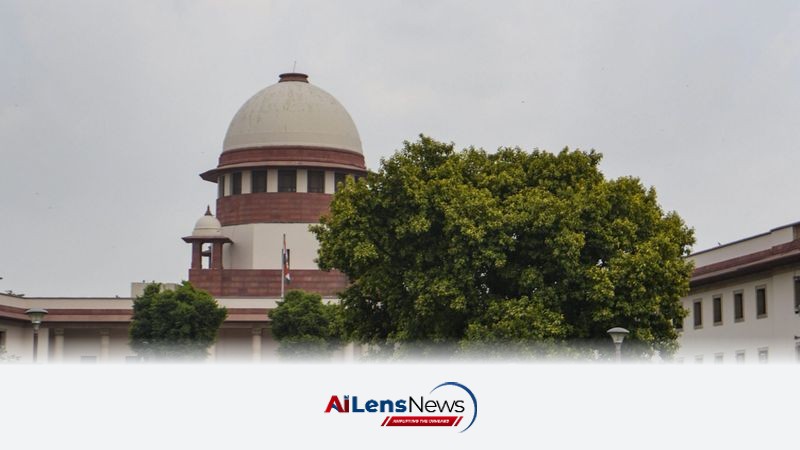



Abhishek Upadhyay, who reported on the Ram Temple donation theft, has approached the Supreme Court against an FIR related to a road rage incident.
New Delhi, India Aug 24, 2026 ALN: In a significant legal move, journalist Abhishek Upadhyay has approached the Supreme Court of India, challenging an FIR lodged against him by the Ghaziabad Police. This action comes in the wake of an alleged road rage incident, amidst concerns over his potential arrest. The legal proceedings surrounding this case have drawn considerable attention not only from the media but also from civil rights advocates and the general public, underscoring the delicate balance between law enforcement and press freedom in India.
Upadhyay, known for his investigative reporting, particularly regarding the Ayodhya Ram Temple donation theft, has expressed apprehension about the implications of the FIR. He argues that the charges against him are unfounded and may be an attempt to intimidate him due to his journalistic endeavors. His work has often placed him at the center of controversial topics, which has made him a significant figure in the landscape of Indian journalism.
The FIR was registered following an incident where Upadhyay was allegedly involved in a confrontation on the roads of Ghaziabad. Details surrounding the incident remain murky, with conflicting accounts emerging from various sources. Upadhyay maintains that he was merely a victim in the situation, asserting that he acted in self-defense. Eyewitness accounts and video footage, if available, could play a crucial role in clarifying the circumstances of the incident, but as of now, the narrative remains contested.
Road rage incidents in urban India are not uncommon, often fueled by the heavy traffic and aggressive driving behaviors observed in many metropolitan areas. However, the involvement of a journalist in such an incident raises questions about the intersection of personal conduct and professional responsibilities. The media has a vital role in holding power to account, and when journalists themselves become embroiled in legal troubles, it can complicate their ability to report on issues of public interest.
In his petition to the Supreme Court, Upadhyay seeks to quash the FIR, arguing that it lacks substantial evidence and is motivated by malice. His legal team is expected to present arguments highlighting the importance of press freedom and the need to protect journalists from undue harassment. Legal experts suggest that the Supreme Court's decision could hinge on interpretations of existing laws regarding press freedom and the rights of individuals accused of crimes.
Historically, the Indian judiciary has played a pivotal role in upholding the rights of journalists, often intervening in cases where press freedom is perceived to be under threat. The Supreme Court's ruling in this case could set a significant precedent, impacting how future cases involving journalists are handled, particularly in the context of road rage incidents and other similar confrontations.
This case has raised concerns among media circles regarding the safety and rights of journalists in India. Many fear that the increasing number of legal challenges against reporters could stifle investigative journalism and inhibit the free flow of information. The chilling effect of such legal actions can lead to self-censorship among journalists, who may hesitate to pursue stories that could provoke backlash from powerful individuals or entities.
The issue of press freedom in India has been a contentious one, with numerous reports documenting the increasing pressures faced by journalists. From physical threats to legal harassment, the landscape for reporters has become increasingly perilous. This case, therefore, is not just about Upadhyay; it symbolizes a broader struggle for the rights of journalists to report without fear of retribution.
The public response to Upadhyay's situation has been mixed. Supporters argue that this is a crucial moment for press freedom, while critics question the ethics of his reporting methods. The case has sparked a broader conversation about the relationship between law enforcement and the media. Some commentators have pointed out that the media's role in society is to inform the public, but this role can be complicated when journalists find themselves in legal trouble.
Social media platforms have become a battleground for opinions on this case, with various factions voicing their support or condemnation of Upadhyay. The discussions have highlighted the polarized views on press freedom in India, with some advocating for stronger protections for journalists, while others call for accountability and ethical standards in reporting.
The Supreme Court is expected to hear Upadhyay's petition soon, and the outcome could set a precedent for future cases involving journalists and legal challenges. As the situation unfolds, many will be watching closely to see how the judiciary balances the rights of individuals against the need for a free press. Legal scholars and practitioners will be particularly interested in how the court interprets the principles of freedom of expression in relation to the rights of individuals accused of criminal behavior.
In conclusion, Abhishek Upadhyay's legal battle is emblematic of the challenges faced by journalists in contemporary India. The outcome of this case may have lasting implications for the future of investigative journalism in the country. As the legal proceedings progress, it will be essential to monitor not only the developments in Upadhyay's case but also the broader implications for press freedom and the rights of journalists in India. The case serves as a reminder of the ongoing struggles for a free and independent press, which is vital for a healthy democracy.
To learn more about the latest developments in Crime & Law, stay updated with our exclusive reports and analyses on AILensNews.


As the wine harvest season begins in Austria, locals indulge in Sturm, a sweet, …
In a significant operation, Assam Rifles and DRI seized meth tablets valued at R…

A private vehicle belonging to an Assam Police jawan was set ablaze near the Ass…
The Food Corporation of India has initiated a probe into a viral video featuring…