

More
Checking your session
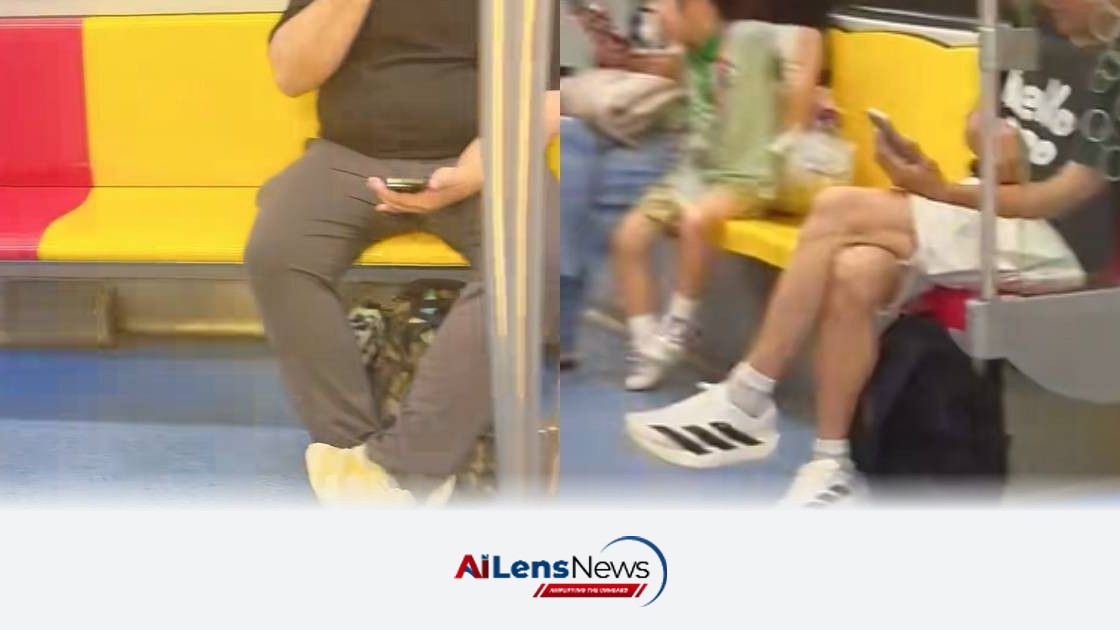



A Chinese national living in Singapore shares her surprise at the local habit of placing bags on the floor instead of using empty seats on the MRT, sparking mixed reactions online.
Singapore, Singapore Aug 25, 2026 ALN: Public transportation serves as a vital artery in urban environments, facilitating the movement of millions of commuters daily. In cities worldwide, the etiquette surrounding the use of space on public transport can vary significantly, influenced by cultural norms, societal expectations, and individual behaviors. In Singapore, a recent observation by a Chinese national has brought attention to the unique practices of MRT (Mass Rapid Transit) commuters, particularly regarding how they manage their personal belongings while traveling.
The woman, living in Singapore, shared her experiences in a video on Xiaohongshu, a popular Chinese social media platform. Her observations centered on the behavior of commuters during her MRT journey, where she noted a common practice among passengers: despite the availability of empty seats, many chose to keep their bags either at their feet or on their laps rather than placing them on adjacent seats. This behavior struck her as considerate, highlighting a cultural inclination towards maintaining a sense of space and comfort for fellow passengers.
The practice of keeping bags on the floor or on one's lap rather than occupying additional seats is deeply rooted in Singapore's public transport culture. It reflects a broader societal value placed on consideration for others and a collective understanding of shared spaces. Singapore, known for its efficient public transport system, has cultivated a set of unspoken norms that govern commuter behavior. These norms often promote a sense of order and respect, which many residents and visitors appreciate.
In her video, the Chinese national articulated that the best kind of consideration comes not from external enforcement but from an internalized sense of responsibility towards others. This perspective resonated with many viewers, particularly foreigners who have settled in Singapore, as they echoed sentiments about the comfort and predictability that these established norms provide. The sense of order in Singapore's public transport system is often cited as one of the factors that contribute to the overall quality of life in the city-state.
However, the reactions to her observations were not universally positive. Singaporeans who viewed the video offered a range of perspectives, reflecting the complexity of public transport etiquette in a multicultural society. Some comments reinforced the idea that following such rules is simply part of life in Singapore, with one user remarking, "That's just how it is here; everyone follows the rules." This indicates a level of acceptance and normalization of these behaviors among long-term residents.
Yet, other commenters expressed skepticism about the woman's idealized view, pointing out that not all commuters adhere strictly to these norms. Issues such as queue-cutting, loud conversations, and the use of seats for bags were mentioned, suggesting that while many strive to maintain etiquette, lapses do occur. This reflects a reality that, like any urban environment, Singapore's public transport system is subject to the behaviors of a diverse population, each bringing their own cultural practices and expectations.
Interestingly, some commenters highlighted the role of social media in influencing commuter behavior. The fear of being filmed and subsequently criticized for misconduct has led some to be more mindful of their actions while using public transport. This phenomenon raises questions about the impact of digital surveillance on social behavior and the extent to which it may encourage adherence to social norms.
Another perspective was offered by a user who described a practical approach to managing personal belongings in varying crowd conditions. This adaptability underscores the dynamic nature of public transport use, where individual behaviors can shift based on the context of the journey. Such flexibility is essential in a bustling metropolis like Singapore, where commuter volumes can fluctuate dramatically throughout the day.
This incident has sparked a broader conversation about public transport etiquette and the cultural differences that shape commuter behavior. It serves as a reminder that small habits, such as how one manages their bag on public transport, can reflect larger societal values and norms. As cities become increasingly interconnected, understanding and respecting these differences will be essential for fostering harmonious public spaces.
Moreover, the discussion around bag etiquette on public transport in Singapore highlights the importance of cultural sensitivity in an increasingly globalized world. As more individuals from diverse backgrounds interact within shared spaces, the need for mutual respect and understanding becomes paramount. This incident illustrates how seemingly trivial aspects of daily life can lead to meaningful dialogues about community standards, individual responsibility, and the social contract that binds urban dwellers together.
In conclusion, the observations made by the Chinese national regarding bag etiquette on Singapore's MRT have not only opened up discussions about commuter behavior but also emphasized the importance of cultural norms in shaping public transport experiences. As cities continue to evolve and grow, fostering a culture of respect and consideration will be crucial in ensuring that public transportation remains a safe and pleasant experience for all commuters.
To learn more about the latest developments in Mind & Soul, stay updated with our exclusive reports and analyses on AILensNews.

The author reflects on the complexities of grief and the inadequacies of societa…

In a fast-paced world, the simple act of noticing can foster deeper connections …

Coral McConnon explores how taking time to slow down can lead to improved thinki…

An American earning $220,000 is contemplating a $70,000 salary reduction to move…

Loneliness influencers are reshaping perceptions of solitude, showing that being…