

More
Checking your session
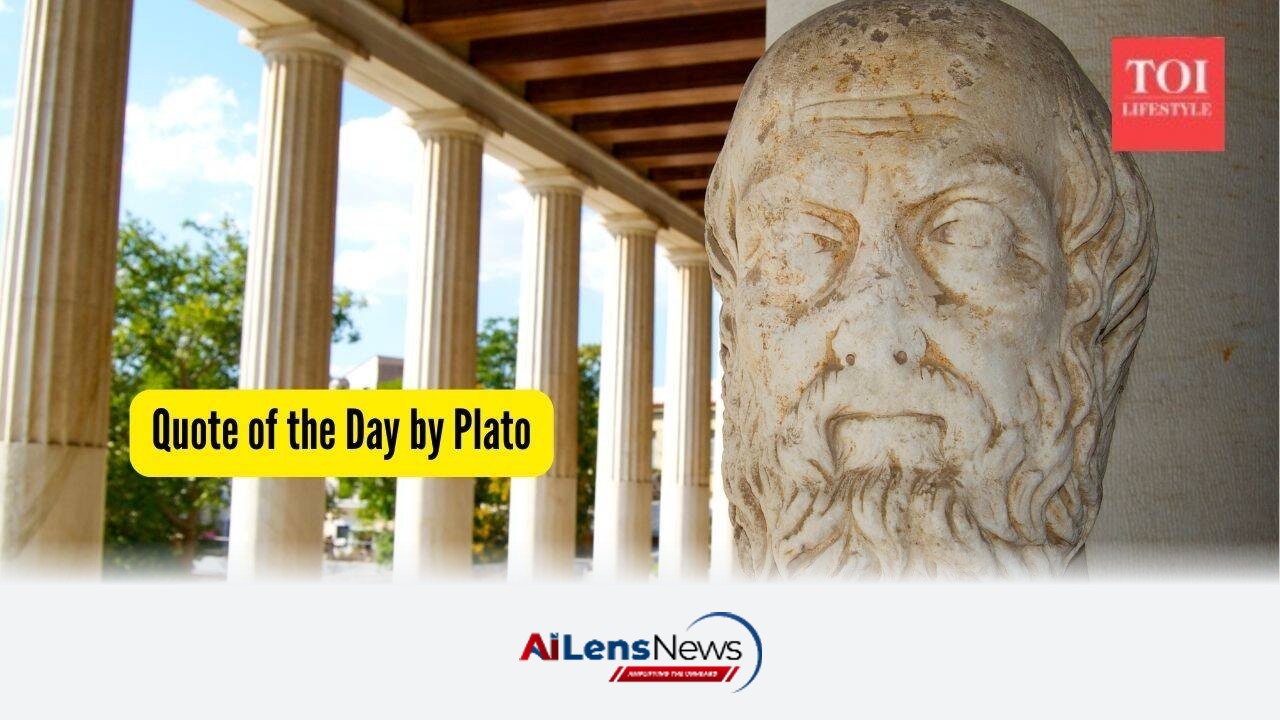



Plato's teachings on knowledge and justice remain relevant, offering guidance in today's fast-paced world. His distinction between wisdom and opinion is crucial.
New Delhi, India Aug 28, 2026 ALN: Plato's dialogues delve into enduring inquiries regarding justice and the essence of knowledge. His establishment, the Academy, nurtured intellectual thought and significantly shaped minds such as Aristotle's. He posited a clear distinction between genuine knowledge and superficial opinion, advocating for wisdom infused with purpose. This ancient wisdom continues to resonate deeply within the context of today's rapid communication landscape. In an age where information is abundant yet often superficial, Plato's emphasis on the importance of thoughtful discourse is more relevant than ever.
Understanding the philosophical foundations laid by Plato provides a critical lens through which we can view contemporary issues. His belief that true knowledge comes from understanding the forms, the abstract representations of reality, encourages individuals to seek deeper meanings rather than accepting surface-level opinions. This philosophical approach promotes a rigorous examination of ideas, pushing individuals to question the validity and origin of their beliefs. In a world inundated with information, where social media often amplifies the loudest voices rather than the most knowledgeable, Plato's call for a deeper engagement with ideas is a vital reminder of the need for discernment.
Plato's philosophical framework is built upon the idea that the physical world is a mere shadow of a higher, more perfect reality. He believed that the pursuit of knowledge is a journey toward understanding these ideal forms, which represent the true essence of all things. For instance, concepts such as beauty, justice, and equality exist in their purest forms beyond the tangible world. This pursuit of ideal forms is not just an abstract endeavor; it has practical implications for how individuals engage with the world around them.
His dialogues often feature Socratic questioning, a method that challenges assumptions and promotes critical thinking. This technique is essential in today's world, where misinformation can easily spread. The Socratic method encourages individuals to think critically about their beliefs and to engage in constructive dialogue. In an era where echo chambers are prevalent, fostering environments where ideas can be openly discussed and scrutinized is crucial for the health of democratic societies. Plato's emphasis on dialectic—engaging in dialogue to arrive at truth—underscores the importance of respectful discourse in a time when divisive rhetoric can overshadow reasoned debate.
The Academy, founded by Plato around 387 BCE, was one of the first institutions of higher learning in the Western world. It fostered an environment where intellectual discussions could flourish, allowing ideas to be debated and refined. The Academy's influence extended beyond philosophy; it laid the groundwork for various fields of study, including mathematics, astronomy, and political theory. This interdisciplinary approach is mirrored in modern education, where the integration of different fields is seen as essential for comprehensive understanding.
Many prominent thinkers, including Aristotle, emerged from this institution, highlighting its significance in shaping philosophical thought. Aristotle's work, which often contrasted with Plato's, further enriched the discourse initiated by Plato, demonstrating the value of intellectual diversity. The legacy of the Academy continues to influence modern educational systems, emphasizing the importance of inquiry and dialogue. Today, educational institutions strive to create environments that encourage critical thinking, collaboration, and the exploration of diverse perspectives—principles that can be traced back to Plato's vision.
In today's fast-paced communication landscape, the distinction between knowledge and opinion is crucial. The rise of digital media has transformed how information is disseminated, often prioritizing speed over accuracy. Plato's insights encourage individuals to engage in meaningful conversations, prioritizing depth over superficiality. In a climate where sensationalism can overshadow substantive content, returning to Plato's ideals can help individuals navigate complex issues with a more discerning eye.
As we navigate a world filled with rapid information exchange, embracing Plato's wisdom can lead to more thoughtful interactions and a deeper understanding of complex issues. It calls for a collective responsibility to engage with information critically, to question sources, and to seek out diverse viewpoints. The pursuit of knowledge, as Plato envisioned, is not merely an academic exercise but a vital component of civic engagement and personal development.
In conclusion, Plato's teachings on wisdom and knowledge are timeless. They remind us to seek understanding and engage in meaningful discourse, fostering a more informed society. In an age where the quality of discourse is often compromised, returning to the principles established by Plato can inspire individuals to cultivate a culture of inquiry and respect for diverse perspectives. As we face the challenges of misinformation and divisive rhetoric, the philosophical insights of Plato provide a guiding framework for navigating the complexities of modern communication.
To learn more about the latest developments in Mind & Soul, stay updated with our exclusive reports and analyses on AILensNews.

The author reflects on the complexities of grief and the inadequacies of societa…

In a fast-paced world, the simple act of noticing can foster deeper connections …

Coral McConnon explores how taking time to slow down can lead to improved thinki…

A Chinese national living in Singapore shares her surprise at the local habit of…

An American earning $220,000 is contemplating a $70,000 salary reduction to move…