

More
Checking your session
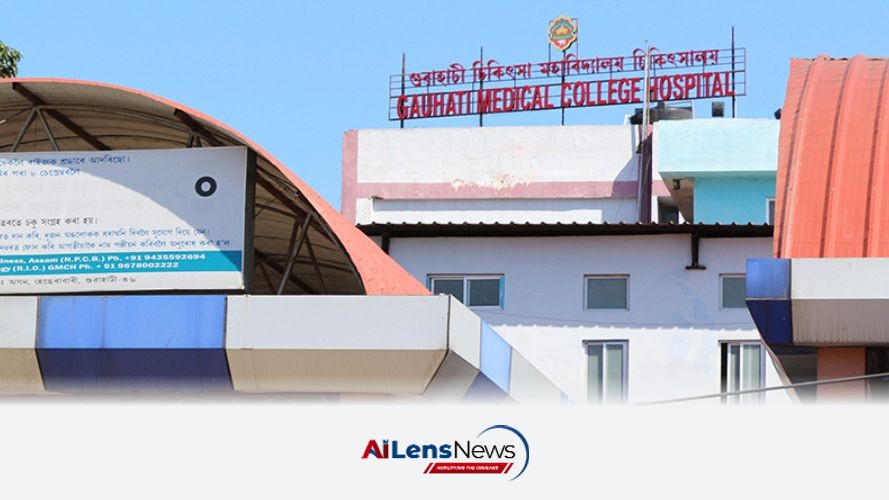



Assam's Cabinet has sanctioned ₹600 crore to establish the country's first public-sector proton beam therapy center at GMCH, enhancing cancer treatment capabilities.
Dispur, India Aug 30, 2026 ALN: The Assam Cabinet has approved a significant investment of ₹600 crore to establish India’s first proton beam therapy facility within the public healthcare sector. This specialized cancer treatment center is anticipated to take at least three years to become operational. The approval marks a pivotal moment in the state's healthcare landscape, particularly in the fight against cancer, which has become a pressing health concern in India.
The facility will be located at the Gauhati Medical College and Hospital (GMCH), a prominent institution in Assam, marking a substantial enhancement in the state’s capacity to provide advanced cancer treatment, as stated by Chief Minister Himanta Biswa Sarma. The introduction of proton beam therapy is particularly significant given the rising incidence of cancer across India, with estimates suggesting that over a million new cases are diagnosed each year.
This ₹600 crore investment will encompass the procurement and installation of the advanced therapy system, construction of specialized infrastructure, and operational support, including long-term maintenance. The establishment of such a facility is expected to not only improve treatment outcomes for cancer patients but also alleviate the need for patients to travel to other states or countries for advanced treatment options.
“The investment includes the entire setup cost, including a special bunker for the machine. Training for doctors will take approximately one to one-and-a-half years. It also covers five years of comprehensive maintenance costs, as we will not be able to maintain it independently,” Sarma informed reporters following the Cabinet meeting. This highlights the complexity and sophistication of proton beam therapy, which requires specialized knowledge and infrastructure to operate effectively.
The financial structure of this project is noteworthy; out of the total investment, ₹315 crore will be sourced as a loan from the World Bank for procuring the machine, while the Assam government will contribute ₹285 crore. This partnership with the World Bank underscores the importance of international collaboration in enhancing healthcare capabilities in developing regions.
According to Sarma, only around 40 centers worldwide currently offer proton beam therapy, including leading hospitals in the United States and Singapore. This places Assam in an exclusive league of global centers, potentially transforming the state into a hub for medical tourism. “With the introduction of this machine, Assam will join an exclusive league of global centers. This will also provide Assam with a new identity in medical tourism,” he remarked, indicating the potential economic benefits that could arise from attracting patients from other states and countries seeking advanced cancer treatment.
Sarma noted that GMCH will become the third hospital in India, across both public and private sectors, to house a proton beam therapy facility. Assam will be the first state in the country to offer this treatment through the public healthcare system. This is particularly significant as it reflects a commitment to improving healthcare accessibility in a region that has historically struggled with healthcare disparities.
The Chief Minister emphasized that proton beam therapy will significantly enhance Assam’s cancer treatment infrastructure by providing a more precise form of radiation therapy. “The radiation used in traditional treatments like LINAC and cobalt machines can affect organs beyond the targeted area. In contrast, proton beam therapy is precision-based and specifically targets the affected area,” he explained. This precision is crucial in minimizing damage to surrounding healthy tissues, thereby improving patient outcomes and reducing side effects.
Currently, proton beam therapy is available at select facilities in India, including Apollo Hospitals in Chennai and Tata Memorial. However, the establishment of a public facility in Assam is expected to democratize access to this advanced treatment, making it available to a broader segment of the population who may not have the means to afford treatment at private institutions.
“This initiative will improve Assam’s capacity to provide superior care to cancer patients not only from our state but also from across India,” Sarma concluded. The implications of this development extend beyond immediate healthcare benefits; it also reflects a growing recognition of the need for advanced medical facilities in underserved regions, aligning with broader national health objectives aimed at reducing health inequities.
In conclusion, the establishment of the proton beam therapy facility in Assam represents a significant advancement in the state's healthcare capabilities. It is a vital step towards enhancing cancer treatment options and improving patient outcomes in a region that has faced challenges in accessing advanced medical care. As the facility progresses towards its operational phase, it will be closely watched as a model for similar initiatives across India, particularly in the public healthcare sector, where the need for advanced treatment options is increasingly critical.
To learn more about the latest developments in Emergency & Critical Care, stay updated with our exclusive reports and analyses on AILensNews.

Despite devastating floods in Assam's Sivasagar district, the region recorded ze…

The Life Insurance Corporation of India has invested Rs 4.67 crore in Assam Medi…

Congress MP Gaurav Gogoi urges the Centre to implement a nationwide strategy to …

In response to the ongoing floods, Sivasagar has ramped up vector control and di…

Letters to the editor highlight urgent need for a structured mental healthcare s…