

More
Checking your session
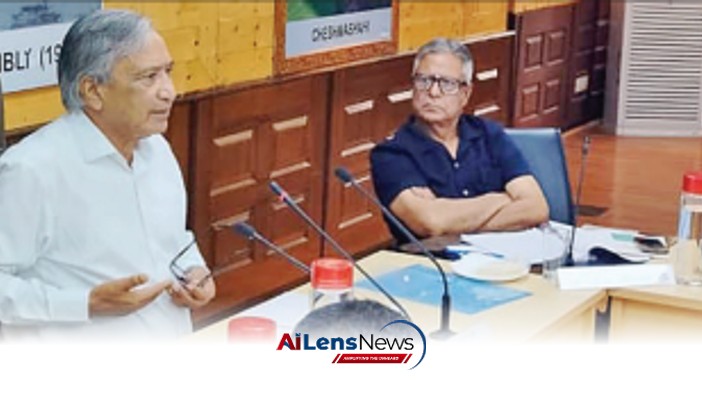



The Environment Committee convened to discuss conservation measures for key lakes and wetlands in Jammu and Kashmir, emphasizing the need for community involvement.
Leh, India Aug 22, 2026 ALN: The Committee on Environment in Jammu and Kashmir convened for a significant meeting at the Assembly Complex in Srinagar, with a focus on the conservation and management of critical wetland areas, including Hokersar, Mansabal, Wular, Nigeen, Mansar, and Surinsar Lakes. These water bodies are not only vital to the ecological balance of the region but also play a crucial role in supporting biodiversity and mitigating floods.
Chaired by Mohammad Yousuf Tarigami, the meeting brought together various committee members, including Gharu Ram, Baldev Raj Sharma, Daleep Singh, Showkat Hussain Ganie, Javaid Ahmad Mirchal, Sajjad Shafi, Rameshwar Singh, and Devyani Rana. Their collective expertise and perspectives are essential in addressing the multifaceted challenges that wetlands face in Jammu and Kashmir.
In addition to committee members, the meeting saw the participation of key stakeholders such as the Chairman of the Jammu and Kashmir Pollution Control Committee (JK PCC), Vasu Yadav, Chief Wildlife Warden (CWLW) and Principal Chief Conservator of Forests (PCCF) Wildlife, Suneesh Buxy, and various officials from the Assembly Secretariat. The presence of these officials underscores the importance of collaboration across different government departments in addressing environmental issues.
During the discussions, Tarigami highlighted the critical importance of wetlands for the ecosystem, emphasizing their role in maintaining biodiversity and acting as natural buffers against flooding. He expressed deep concern regarding the escalating environmental pollution and increasing human interference in these vital water bodies, which are essential for sustaining the ecological heritage of the region. Tarigami's remarks resonate with broader global concerns about environmental degradation and the need for sustainable practices to protect natural resources.
The meeting also reviewed findings from a recent audit conducted by the Comptroller and Auditor General (CAG), which provided insights into the current state of wetland conservation efforts. Tarigami insisted that future conservation strategies must be informed by scientific data and actively involve local communities. This approach not only enhances the effectiveness of conservation measures but also fosters a sense of ownership among the local population, which is crucial for the long-term sustainability of these efforts.
To ensure that conservation initiatives are implemented effectively, Tarigami directed relevant departments to prepare time-bound Action Taken Reports on the measures being undertaken for the six major lakes and other wetlands in Jammu and Kashmir. This directive aims to establish accountability and ensure that progress is tracked systematically.
One of the notable developments discussed during the meeting was the initiation of a comprehensive exercise utilizing high-resolution satellite imagery to identify and map wetlands across the region. This project began with the mapping of wetlands larger than 2.25 hectares, followed by those between 2.25 and 1 hectare, and is now extending to identify smaller wetlands below 1 hectare. As of now, approximately 1,700 wetlands have been identified. This data is invaluable for understanding the distribution and health of wetland ecosystems, which is essential for effective management and conservation efforts.
To further enhance transparency and accessibility of information related to wetlands, the Department announced the development of a dedicated State-level portal. This portal is set to include various layers of information, such as forest boundaries and the Protected Area Network of the Wildlife Department. Tarigami emphasized the importance of creating a user-friendly interface that is accessible to committee members, relevant departments, and the general public. This initiative aims to democratize access to environmental data, encouraging greater public engagement in conservation efforts.
Moreover, Tarigami instructed that the portal should be developed in phases, incorporating data on vegetation, water bodies, rivers, and other ecological features over time. By making this information publicly available, the initiative is expected to foster greater accountability among government agencies and promote community participation in wetland conservation activities.
The implications of these discussions and initiatives are significant for the future of Jammu and Kashmir's wetlands. As climate change continues to pose threats to ecosystems worldwide, the proactive measures being discussed could serve as a model for other regions facing similar challenges. By prioritizing scientific research, community involvement, and transparency, the Jammu and Kashmir Environment Committee is taking essential steps toward safeguarding these vital natural resources for future generations.
In conclusion, the meeting of the Committee on Environment represents a critical moment in the ongoing efforts to conserve and manage the wetlands of Jammu and Kashmir. The collaborative approach involving various stakeholders, coupled with a focus on scientific data and community engagement, could lead to more effective conservation strategies. As these initiatives unfold, they will not only benefit the local environment but also contribute to the broader goals of sustainability and ecological balance in the region.
To learn more about the latest developments in Conservation, stay updated with our exclusive reports and analyses on AILensNews.

G.H. Kango, a passionate advocate for ecology and conservation in Jammu & Kashmi…

A groundbreaking study reveals the reproductive calendar of the critically endan…

The Lieutenant Governor of , R.K. Saxena, has reconstituted the State Board for …
WWF-India has distributed solar flashlights to families in Doxa, , to enhance hu…
Students at GMDC Zanskar participated in a program focused on the ecological and…