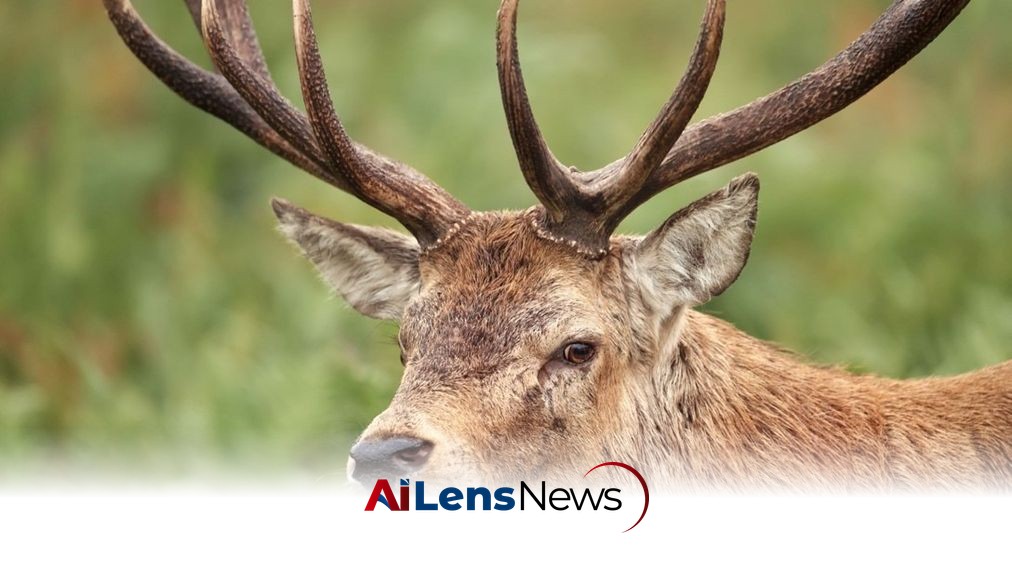


A groundbreaking study reveals the reproductive calendar of the critically endangered Kashmir red deer, or Hangul, highlighting the impact of human interference on its recovery.
Leh, India Jul 30, 2026 ALN: A landmark study has for the first time mapped the reproductive calendar of the critically endangered Kashmir red deer or Hangul (Cervus hanglu), revealing that human disturbance during crucial breeding and birth months could undermine the recovery of the species whose population has dwindled to around 400 animals. The Hangul is not just a species of deer; it is a symbol of the rich biodiversity that characterizes the Kashmir region, making its conservation imperative not only for ecological balance but also for cultural heritage.
The research, led by scientists from the Laboratory for the Conservation of Endangered Species (LaCONES), Centre for Cellular and Molecular Biology (CCMB), Hyderabad, in collaboration with the Wildlife Trust of India, provides what experts describe as a “scientific blueprint for protecting Hangul during its most vulnerable periods.” Published in the prestigious journal Scientific Reports, the study monitored the only viable wild population of Hangul in Dachigam National Park using non-invasive hormone analysis from 1,172 fresh faecal samples collected over a year. This innovative approach allowed researchers to gather critical data without disturbing the animals, showcasing the importance of non-invasive methods in wildlife research.
Researchers found that while male Hangul exhibit a synchronised rutting season between October and December, females display a more dispersed mating pattern extending over several months. Pregnancies peak between January and March, while April marks the principal birthing season, when females experience heightened physiological stress. This reproductive pattern is crucial for the survival of the species, as it ensures that fawns are born during a time of abundant food availability, which is essential for their growth and development.
The findings suggest that these months should be treated as "critical conservation windows," with minimal human activity inside Hangul habitats. The study highlights the need for immediate action, as human activities such as tourism, grazing, and infrastructure development can significantly disrupt these critical periods. The authors emphasized that the timing of human disturbances could have long-lasting effects on the population recovery of Hangul, which is already facing numerous threats.
"Our findings establish the reproductive seasons of Hangul for the first time and provide a baseline for conservation breeding programmes," the authors wrote, adding that anthropogenic disturbances during mating and parturition should be minimised to improve population recovery. This baseline data is essential for developing targeted conservation strategies that can effectively support the Hangul population.
The study also detected elevated stress hormones in both male and female Hangul during the breeding season. More significantly, researchers recorded another sharp spike in stress during May, coinciding with the annual movement of migratory livestock herders, their sheep, goats and guard dogs into upper Dachigam. This correlation raises concerns about the impact of livestock grazing and associated human activity on the Hangul's reproductive success. While the study acknowledges that further investigation is needed to conclusively establish the link, scientists believe the timing strongly suggests that livestock movement and associated human activity could be adding pressure on the endangered species. Earlier studies have already shown that Hangul are increasingly shifting towards lower elevations during summer to avoid disturbance, indicating that human presence is altering their traditional habitat use.
Researchers also found that Hangul's reproductive cycle differs from that of red deer living in northern Europe and Arctic regions. “As a mixed feeder, Hangul has access to food for a longer period than grazing deer, allowing females to have a relatively extended breeding season. Nevertheless, births remain synchronised with spring, ensuring calves arrive when vegetation is abundant,” they said. This adaptability is a positive sign, but it is also vulnerable to changing environmental conditions.
The study reads that satellite-derived vegetation data showed that food availability peaks from May to June, matching the period when newborn fawns require maximum nutrition. It warns that climate change, shifting vegetation patterns and increasing human activity could disrupt this delicate timing, affecting breeding success in future. The implications of climate change cannot be understated; as temperatures rise and precipitation patterns shift, the habitats that Hangul rely on may become less hospitable, further threatening their survival.
The findings are expected to have immediate implications for wildlife management in Jammu and Kashmir. Scientists have recommended restricting tourism, grazing, infrastructure work and other disturbances inside Dachigam during the breeding and birthing periods. These recommendations are crucial as they offer a path forward for conservation efforts that can be implemented in a timely manner. They also advocate expanding camera-trap monitoring, improving habitat connectivity between isolated Hangul populations and strengthening captive breeding efforts using the newly established reproductive calendar. Such measures are vital for ensuring that the Hangul population not only survives but begins to recover.
Once numbering between 3,000 and 5,000 animals across Kashmir, the Hangul has suffered a catastrophic decline over the past century due to habitat fragmentation, grazing pressure, poaching and human disturbance. Today, Dachigam National Park supports the only viable population, with a few tiny, isolated groups surviving in Wangat-Naranag, Overa-Aru, Tral and Lolab landscapes. The historical decline of the Hangul is a stark reminder of the impact of human activity on wildlife, underscoring the need for sustainable practices that can coexist with conservation goals.
The researchers say the hormone profiles generated through the study now provide an essential scientific foundation for future conservation breeding programmes and long-term management strategies, especially as climate change continues to reshape Himalayan ecosystems. This data can help inform not just local conservation efforts but also broader initiatives aimed at preserving biodiversity in the region.
The study concludes that protecting Hangul during its mating and birthing seasons may prove as important as habitat restoration itself, warning that without reducing disturbance during these critical months, the future of Kashmir's iconic red deer will remain uncertain. As conservationists look to the future, the findings of this study serve as a crucial reminder of the intricate balance between human activity and wildlife preservation, highlighting the urgent need for collaborative efforts to ensure the survival of the Hangul and, by extension, the health of the entire ecosystem in which it resides.
To learn more about the latest developments in Conservation, stay updated with our exclusive reports and analyses on AiLensNews.

