

More
Checking your session
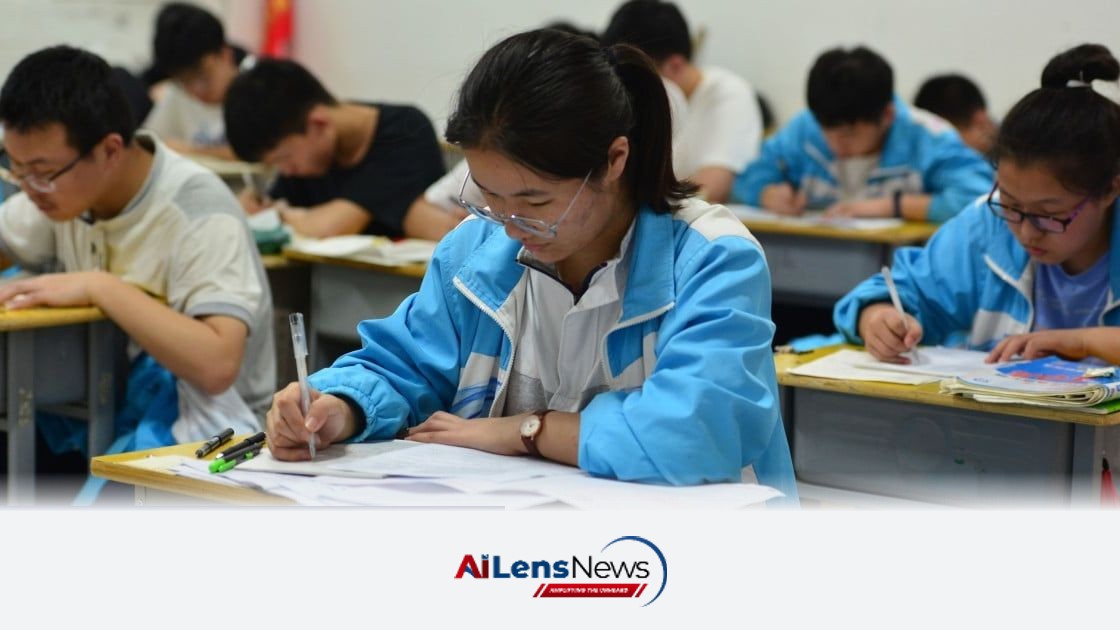



A university dean warns that recent Gaokao reforms may expose Chinese students to distorted historical narratives as history education declines.
London, United Kingdom Aug 23, 2026 ALN: China's education system has long been a focal point of national policy, particularly regarding how history is taught and understood. Recently, a concerning trend has emerged wherein secondary school students are opting to drop history as an exam subject. This shift has raised alarms among educators and policymakers alike, with warnings that it could render the public more susceptible to distorted narratives about the past. Liu Linhai, the dean of the school of history at Beijing Normal University, has been vocal about these concerns, emphasizing the critical role that history education plays in shaping historical, cultural, ethnic, and national identities.
The term "historical nihilism" has gained traction in Chinese political discourse, particularly as the government seeks to combat narratives that contradict or undermine the state’s official interpretation of history. This includes a range of topics, from the portrayal of events such as the Cultural Revolution to the interpretation of China's role in global history. Liu's commentary, published in the state-backed China Teacher Paper, underlines the urgency of addressing the weakening status of history education. He argues that the marginalization of history in the curriculum could lead to a generation of students who lack a coherent understanding of their national identity and cultural heritage.
In recent years, the Chinese government has intensified its efforts to promote a specific narrative of history that aligns with its political ideology. This includes countering what authorities label as "pseudo-history," which encompasses various fringe theories that challenge established historical facts. For instance, some narratives claim that ancient civilizations, such as Ancient Greece, did not exist, which undermines the foundations of Western thought and philosophy that are often contrasted with Chinese values. By framing these ideas as a "new variant" of historical nihilism, the government is signaling its intent to take a firmer stance against alternative historical interpretations that could threaten its legitimacy.
The implications of these educational reforms and the diminishing emphasis on history are profound. A populace that is less educated in historical matters may struggle to engage critically with current events or to understand the complexities of China’s past. This could foster an environment where misinformation can thrive, as students may not have the tools necessary to discern credible historical narratives from those that are misleading or fabricated.
Moreover, the broader context of education in China is undergoing significant transformation, particularly as the Gaokao, the national college entrance examination, evolves. Reforms to the Gaokao have included adjustments to the subjects that are prioritized, with a growing emphasis on STEM fields (science, technology, engineering, and mathematics) at the expense of the humanities, including history. This shift has sparked debate among educators and parents about the importance of a well-rounded education that includes critical thinking and historical awareness.
As history education faces challenges, policymakers are urged to consider the long-term consequences of diminishing its role in the curriculum. Liu's call for coordinated and effective measures to address structural issues affecting history education is a plea for a re-evaluation of educational priorities. Policymakers must grapple with the question of how to balance the need for a strong national narrative with the importance of fostering critical thinking and historical inquiry among students.
In light of these developments, the role of educators becomes increasingly vital. They must navigate the complexities of teaching history in an environment where state narratives are heavily promoted. This may involve finding innovative ways to engage students with history, fostering a critical approach to learning, and encouraging discussions that allow for multiple perspectives on historical events.
The future of history education in China is not merely an academic issue; it is intertwined with national identity, cultural continuity, and the ability of citizens to engage with their past in a meaningful way. As the landscape of education continues to change, the challenge will be to ensure that history remains a vital part of the curriculum, enabling students to develop a nuanced understanding of their heritage and their place in the world.
Ultimately, the ongoing discussions about history education reflect broader societal values and the importance placed on understanding the past to inform the future. As China navigates its path in an increasingly complex global environment, the ability to critically engage with history will be essential for fostering informed and engaged citizens.
To learn more about the latest developments in School Education, stay updated with our exclusive reports and analyses on AILensNews.

More than 25 states are now mandating cursive instruction, citing its importance…

A nostalgic look at Paisley Grammar School's history, exploring its disciplinary…

On August 15, a local school in New Tura celebrated India's Independence Day wit…

This article explores the importance of recognizing diverse learning methods in …

Paisley Grammar School, a historic institution, is closing its doors after 450 y…