


Paisley Grammar School, a historic institution, is closing its doors after 450 years. Alumni gather to reminisce about their experiences and the school's impact.
London, United Kingdom Aug 17, 2026 ALN: They’re queuing to get in like they did 30 years ago, or 40, or in some cases 80. Some things have changed, like the doors (no more separate entrances for girls and boys) and the uniforms (no more tasselled caps) and the discipline (no more leather belts). But the biggest change is what’s about to happen to the building. These are the last days of the old Paisley Grammar and thousands of its children have returned for one last look, one last trip to school.
Inside, past the queues, the atmosphere is excitable rather than sad. We’ve been gathered in the main building where the classrooms are arranged round a large atrium, in the way things often are in Victorian schools (and prisons). Up on the third storey, oak beams run from one landing to the other over a 30ft drop and there’s a legend I hear from several sources that the most daring pupils would walk across the beams, despite the risk of the belt, or death, or both. A former headmaster tells me the legend is true and he knew one of the boys who did it. I look up and think: were pupils more daring then or are we more timid?
There are many other legends about the school. A former teacher tells me of the group of boys who were caught making their own alcohol in the prefects’ room. And a former pupil tells me of the protest they staged against a male teacher who belted a female pupil; the girls draped themselves in daisy chains and the boys slammed the desk lids in noisy anger at the injustice. It was taken for granted back then, in the 1950s, that corporal punishment was acceptable, desirable even, but things were changing and would continue to change, and it wasn’t always easy for Paisley Grammar.
A more famous story about the school is the one about how it was saved by the Prime Minister and just not any Prime Minister either: Margaret Thatcher. I look at the files from her time as PM and there in among them is a memo of January 22, 1988: “I believe we must take urgent action to prevent closure of a school like Paisley,” she writes. “If we act it could prove the turning point for the party’s fortunes in Scotland.” It proved not to be that, as we know, but the fight to save the school did lead to some wider changes which still have an effect today.
Then there’s the famous pupils. One of them is the journalist Andrew Neil – who helped raise the stink when the school was threatened with closure in the 80s – but there’s another pupil who’s more famous even than him. I’m flicking through copies of the old school magazine in the entrance hall and find one from 1989 and inside there’s an article about a pupil called David MacDonald. The article says that his ambition is to be an actor and that there’s one particular role he’d love to play: Doctor Who. Sixteen years later, he did, after changing his name to David Tennant.
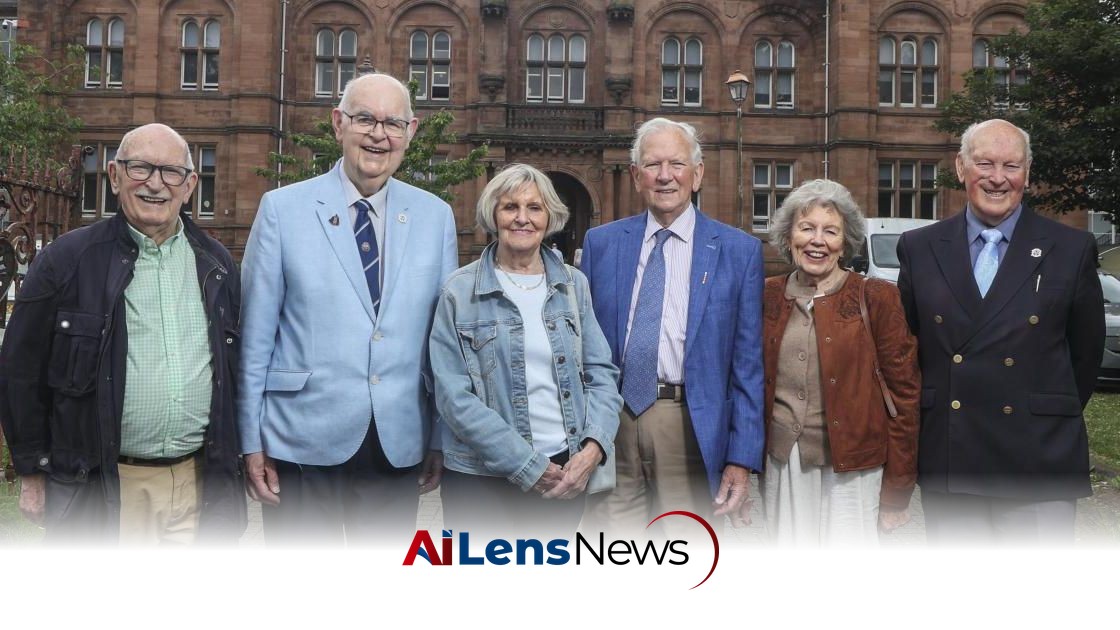
Other notable alumni have turned up today to have one last look at the place ahead of the school’s final closure, including a former headteacher (although it was called rector in his day) Hugh Nisbet and the producer of Taggart and many other TV shows Robert Love. The plan is to sit down with them and some of their old Grammarian chums to talk about the school and what’s happening to it, but first the man from the council, head of education Gerard McLaughlin, is telling me more about the fate of the old school, why it’s happening and what happens next.
The why is fairly simple as far as Mr McLaughlin is concerned: the school is too small, too old, and no longer fit for purpose, and as for the fate of the old building, it’ll be turned into flats. The developer Nixon will convert the B-listed main building into apartments, and build a further three new blocks in the school grounds, some of which will be for social rent. Mr McLaughlin says the planning conditions for the developer are tight, meaning the beautiful central atrium for example will be retained.
The what-happens-next is that the 1,350 pupils are relocating next week to a new purpose-built school – cost: £85m – and it’s a striking contrast to the old Victorian building they’ve been used to. Traditionalists like me will pine for the old building designed by Thomas Graham Abercrombie in the Scots Renaissance style, but the new building has dedicated drama and performance spaces, enhanced sports facilities including full-size pitches and the latest tech in the classrooms. In a sort-of nod to the old building, it also has a large atrium that gives the whole thing a campus feel rather than a school feel, which was the aim from the start.
When I sit down with the old Grammarians for a chat, I ask them how they’re feeling about the old school shutting down and I guess I’m surprised by their answers. But first, I want to know what it was like in the old days, how it’s changed, and what’s changed for the better, or the worse and I’m starting with Hugh Nisbet, who was headmaster of the grammar in the late 80s and 90s, but first came to the school as a secondary pupil in 1952.
Hugh, who’s 86, grew up in Barrhead, the son of a railway clerk, so it wasn’t a given that he would go to Paisley Grammar. First, he had to pass the qualification exam – the ‘qualy’ – which all 12-year-olds aiming to get into Paisley had to pass and there was a fee to be paid: 12 guineas a year. He also had to wear the dreaded tasselled cap. “I had the cap when I was a prefect,” says Hugh, “but it always went into my bag before I got on the bus to Barrhead!”
Hugh is back at the school today with Robert Love, 90, who had a successful career in television where he became head of drama at STV and made Taggart, High Road and many other shows. Robert, whose father was a principal teacher of classics at Paisley, came to the school in 1941 and one of his strongest memories is how important theatre and drama was. “It was a big thing in the school,” he says, “And I would say it’s one of the reasons I did what I did.” Robert remembers visits by the pioneering Bertha Waddell’s Children’s Theatre and even Joan Littlewood’s Theatre Workshop, later famous for Oh, What a Lovely War! and other influential works.
Also here today are Melvyn Haggarty, a former head of history at the school, Gaynor Mathieson, who was a pupil all the way through from primary, and Rona Falconer and Bill Fisher, who were pupils in the 50s and went on to become a teacher and surgeon respectively. They’re all happy to be back at the old place for the day, pointing out the classrooms they remember and so forth, but it’s the differences between then and now that’s most striking.
To learn more about the latest developments in School Education, stay updated with our exclusive reports and analyses on AILensNews.

