

More
Checking your session
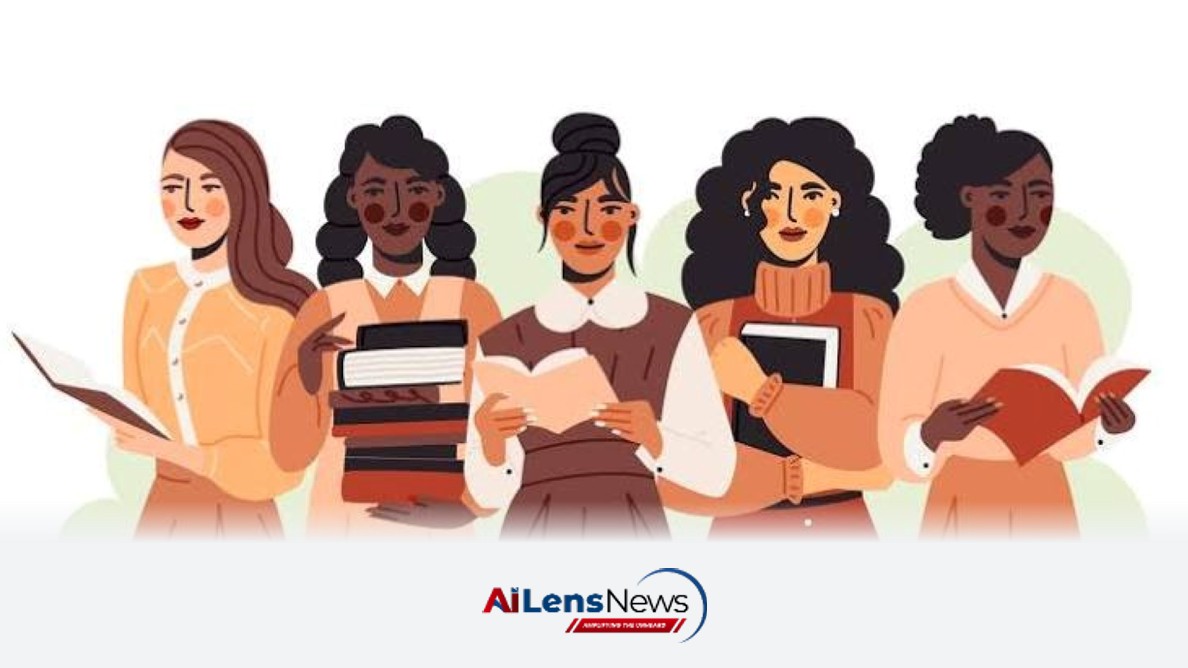



A recent analysis reveals a significant gender divide in Jammu and Kashmir's education sector, with women comprising 94% of foundational teachers while men dominate at higher levels.
Leh, India Aug 31, 2026 ALN: At the foundational level, nearly 94 per cent of teachers in Jammu and Kashmir are women. At the secondary level, 60 per cent are men. This sharp gender divide, revealed in the latest school teaching workforce data, points to a distinct pattern: women dominate the early years of education, while men take over as students grow older.
The data, covering all types of school management, shows that J&K has a total of 166,163 teachers, comprising 84,561 females and 81,602 males. Women account for about 50.9 per cent of the overall teaching workforce, compared to 49.1 per cent men. However, the overall figures mask a significant variation across different class categories.
At the foundational level, the gender gap is particularly striking. Of the 5,038 teachers reported in the foundational category, 4,717 are female, and only 321 are male. Thus, female teachers constitute nearly 94 per cent of teachers in this category. This trend can be attributed to a variety of factors, including societal norms that view early childhood education as a nurturing role traditionally associated with women. Furthermore, women often seek employment in teaching roles that allow for more flexible hours, which is particularly appealing for those balancing family responsibilities.
Among teachers handling foundational and preparatory classes, females again outnumber males. This category has 66,022 teachers, including 37,309 females and 28,713 males. Women account for about 56.5 percent of the teaching workforce here. This continued female representation in early education is critical, as research indicates that young children benefit from female role models during their formative years, contributing positively to their social and emotional development.
The female advantage continues, though narrowly, in the foundational, preparatory, and middle category. Of 17,377 teachers, 9,071 are female compared to 8,306 male teachers, giving women a 52.2 per cent share. This slight edge suggests that while women are still predominant in the earlier stages of education, there is a gradual shift occurring as children transition into more advanced educational stages.
The pattern reverses at the middle level. J&K has 39,663 teachers in the middle category, of whom 21,584 are male and 18,079 female. Male teachers thus account for 54.4 per cent. This shift is noteworthy as it reflects broader societal trends where men are increasingly seen as more suitable for teaching older students, particularly in subjects like mathematics and science, which are often stereotypically associated with male educators.
The male advantage becomes more pronounced among teachers handling middle and secondary classes. Of 5,231 teachers in this category, 2,971 are male and 2,260 female, giving men a 56.8 per cent share. This trend raises questions about the implications for educational outcomes, as the presence of male teachers in higher grades may influence the dynamics of classroom engagement and student performance.
The widest gender gap at the higher level is recorded among secondary teachers. Of 32,832 teachers, 19,707 are male compared to 13,125 female, indicating that male teachers constitute 60 per cent of the workforce. This significant disparity at the secondary level suggests that male educators are more likely to be attracted to or retained in these positions, which may be influenced by factors such as salary expectations, career advancement opportunities, and societal perceptions of authority.
Taken together, the three categories involving foundational education have 37,340 male and 51,097 female teachers, giving women a lead of 13,757. In contrast, the middle and secondary categories collectively have 44,262 male and 33,464 female teachers, giving men a lead of 10,798. This stark contrast highlights the ongoing challenges of gender parity in education, prompting discussions about how to attract and retain more female educators in higher grades.
The figures, therefore, point to a distinct shift in gender representation, which shows women have a stronger presence in foundational and preparatory teaching, while men become more predominant as the classes move towards the middle and secondary levels. This gender disparity in teaching roles has broader implications for educational policy and practice in Jammu and Kashmir. It raises questions about the effectiveness of current recruitment strategies and the need for targeted initiatives to encourage more women to pursue careers in secondary education.
Furthermore, addressing this gender gap could have significant ramifications for the educational landscape in Jammu and Kashmir. A more balanced representation of genders in teaching could contribute to a more inclusive learning environment, where students are exposed to diverse perspectives and teaching styles. It may also foster a more equitable society over time, as educational institutions play a crucial role in shaping future generations.
In conclusion, the current gender disparity in Jammu and Kashmir's education system highlights the urgent need for policy interventions aimed at promoting gender balance in teaching roles across all educational levels. As the region continues to evolve, ensuring equal representation in education will be vital for fostering an inclusive and equitable society.
To learn more about the latest developments in Education News, stay updated with our exclusive reports and analyses on AILensNews.
A power failure at two Jaipur centres interrupted the NEET-PG 2026 examination, …

The NEET PG 2026 examination has begun, with more than 2.73 lakh candidates part…
The Deputy Commissioner of Nubra conducted a review meeting to assess the functi…
Chief Minister Omar Abdullah reviews a roadmap to enhance senior secondary educa…

During his recent visit to Government Degree College Kargil, MP Haji Hanifa Jan …