

More
Checking your session
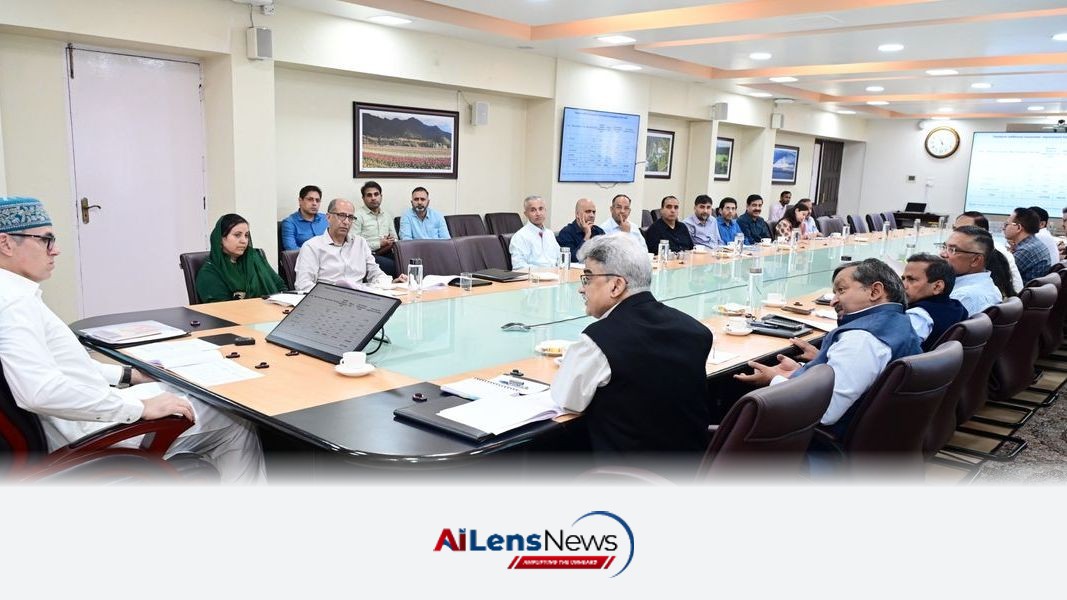



Chief Minister Omar Abdullah reviews a roadmap to enhance senior secondary education and improve the Gross Enrolment Ratio in Jammu and Kashmir.
Leh, India Aug 25, 2026 ALN: Chief Minister Omar Abdullah on Monday reviewed a phased roadmap to strengthen senior secondary education and improve the Gross Enrolment Ratio (GER) at the higher secondary level across Jammu and Kashmir.
Chairing a review meeting of the School Education Department at the Civil Secretariat, Omar discussed the phased plan to upgrade 714 High Schools into K-12 composite schools. This initiative is part of a broader strategy to enhance the educational landscape in Jammu and Kashmir, a region that has faced numerous challenges in terms of educational access and quality.
The meeting focused on improving the Gross Enrolment Ratio (GER) at the higher secondary level and reviewed the phased plan to upgrade 714 High Schools into K-12 composite schools. The GER is a crucial indicator of the number of students enrolled in a specific education level compared to the population of the age group that officially corresponds to that level. A low GER in Jammu and Kashmir has been a concern for policymakers, as it reflects the difficulties many students face in continuing their education beyond the tenth grade.
The proposed upgradation aims to ensure continuity in school education and expand access to Classes XI and XII, particularly in underserved and geographically remote areas. Many students in these regions often find it challenging to pursue higher secondary education due to the lack of nearby schools offering these classes. By converting high schools into K-12 composite schools, the government aims to provide a seamless transition for students from primary and secondary education to higher secondary education.
This initiative is also expected to help reduce student dropouts after Class 10, a significant issue in the region. Dropout rates can be attributed to various factors, including socio-economic conditions, the distance to schools offering higher classes, and the lack of adequate infrastructure and resources. By improving access to higher secondary education, the government hopes to retain more students in the education system and ultimately increase their chances of pursuing higher education or vocational training.
The meeting also discussed better utilisation of existing human resources, strengthening academic facilities, and improving the overall school network across Jammu and Kashmir. Effective management of human resources is essential for the success of this initiative. It includes ensuring that qualified teachers are available for higher secondary classes and that there are sufficient support staff to maintain and operate the upgraded schools.
The roadmap envisages a planned and need-based expansion of senior secondary education, with the government also coordinating with the Government of India for necessary support under centrally sponsored schemes. This collaboration is crucial as it can provide additional funding and resources to support the infrastructure development and staffing needs of the new K-12 schools. The involvement of the Government of India signifies the importance of this initiative on a national level, as it aligns with broader educational goals set forth by the central government.
Omar stressed the need for a focused and requirement-based strategy to expand senior secondary education, with particular attention to accessibility and ensuring better educational opportunities for students across Jammu and Kashmir. The emphasis on accessibility is vital, especially in a region characterized by its diverse geographical landscape, which includes remote villages and mountainous areas. The government’s commitment to improving educational access reflects a recognition of the unique challenges faced by students in these areas.
The meeting was attended by Education Minister Sakina Itoo, Advisor to the Chief Minister Nasir Aslam Wani, Chief Secretary Atal Dulloo, and senior officers from the School Education, Finance, Planning, and Public Works departments. The participation of these officials highlights the multi-faceted approach required to successfully implement the proposed upgrades, as it involves collaboration across various government departments to ensure that all aspects of the education system are addressed.
The proposed upgrade of 714 High Schools into K-12 composite schools is aimed at strengthening the senior secondary education network and improving access to higher secondary education for students across the Union Territory. This initiative is expected to have far-reaching implications for the educational landscape in Jammu and Kashmir. By enhancing the quality and accessibility of education, the government hopes to empower students, enabling them to pursue higher education and contribute positively to society.
In conclusion, the decision to upgrade high schools to K-12 composite schools represents a significant step towards improving the educational framework in Jammu and Kashmir. As the region continues to navigate its socio-economic challenges, initiatives like this are essential for fostering an educated populace capable of driving progress and development. The success of this program will depend on effective implementation, ongoing support from government entities, and a commitment to addressing the unique needs of students in Jammu and Kashmir.
To learn more about the latest developments in Education News, stay updated with our exclusive reports and analyses on AILensNews.

During his recent visit to Government Degree College Kargil, MP Haji Hanifa Jan …
Former Chief Minister Omar Abdullah recognized the outstanding performance of NE…
Students and alumni of the National Law School of India University have raised o…
This article explores the effectiveness of Cluster Universities in Jammu and Kas…
In light of ongoing debates regarding its renaming, Dyal Singh Evening College h…