

More
Checking your session
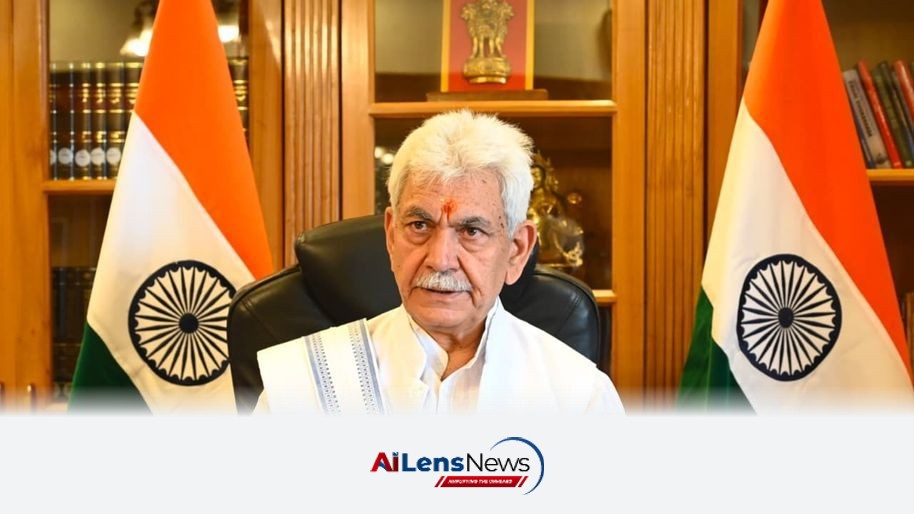



Manoj Sinha calls for integrating values with scientific learning during the Foundation Day of the Shri Mata Vaishno Devi Gurukul.
Leh, India Aug 31, 2026 ALN: In a recent address to students, Lieutenant Governor Manoj Sinha emphasized the critical need to balance scientific inquiry with ethical values in education. His remarks came during the Foundation Day celebrations of the Shri Mata Vaishno Devi Shrine Board and the Annual Day of the Shri Mata Vaishno Devi Gurukul. The Lieutenant Governor's comments reflect a broader discourse on the role of education in shaping not only knowledgeable individuals but also responsible citizens.
Sinha articulated a philosophy that intertwines science and values, stating, “Science gives us speed and values give us direction.” This metaphor highlights the dual necessity of acquiring knowledge and understanding the ethical implications of its application. In an age where technological advancements occur at an unprecedented pace, the call for a balanced approach is particularly relevant. The integration of values into scientific education can help ensure that innovations are pursued with a sense of responsibility and ethical consideration.
The Lieutenant Governor drew upon the rich tradition of Indian philosophy, particularly the Upanishadic teachings, which encourage inquiry and dialogue as fundamental aspects of learning. He remarked that questioning is not a sign of weakness but rather a pathway to deeper understanding. This perspective aligns with educational philosophies that advocate for critical thinking and active engagement in the learning process. It suggests that educators should not only provide students with factual knowledge but also guide them in developing moral and ethical frameworks.
In his address, Sinha underscored the importance of this balance by stating that true progress lies in harmonizing speed with direction. He posited that the journey towards advancements in fields such as artificial intelligence should not occur in isolation from spiritual and ethical considerations. The intertwining of technology and spirituality, he argued, could lead to a more holistic form of education that nurtures both intellect and character.
Furthermore, the Lieutenant Governor expressed his satisfaction with the Gurukul's incorporation of modern subjects, particularly science and computer technology, into its curriculum. This integration reflects a growing recognition of the necessity for educational institutions to adapt to contemporary demands while retaining their foundational values. By embracing modern educational practices, the Gurukul aims to prepare students for a future where they can excel in both traditional and emerging fields.
In addition to emphasizing the balance between science and values, Sinha called for a heightened focus on environmental consciousness within educational institutions. He urged the Gurukul and the Shrine Board to adopt sustainable practices, including initiatives in water conservation, energy efficiency, tree planting, and cleanliness. These actions not only reflect a commitment to environmental stewardship but also serve as practical applications of the values being taught. By making sustainability a core principle, educational institutions can foster a culture of responsibility towards the planet among students.
The Lieutenant Governor referenced ancient Indian scriptures, such as the Prithvi Sukta of the Atharvaveda, which embody a profound respect for nature and a commitment to its preservation. In the context of the current global challenges posed by climate change, Sinha advocated for a dual approach that combines traditional ecological wisdom with contemporary scientific understanding. This integration can lead to more effective strategies for environmental protection and sustainability.
In his address, Sinha proposed three initiatives aimed at enhancing the educational framework of the Gurukul:
Concluding his remarks, the Lieutenant Governor expressed confidence that the Shri Mata Vaishno Devi Gurukul would evolve into a prominent center of education where tradition and modernity coexist and enrich one another. He articulated a vision where students emerge as aware, sensitive, and virtuous citizens. Sinha's assertion that knowledge is incomplete without compassion, humility, and a sense of responsibility towards humanity underscores the importance of nurturing not just skilled professionals but also conscientious individuals who can contribute positively to society.
In a broader context, the Lieutenant Governor’s emphasis on balancing values and science in education resonates with ongoing discussions about the role of education in shaping societal norms and ethical standards. As societies grapple with rapid technological advancements and their implications, the call for an educational framework that prioritizes ethical considerations alongside scientific progress becomes increasingly pertinent. The initiatives proposed by Sinha may serve as a model for educational institutions seeking to navigate the complexities of modern education while remaining rooted in cultural and ethical traditions.
Ultimately, the Lieutenant Governor's address is a reminder of the potential of education to not only impart knowledge but also to foster a sense of purpose and responsibility among students. As the world continues to evolve, the integration of values into educational frameworks may prove essential in guiding future generations towards a more ethical and sustainable path.
To learn more about the latest developments in Higher Education, stay updated with our exclusive reports and analyses on AILensNews.

During a recent inspection of the Polytechnic College in Leh, the Chief Secretar…

A remarkable father-daughter duo from Kangra district has completed their LLB co…

After completing a BCA, students often face the dilemma of whether to pursue an …

A power failure at two Jaipur centres interrupted the NEET-PG 2026 examination, …

A recent analysis reveals a significant gender divide in Jammu and Kashmir's edu…