

More
Checking your session




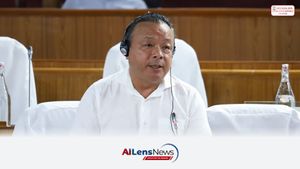
Opposition Leader Dr. Mukul Sangma questions the withdrawal of teaching posts at Captain Williamson Sangma State University, citing concerns over faculty recruitment and education policies.
Shillong, India Aug 27, 2026 ALN: Opposition Leader Dr Mukul Sangma on Thursday questioned the withdrawal of recruitment notification for Captain Williamson Sangma State University. This issue has raised significant concerns regarding the recruitment process and the overall governance of educational institutions in the state.
Taking part in a short duration discussion on education, Sangma highlighted that the university had on June 27 invited applications for various academic positions including professor, associate professor, and assistant professor. However, this recruitment drive was abruptly withdrawn on July 23, primarily due to concerns regarding the pay structure for these positions. The sudden cancellation of the recruitment notification has left many prospective candidates in a state of uncertainty and has raised questions about the decision-making processes within the university administration.
Sangma pointed out that faculty members within the university had expressed considerable frustration over the withdrawal of the notification. They urged the government to reconsider its stance and to support the Board of Governors’ decision to proceed with the recruitment as planned. The withdrawal not only affects the university's ability to attract qualified candidates but also raises concerns about the university's commitment to maintaining high academic standards and fulfilling its educational mandate.
In his address, Sangma also flagged a proposal to fill positions left vacant by retired government school teachers on a fixed pay of around ₹30,000. He questioned whether such decisions were made with the proper approval from the Cabinet, emphasizing the need for transparency and accountability in the recruitment processes of educational institutions. The proposal to fill these positions at a fixed pay rate rather than through regular recruitment processes could have implications for the quality of education provided, as it may attract less experienced or qualified individuals to fill these critical roles.
Moreover, Sangma cautioned against what he termed as blanket rationalisation before filling vacancies. He warned that such an approach could adversely impact the accreditation of educational institutions and, consequently, affect the educational opportunities available to underprivileged students. Accreditation is vital for ensuring that educational institutions meet certain standards of quality, and any disruptions in staffing could jeopardize these standards.
Dr. Sangma emphasized that the government has a binding responsibility towards education as a social sector. He referred to several important frameworks that govern education in India, including the Right to Education Act, the National Education Policy, and other statutory provisions. These frameworks not only outline the rights of students to receive quality education but also place obligations on the government to ensure that educational institutions are adequately staffed and resourced.
In addition to the recruitment issues, Sangma also brought attention to the physical state of school infrastructure in the region, particularly highlighting the problem of leaking roofs in schools that had been exacerbated by a recent hailstorm. This issue underscores the broader challenges faced by the education sector in the state, where infrastructural deficiencies can significantly hinder the learning experience for students.
Reviving the education legacy of the region has become a pressing concern for many stakeholders, including educators, parents, and policymakers. Historically, the region has been known for its commitment to education, but recent developments have raised fears that this legacy may be at risk. The withdrawal of recruitment notifications, inadequate infrastructure, and insufficient teacher recruitment could collectively undermine the quality of education offered in the state.
As the discussion on education continues, it is evident that significant reforms and strategic planning are necessary to address these challenges. The government must take proactive steps to ensure that educational institutions are not only adequately staffed but also equipped with the necessary resources to provide a conducive learning environment. This includes investing in infrastructure, supporting teacher training programs, and ensuring that policies are in place to attract and retain qualified educators.
In conclusion, the concerns raised by Dr. Mukul Sangma regarding the withdrawal of the teaching posts notification at Captain Williamson Sangma State University reflect broader issues within the educational landscape of the region. As stakeholders navigate these challenges, it is crucial for the government to reaffirm its commitment to education and to take decisive actions that will secure the future of learning for all students in the state.
To learn more about the latest developments in Education News, stay updated with our exclusive reports and analyses on AILensNews.

In a recent discussion, MLA Mehtab Chandee emphasized the need for a broader foc…

Chief Minister Conrad K. Sangma responds to concerns over college deficits in , …
The government has introduced the Umbrella Post Matric Scholarship for Scheduled…
In a recent assembly discussion, MLA Paul Lyngdoh emphasized the urgent need for…
The 'CM IMPACT Read & Rise' program was inaugurated by Chief Minister Conrad K S…