

More
Checking your session
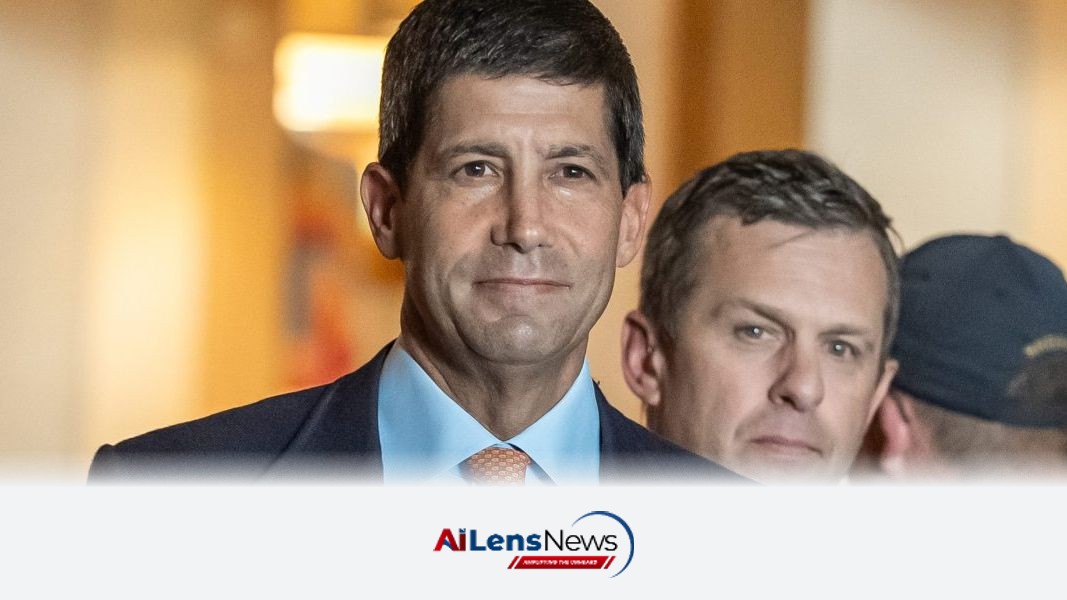



In his keynote speech at Jackson Hole, Federal Reserve Chairman Kevin Warsh emphasized the need for clarity in monetary policy and acknowledged the challenges of elevated inflation.
Washington DC, United States Aug 28, 2026 ALN: Wall Street hadn’t heard a peep out of Federal Reserve Chairman Kevin Warsh for a month, until he walked onstage for his keynote speech at Jackson Hole today.
Warsh’s speech at the Fed’s annual gathering came with added scrutiny this year: Not only was it Warsh’s first as chairman, but he has also caused analysts some discomfort with his pullback from giving now-familiar forward guidance (in which the central bank indicated the general direction of travel for the base interest rate).
On forward guidance, Warsh stuck to his guns, saying: “You might know about my longtime discomfort with early pronouncements of future policy decisions … Forward guidance as a regular practice was adopted by my colleagues—and me—during the Global Financial Crisis. It was essential at the time, and we introduced it with much fanfare.
“But as with other legacies of crises past, I believe the practice has outstayed its welcome. In normal times, the role of forward guidance should be limited and circumscribed; otherwise, it risks creating ambiguity in the name of clarity. Oversharing policy deliberations and overcommitting to future decisions can lead markets, businesses, and households astray, and I believe when policymakers make quasi-commitments on interest rates throughout the cycle, we inhibit our own freedom to make the right calls when it’s time to decide.”
His tone was firm: “We should not indulge a regime in which market participants are looking primarily to the Fed for their next trade.”
And while Warsh has repeated his commitment to the Fed’s dual mandate of inflation at 2% and maximum employment, neither he nor his central bank staffers are living under a rock: Bond yields tracked higher following Warsh’s July press conference, as markets digested a Fed on hold and the suggestion that markets may be doing some of the legwork for financial tightening that they had come to expect from the Fed.
But more alarmingly—for some corners of the street—were the questions hanging over the established frameworks the Fed uses to make decisions about the base rate. Analysts questioned if these frameworks might be subject to change, searching for answers on how policymakers were thinking, even if they didn’t know what action it might prompt.
Here, Warsh shared insights. While his outlook on the economy wasn’t necessarily rosy, it nevertheless described the balance of priorities within the Fed.
Price stability is front of mind, he suggested, in the balance of risks in the Fed’s mandate. He said: “But on the price-stability side of our mandate, the numbers are more concerning. The Fed’s preferred measure of inflation, the 12-month change in the PCE [personal consumption expenditures] price index, stands at 3.7%, while the six-month change is 4.1%.
“None of these measures are perfect, but they all tell a similar story: Inflation is running above our 2% target. So the Fed’s predominant focus right now should be on prices.”
The employment side of the Fed’s mandate is doing “well,” he said, courtesy of a robust consumer and a “rematching” of employers and employees after the COVID pandemic. He added: “As of now, I believe the labor markets are broadly consistent with full employment, but on the price stability side of our mandate, the numbers are more concerning.”
With speculation swirling as to how actively the Fed will commit to its mandate, Warsh moved to nix concerns: “There is one signal nobody can miss: The responsibility for 65 months of sustained, elevated inflation sits squarely with the central bank. And that is where it belongs … I stand here today committed to a discipline, not to a decision. My Fed colleagues and I are hardly the first to hold these positions in a time of great consequence. We are determined to redeem the time by doing our very best work.
“We take our responsibility seriously, with humility and with resolve. So much depends on choices we make. Sound monetary policy helps households and businesses to prosper. When carried out effectively, it broadens and deepens the momentum of our economy … and helps to secure America’s leadership in the world. And I know that our country needs us to think carefully and act wisely.”
To learn more about the latest developments in Economic Reports, stay updated with our exclusive reports and analyses on AILensNews.

Lieutenant Governor VK Saxena has approved a significant reduction in VAT on nat…
In a recent address, Fed Chair Kevin Warsh expressed concerns over high inflatio…
The real estate sector shows signs of stabilization as the economy prepares for …

Recent data from the IBBI reveals a slight uptick in recoveries from personal gu…

Gulf countries play a crucial role in global remittances, providing financial su…