

More
Checking your session
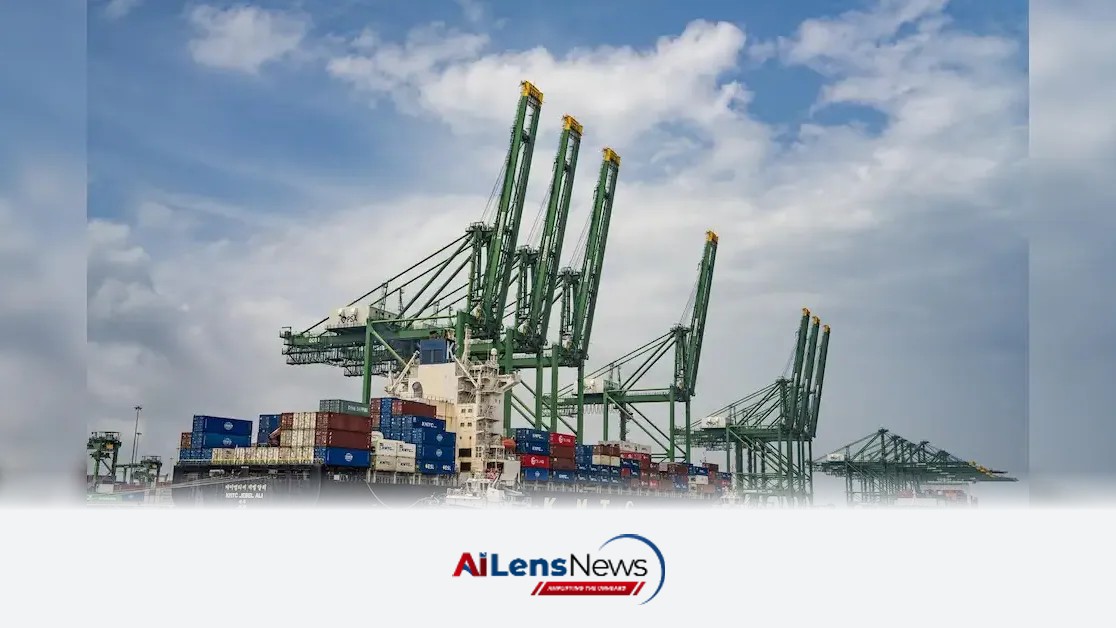



India's exporters face soaring freight costs and shipping disruptions, prompting calls for subsidies, but a focus on increasing cargo volumes may be the better solution.
New Delhi, India Aug 31, 2026 ALN: Exporters and importers in India are currently facing significant challenges due to soaring ocean freight costs and disruptions in shipping schedules. These issues bear a resemblance to the difficulties experienced during the Covid-19 pandemic, yet the current scenario presents its own distinct set of complications that are impacting trade dynamics.
Recent data indicates a dramatic increase in shipping costs, particularly for routes to the United States. The cost of shipping a 40-foot container has escalated from approximately $1,500 prior to the onset of the US-Iran conflict to around $10,000. This steep rise is not confined to just one route; freight rates to the Gulf, Europe, and East Africa have also seen significant hikes, increasing from about $300 to $4,000, $1,200 to $5,000, and $1,200 to $3,400 respectively. Even intra-Asian trade, such as shipments between China and India, has not been immune to these increases, with freight rates climbing to nearly $3,100. This surge in transportation costs is expected to elevate landed costs by an estimated 10-15% for many imports and exports, thereby eroding profitability margins and straining working capital for businesses involved in international trade.
The primary cause of this spike in freight rates can be attributed to the uncertainty surrounding the safe passage of vessels through critical maritime chokepoints, notably the Strait of Hormuz and the Red Sea. These waterways are vital for global trade, and any perceived threat can lead to significant disruptions. Major shipping companies, including industry giants like Maersk, have responded to this uncertainty by reducing their services in conflict-affected areas and opting to divert vessels around the southern tip of Africa to avoid potential risks. Additionally, these companies have cut vessel rotations and reallocated their capacity to prioritize routes that are deemed more secure. The recent surge in exports from China has made freight rates from Chinese ports more attractive, prompting shipping lines to focus on these routes, including for the repositioning of empty containers.
The situation has been exacerbated by the suspension of specific services to Indian ports by Mediterranean Shipping Company (MSC). This decision has intensified pressure on other carriers servicing India, allowing them to pass on higher operating costs to shippers amid an imbalance in supply and demand. The increased costs have prompted larger exporters to favor 40-foot containers over 20-foot ones, as the freight differential between the two is minimal, only about 10-15%. This shift in container preference reflects a broader trend among exporters seeking to maximize efficiency in light of rising costs.
In response to these mounting challenges, there have been renewed calls within India for freight subsidies and increased investment in maritime infrastructure, including the construction of vessels, ports, and containers. However, these demands must be carefully considered against the backdrop of a maritime industry that is undergoing a fundamental technological transition. The industry is increasingly focused on decarbonizing international shipping in alignment with the targets set by the International Maritime Organisation (IMO). A vessel ordered today may take two to three years to build and could remain in service for decades, during which time fuel technology and environmental regulations may evolve significantly. This creates a classic investment dilemma: delaying new capacity could lead to future shortages, while investing heavily in potentially outdated technology could result in stranded assets.
In light of these developments, several large shipping lines have started offering premium-priced, end-to-end transportation packages that include additional services such as inland transportation and customs clearance. Shippers who opt for these comprehensive packages reportedly gain priority access to shipping space, while those who do not may face delays and uncertainty, even if they have long-term contracts in place. Such practices could disadvantage shippers who choose to forgo bundled services, raising potential competition concerns that may need to be addressed with the Competition Commission of India.
Ultimately, for India to navigate these export challenges effectively, it must generate sufficient cargo volumes to attract sailings from global shipping lines. Achieving this requires Indian producers to enhance their global competitiveness and increase their share of global shipping volumes. Shipping capacities tend to gravitate toward regions where enough cargo is available to fill them, making it essential for India to focus on creating adequate two-way cargo volumes. Rather than attempting to resolve a shipping-capacity issue through selective subsidies for certain sectors, India should prioritize strategies that enhance its overall commercial appeal to shipping lines by fostering a robust export environment.
In conclusion, the current challenges faced by Indian exporters and importers highlight the interconnectedness of global trade and the various factors that influence shipping logistics. As the situation evolves, stakeholders across the maritime and trade sectors will need to collaborate and innovate to adapt to the changing landscape. The implications of these challenges extend beyond immediate financial impacts; they underscore the need for long-term strategic planning and investment in infrastructure and technology to ensure that India remains competitive in the global marketplace.
To learn more about the latest developments in Inflation & Prices, stay updated with our exclusive reports and analyses on AILensNews.

Sugar prices continue to exceed sixty rupees per kilogram nationwide, with gover…

Despite facing drought and sanctions, Iran's agricultural output has increased t…
Iran has completed drilling two wells in the Balal gas field, set to boost daily…

TEHRAN - Iran's Oil Minister Mohsen Paknejad announced that the sale and deliver…

The first consignment of sea buckthorn pulp from Kargil has been dispatched to D…