

More
Checking your session
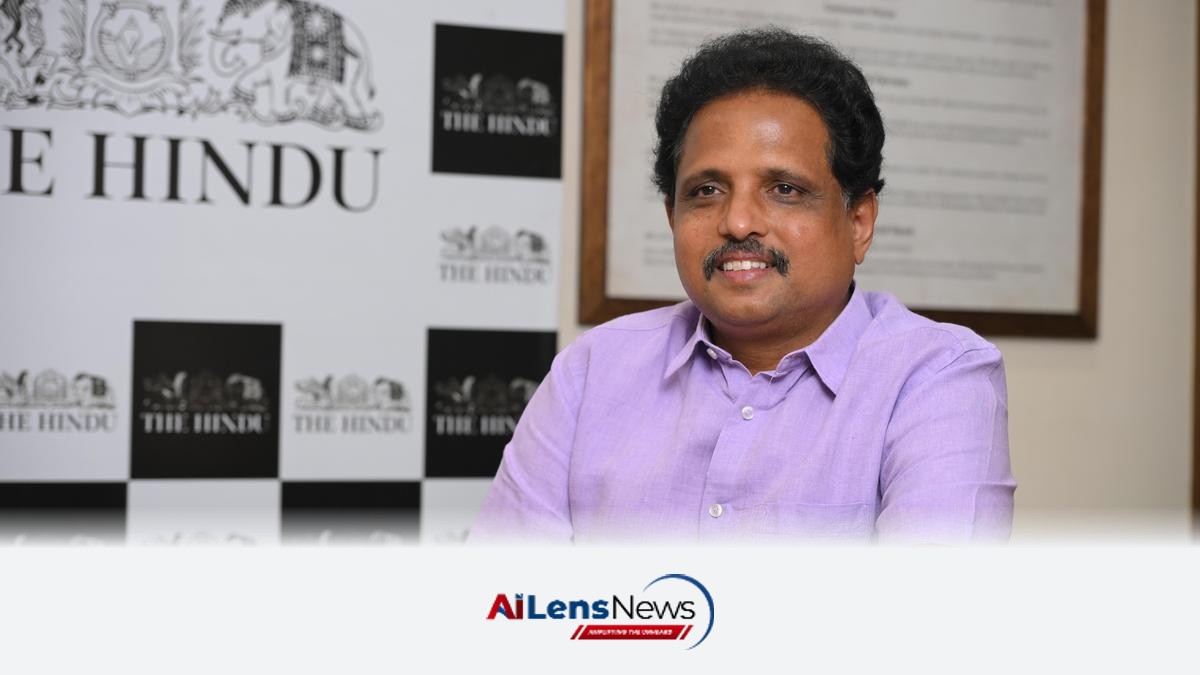



Sahitya Akademi winner Su. Venkatesan discusses how literature, using historical narratives, creates a deeper impact than traditional historical accounts.
Chennai, India Aug 29, 2026 ALN: Literature has long been recognized as a powerful medium for exploring and interpreting the complexities of human experience, and it often transcends the mere recounting of historical events. Su. Venkatesan, a Sahitya Akademi award-winning writer and current Member of Parliament, articulated this sentiment during a recent discussion at The Hindu office. He emphasized that literature, when intertwined with history, can create a profound impact that is often more resonant than traditional historical accounts.
Venkatesan’s perspective on the relationship between literature and history is particularly relevant in today’s context, where narratives are often shaped by the political and cultural climate. By using history as a backdrop for storytelling, Venkatesan believes that contemporary issues can be illuminated in ways that resonate with current audiences. He posed a thought-provoking question during his talk: “What difference does it make whether we speak about a 2,000-year-old story or a story of today?” This inquiry invites readers to consider the cyclical nature of history and its relevance to modern society.
His debut novel, Kaval Kottam, which earned him the prestigious Sahitya Akademi award, serves as an example of his approach. The novel is set against the historical backdrop of Madurai, a city rich in cultural heritage. Venkatesan explained that his choice to write it as a novel rather than a straightforward historical account was deliberate. He argued that literature possesses a unique power to evoke emotions and convey truths that mere facts cannot encapsulate. He cited the example of Saadat Hasan Manto, a renowned writer known for his poignant short stories about the India-Pakistan Partition, to illustrate his point. Despite the existence of numerous historical texts on the Partition, Manto's narratives evoke a depth of pain and understanding that statistics and historical analyses often fail to achieve.
In discussing his second novel, Veerayuga Nayagan Velpari, Venkatesan revealed his intention to encapsulate a broad spectrum of knowledge about the Sangam era. He described the work as a multifaceted painting that incorporates various elements, from astronomy to maritime wisdom, thereby enriching the historical narrative with a diverse array of cultural insights. This holistic approach not only honors the past but also makes it accessible and relevant to contemporary readers.
When probed about the extent to which historical writers should adhere to factual events, Venkatesan maintained that while established historical truths should not be completely altered, there is room for artistic interpretation. He stated, “If you completely alter history, the work will not endure.” This highlights the delicate balance that writers must maintain between factual integrity and creative expression. Venkatesan likened the portrayal of historical events to staging a play, where the scale and emphasis can be adjusted to evoke different responses from the audience. This flexibility allows literature to explore the nuances of historical events while remaining anchored in reality.
The discussion also touched on the roles of writers and public representatives in driving social change. Venkatesan articulated a clear distinction between the two, stating, “The impact literature creates and its lifespan are monumental. The relief provided as an elected representative addresses immediate needs. The purpose of literature is entirely different; the two cannot be compared.” This perspective underscores the enduring influence of literature, which can shape societal values and provoke thought long after immediate political issues have been resolved.
Venkatesan emphasized the importance of continually reclaiming and recreating historical narratives, arguing that these stories must be internalized and contextualized within the framework of contemporary society. He expressed a desire for stories like that of Kapilar, a celebrated poet from the Sangam era, to evolve beyond their historical confines and resonate with modern audiences. This approach to storytelling is not merely an artistic endeavor; it is a form of cultural politics that challenges existing narratives and fosters a deeper understanding of heritage.
In conclusion, Su. Venkatesan's insights into the interplay between literature and history reveal the profound impact that storytelling can have on society. By harnessing the power of literature, writers can illuminate the complexities of human experience, challenge prevailing narratives, and inspire social change. As Venkatesan aptly noted, the act of recreating our heritage is not just an artistic pursuit but a vital political engagement that allows us to reflect on our past while shaping our future. The conversation around literature, history, and their implications continues to be relevant, especially in a world where narratives are often contested and redefined.
To learn more about the latest developments in Literature & Books, stay updated with our exclusive reports and analyses on AILensNews.

Poomani, celebrated for his portrayal of the karisal region, passed away at 79. …

Discover the iconic Chennai location where Rajinikanth shot his debut film, 'Apo…

Chennai's iconic Shanti Theatre, a landmark for generations, has been replaced b…

Explore the memories of Prarthana Theatre, a beloved drive-in cinema in Chennai …

Explore the transformation of Chennai's fishing culture from river catches to th…