

More
Checking your session
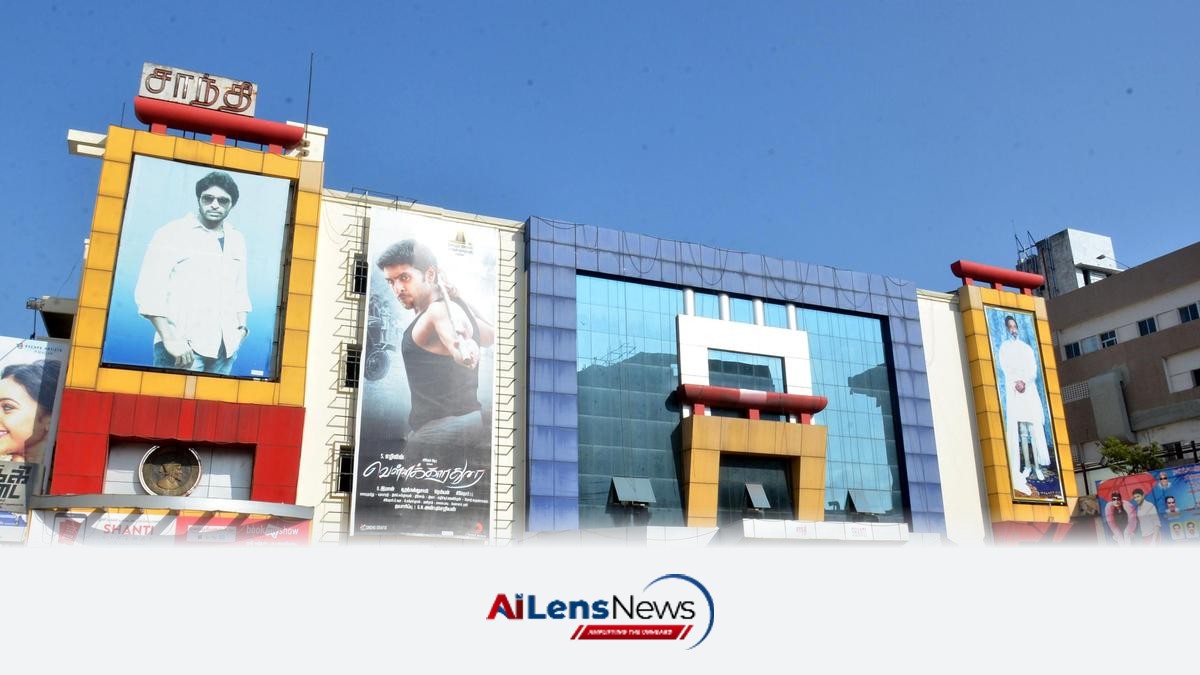



Chennai's iconic Shanti Theatre, a landmark for generations, has been replaced by a corporate hub, marking the end of its cinematic legacy.
Chennai, India Aug 27, 2026 ALN: Today, when we cross Anna Salai in Chennai, we think of traffic, deadlines, and the rush to work. But for many in the city, the same road carries a different set of memories. There was a time when a theatre called Shanti stood here, attracting generations of moviegoers. The theatre became such a landmark that its name spilled beyond its walls and screens, and a bus stop nearby came to be known as Shanti. This transformation reflects a broader trend in urban development where cultural landmarks are often replaced by commercial enterprises.
The Shanti Theatre was built by G. Umapathy and D. Shanmuga Raja, the erstwhile Raja of Sivaganga, and was opened in January 1961 by then Chief Minister K. Kamaraj. The inaugural show was Srinivasa Kalyanam, while the first film to be screened at the theatre was Thooya Ullam, starring Akkineni Nageswara Rao and Savitri. This opening marked the beginning of a cultural institution in Chennai, serving as a venue for not just films but also community gatherings and celebrations.
According to an article published in The Hindu on January 13, 1961, the theatre, which cost ₹20 lakh, had a seating capacity of 1,200. C. Subramaniam, the then Finance Minister, who presided over its inauguration in 1961, emphasized the importance of not just building modern theatres but also producing films that would entertain and educate the audience without corrupting their minds. This sentiment reflects the cultural ethos of the time, where cinema was seen as a means of social influence and education.
The theatre was later bought by legendary actor Sivaji Ganesan, a prominent figure in cinema. “The promoters needed a fresh infusion of funds. They then approached Sivaji Ganesan, who invested in the theatre and eventually bought the shares,” said actor and writer Mohan Raman. Ganesan's involvement with the theatre added to its legacy, as he was not only a beloved actor but also a cultural icon whose films resonated deeply with audiences.
“When it opened, it was the largest single-screen theatre. It had the biggest balcony at the time, with nearly 400 seats. It was fully air-conditioned, and the car parking facility was very good. I would say it had a lavish car park. Everything about this theatre was good,” said film industry analyst Sreedhar Pillai. This description highlights the significance of Shanti Theatre during its heyday, as it was not just a place to watch films but a social hub that catered to the needs of its patrons.
More than 80 films starring Sivaji Ganesan found their way to the Shanti screen, and many hit a 100-day run, a testament to the theatre's popularity. The theatre has also screened films such as Gone with the Wind, Ivanhoe, and Drums of Destiny, showcasing a diverse selection that appealed to a wide audience. In 2005, the theatre was renovated and began its new chapter with the film Chandramukhi, starring Rajinikanth and Prabhu, the youngest son of actor Sivaji Ganesan. The film ran for 888 days in the theatre, a record those days, further solidifying its status as a cultural landmark.
Ramkumar Ganesan, the eldest son of actor Sivaji Ganesan, recollected fond memories of the theatre, saying: “I remember attending the premiere of Karnan (starring his father). And whenever a Sivaji Ganesan film was released, I used to be among the first to buy tickets, often choosing seats in A row seat numbers 1-10.” “I also attended many celebrations there. There is one photograph from the time a South East Asian delegation visited the theatre. All the popular actors of the time, including M.G. Ramachandran, attended the event,” he reminisced. These personal anecdotes illustrate the emotional connection many have with the theatre, highlighting its role in shaping community memories and cultural identity.
The curtains eventually came down on Shanti Theatre, making way for a real estate development that transformed the spot that once echoed with whistles, applause, and film songs into a sprawling office complex. This shift from a cultural venue to corporate space is emblematic of a larger trend in urban centers where commercial interests often overshadow cultural heritage. The transformation raises questions about the preservation of historical sites and the balance between development and cultural conservation.
As cities evolve, the loss of iconic theatres like Shanti signals a shift in how urban spaces are utilized. The new office complex may provide economic benefits and job opportunities, but it also represents a loss of cultural memory for many residents. The nostalgia associated with Shanti Theatre is not just about the films that were screened but also about the shared experiences that took place within its walls.
Looking forward, the challenge for urban planners and policymakers will be to find ways to integrate new developments while preserving the cultural heritage that defines a city's identity. The story of Shanti Theatre serves as a poignant reminder of the importance of cultural spaces in fostering community connections and the need to advocate for their preservation amidst the relentless march of urbanization.
To learn more about the latest developments in Film & Cinema, stay updated with our exclusive reports and analyses on AILensNews.

Explore the memories of Prarthana Theatre, a beloved drive-in cinema in Chennai …

Chennai's beaches have long served as a backdrop for love and life in cinema, re…

Udhayam Theatre, a beloved Chennai institution, captivated audiences for decades…

S. Janaki's voice shaped the portrayal of rural heroines, capturing their emotio…

Explore the transformation of Chennai's fishing culture from river catches to th…