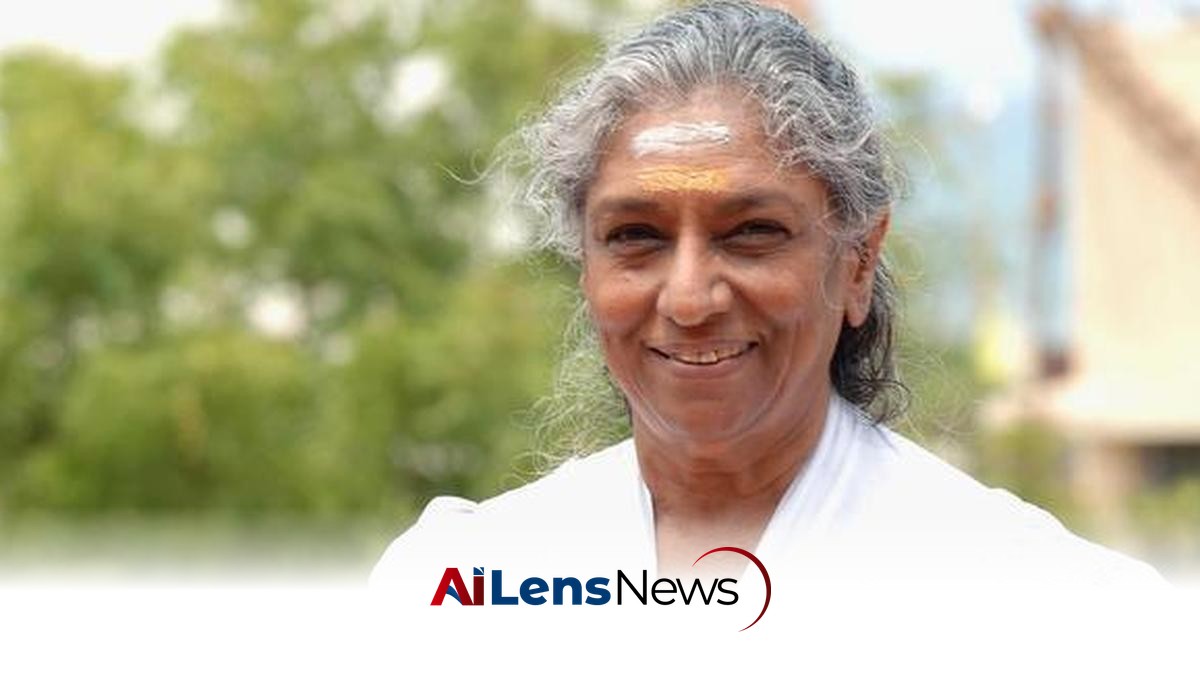


S. Janaki's voice shaped the portrayal of rural heroines, capturing their emotions and desires, while complementing Bharathiraja's cinematic vision.
Chennai, India Jul 12, 2026 ALN: If Bharathiraja taught people how to look at villages, then it was certainly S. Janaki who taught them to listen to the women in these villages. She was the perfect acoustic accompaniment for Bharathiraja’s vast rural landscapes. There’s no scientific way of telling how this combination dressed up folklore as a living, breathing, urgent way of life through celluloid, but it would be safe to say they pulled off something remarkable.
S. Janaki, often referred to as Janaki amma, was not merely a playback singer; she was a voice that resonated with the very essence of rural India, particularly the experiences and emotions of women. Born in 1938 in the small town of Pallavi in the Thanjavur district of , her journey into the world of music began at a young age. Her early exposure to the rich musical traditions of her region laid the foundation for her illustrious career. Over the decades, she became synonymous with the portrayal of strong female characters in cinema, especially during the 1970s and 1980s, a time when the film industry was exploring more nuanced representations of women.
Janaki amma’s voice gave contour to the heroines, their fears, their desires, their hopes, and their dreams, even as Bharathiraja wrote them lion’s space on the screen. Take the classic, much-feted 16 Vayathinile and the wonderful Sendoora Poove. A young Sridevi is footloose and fancy-free; she starts with a lilt, and as the melody progresses, a mild, tender eroticism creeps in as the young girl asks the breeze to carry her message, not coyly or hesitantly, but with a confidence that Janaki’s voice lends to Mayilu’s character. In this way, Janaki amma’s singing created a safe, legitimate space for female desire, even if they would be punished by the real world later.
Her collaboration with Bharathiraja was pivotal in shaping the narrative of rural women in cinema. The director’s films often depicted the struggles and aspirations of women in village settings, and Janaki’s voice acted as the emotional backbone of these stories. Her ability to convey complex emotions through song allowed the audience to connect with the characters on a deeper level. The songs became a medium through which the inner lives of these women were expressed, showcasing their strength, vulnerability, and resilience.
When she sings for the women from the rural areas, Janaki ensured her voice had a timbre and grain that sat well on Illayaraja’s earthy music and Bharathiraja’s visuals. The fullness of it gave the women the freedom that some of them dreamt of, while a few actually landed. With her incredible talent not just for singing but also performance, just like her singing partner the late S.P. Balasubrahmanyam, she would pack in a hesitation or a sob, a laugh, a longing, or joy in a way that felt completely in sync with the rural backdrop. Her versatility allowed her to navigate a wide range of emotions, from the playful innocence of youth to the poignant reflections of a woman grappling with her circumstances.
In another classic Poovarasampoo Poothachu, a song that could have only come from a village, in the film Kizhakke Pogum Rail, Janaki amma’s voice oscillates between flirtation, shyness, want, hope, and a fervent appeal to the deity to make it happen, capturing the weight of what is to come, just as a woman-child might feel in those circumstances. This ability to encapsulate the essence of a character's emotional journey made her an indispensable part of the storytelling process. In Alaigal Oivathillai, set in a beachside village, Aayiram Thamarai Mottukale, she manages to bring in that tender, tentative physical intimacy in the duet along with SPB as young Radha and Karthik discover each other. The chemistry between the characters was amplified by Janaki's emotive singing, which made the audience feel the burgeoning romance in a visceral way.
The plausibility she brings to the song is probably what endeared Janaki to her heroines, her fans, her stars, composers, and her directors. It was not for nothing that she was called Isai Arasi (Queen of Music); she could lend her voice to truthfully convey what any woman would feel intensely. The richness of the rural landscape we have seen in cinema owes as much to Janaki Amma as it does to Bharathiraja, both now dearly departed.
Janaki's impact on cinema extends beyond her collaborations with Bharathiraja. Throughout her career, she worked with numerous composers, including the legendary Ilaiyaraaja, who was pivotal in her rise to fame. Their partnership produced some of the most memorable songs in cinema, blending traditional folk elements with contemporary sounds. Janaki's ability to adapt her singing style to suit various musical genres and compositions made her a sought-after playback singer. Her contributions to film music not only enriched the soundtracks but also elevated the narratives of the films themselves.
In addition to her work in film, Janaki has also been recognized for her contributions to music outside of cinema. She has performed in various genres, including classical music, devotional songs, and folk music. Her versatility and mastery over different musical styles have earned her accolades and respect in the broader music community. Janaki's influence can be seen in the works of contemporary playback singers who cite her as an inspiration and a benchmark for emotional expression in singing.
The legacy of S. Janaki is not merely confined to her extensive discography or her numerous awards; it is also reflected in the cultural shifts that her music helped facilitate. By giving voice to the struggles and aspirations of rural women, she played a significant role in changing the narrative around female representation in Indian cinema. Her songs often highlighted themes of love, longing, and the complexities of womanhood, resonating with audiences across generations.
As the film industry continues to evolve, the impact of Janaki's contributions remains relevant. The characters she voiced and the stories she helped tell continue to inspire new filmmakers and artists. Her ability to convey the nuances of female experience through music has paved the way for a more inclusive understanding of women's roles in cinema. In a world where women's voices are still often marginalized, Janaki's legacy serves as a reminder of the power of music to transcend boundaries and give life to the stories of those who have been historically overlooked.
In conclusion, S. Janaki’s artistry has left an indelible mark on the landscape of Indian music and cinema. Her unique ability to embody the spirit of rural women through her singing has not only enriched cinema but has also contributed to the broader cultural narrative of India. As we reflect on her contributions, it is essential to acknowledge the profound impact she has had on the representation of women in the arts, and the ways in which her music continues to resonate with audiences today.
To learn more about the latest developments in Film & Cinema, stay updated with our exclusive reports and analyses on AiLensNews.

