

More
Checking your session
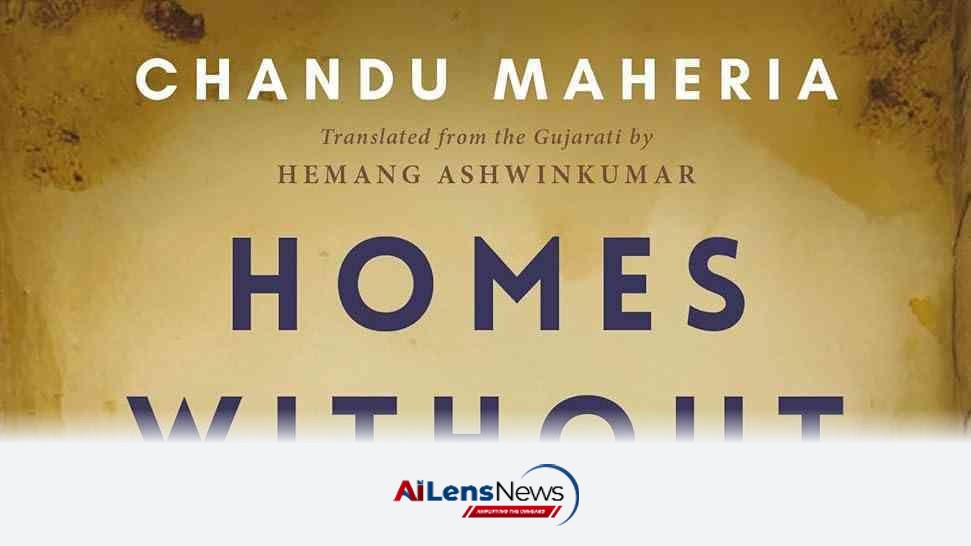



Chandu Maheria's memoir, translated by Hemang Ashwinkumar, reflects on his life as a Dalit, addressing themes of poverty, caste discrimination, and resilience.
New Delhi, India Aug 31, 2026 ALN: The reading of Chandu Maheria’s moving memoir, Homes Without Windows, translated by Hemang Ashwinkumar, must begin with the cover. It shows a photograph taken in a studio of two brothers, wearing uniforms but no shoes. The photographer had slipped ties around their necks, and Maheria, who still has the photo on his desk, marvels at their “dapper” selves. But the “unshod feet” tell the story of a life of extreme poverty, deprivation, disadvantage, and exclusion that Maheria and his siblings struggled to leave behind.
It’s not an easy book to read, but Maheria fills it with wry humour that was perhaps, more than anything else, a coping mechanism. When friends asked why they hadn’t worn chappals, he quipped that the studio didn’t allow footwear. The irony is not lost on Maheria or his readers that he hails from the chamar community whose “hereditary occupation” is tanning and cobbling. There’s a poignant chapter, “Your Chappals, Our Skulls,” in which he recalls an incident when he was five or six years old, the year being 1964 or 1965. The occasion is his brother and sister’s wedding ceremonies (they were both children at the time), and he got new clothes and chappals. He strutted around all day in his footwear and refused to take them off even at night.
He had never owned a pair, and like others, never wore any kind of footwear at the chawl where they lived, even while using public toilets. Their chawl didn’t have one attached to it, and that compelled all of them to use the “hellish toilets” of Hiralal’s chawl nearby. It’s in the toilet queues that Maheria learnt his first lessons in social inequality, when they had to give up their turn if a Hiralal dweller arrived, he writes in “The Mayor’s Bungalow.” The people living at Hiralal’s chawl were equally beleaguered and had migrated to “escape poverty, untouchability, oppression, and exploitation,” and yet “they saw hierarchy and hatred as natural ways of being, such that even the slightest breach in the set order resulted in exchanges of expletives and blows.” Though not untouchability in its conventional sense, points out Maheria, these practices were rooted in direct discrimination, in an ordained difference between the high and the low, that had seeped right up to the bottom of the caste order.
Growing up in grinding poverty meant that Maheria often went without food, but “if the question of filling the bottomless pits of hunger was not vexed enough, the daily dilemma of emptying our bowels had made our lives, both personal and social, embarrassing and miserable.” The stench or “gandh” – Dalits use the same word for fragrance – is seared in his memory.
Years later, when they have their own shiny toilet, it seems to be a better place than the rooms without windows in the chawl. It’s not a surprise that Maheria has never been able to romanticise the monsoons. The endless spell of rains meant only leaky roofs, dank walls, and endless misery for people forced to live on the margins with little or no money.
Caste segregation is a brutal reality in India, and Maheria, a prominent Dalit intellectual, activist, writer, editor, and poet, realised early, in the words of his translator, that the “emancipation of his community depended as much on the enlightenment of minds as on the struggle for rights.”
In 11 chapters, Maheria sketches his journey, and that of his family and friends. It’s as much his story as it is a story of Gujarat (and India) and its many fractures. He touches on migration, the anti-reservation riots (1981, 1985), communal violence (1992), Dalits’ antipathy towards Gandhi, and the role of Ambedkar in reshaping the future of communities which were dealt harsh blows by society.
Maheria’s parents, Ba (father) and Ma, also play a huge role in shaping their lives. His father had been forced to migrate from a village in Kheda district to Ahmedabad. His stoic narrative? “We left the village because there was no place for us there, just none. No work, no home, no dignity, nothing. So, consider this place [Rajpur] your village. Wherever you get shelter and a piece of bread is your homeland.”
Ba, at the receiving end of many a casteist slur, ensured his children got an education and government jobs. Ma was the chief enabler, running pillar to post to feed hungry mouths and seeing to it that all festivals, including Diwali, were celebrated in some way. Her way to explain the lack of crackers in her children’s hands? “Our kids don’t crave that kind of indulgence, oh no.” He credits his mother for ensuring that he and his siblings could grow up to be “model civilians free from addiction, ignorance, and violence while living in an area where gambling, filthy abuses, and fisticuffs were the order of the day.”
Nothing escapes Maheria’s sweeping eye, as Ashwinkumar observes in the introduction: His writings do “not spare the internalisation of the logic of caste by Dalits themselves.” Simultaneously, he “exhibits a keen awareness of the prevalence of the worst forms of patriarchy within Dalit society.”
In the Preface of his autobiography, Bengali Dalit writer Manoranjan Byapari exhorts his readers to look around to spot the invisible people they are conditioned not to see. The little boy at the tea stall, the young security guard, the sweeper on the railway platform, the dom at the funeral pyres – Byapari had done it all. “Life appears to have spread skittish mustard seeds under my feet,” he writes in Interrogating My Chandal Life, translated by Sipra Majumdar from the Bengali Itibritte Chandal Jibon. “I have never been able to stand still in any role for more than a few days, always skidding onto another spot.” He tells the story of that “skidding, slipping, fallen-back life,” and how he lived against all odds and learnt to write about it. Like Byapari, if Maheria hadn’t written about his experience, and Ashwinkumar had not translated it, a wide community of readers would be left in the dark about prevailing realities and the complexities of living in caste-ridden India.
Homes without Windows, Chandu Maheria, translated from the Gujarati by Hemang Ashwinkumar, Juggernaut.
To learn more about the latest developments in Literature & Books, stay updated with our exclusive reports and analyses on AILensNews.

At the Edinburgh International Book Festival, Douglas Stuart discusses his new n…

On Firaq Gorakhpuri’s birth anniversary, we explore his profound poetry that cap…

Sahitya Akademi winner Su. Venkatesan discusses how literature, using historical…

Snigdha Poonam's 'Scamlands' delves into the intricate web of scams that prey on…

Caoimhín Mac Giolla Íosa's new book aims to highlight the rich tapestry of Irish…