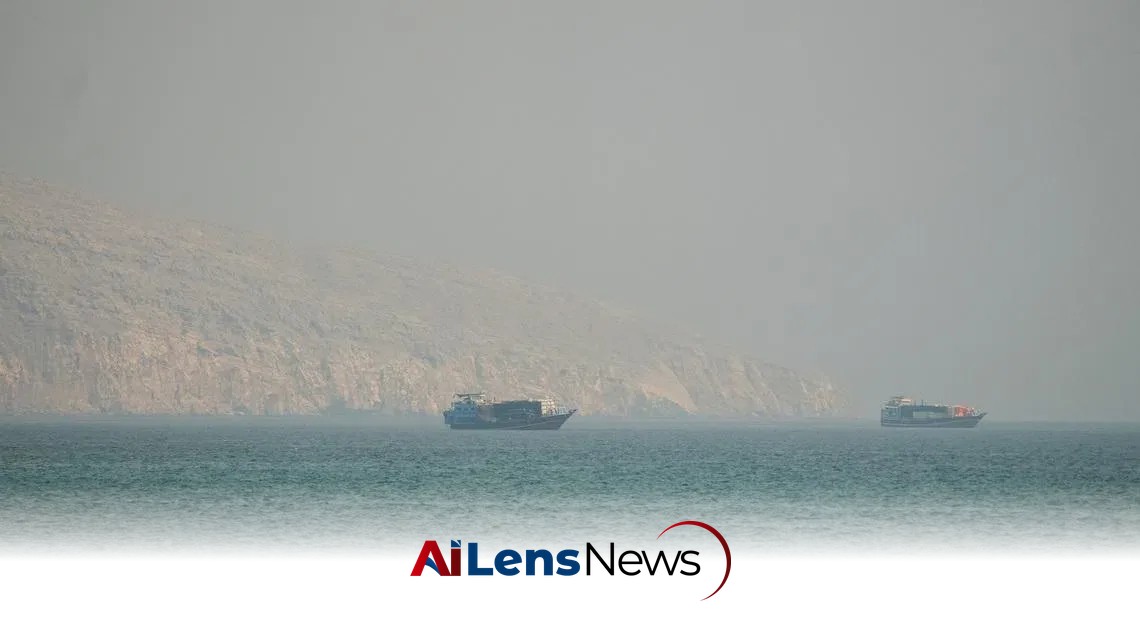


Iran has announced the closure of the Strait of Hormuz after an unauthorized vessel was struck, escalating tensions in the region and impacting global energy prices.
Singapore, Singapore Jul 12, 2026 ALN: DUBAI/WASHINGTON - On July 11, Iran declared the closure of the Strait of Hormuz following an incident involving an unauthorized vessel that was struck for ignoring warnings. This declaration has raised significant concerns regarding maritime security and the potential for escalating military confrontation in the region. The Iranian government has threatened severe responses to any retaliatory actions or the establishment of new enemy bases in close proximity to its borders.
The Islamic Revolutionary Guard Corps (IRGC) announced that a vessel, which had jeopardized maritime security by switching off its tracking systems, was struck and subsequently halted. However, the IRGC did not disclose specific details about the identity of the ship involved in the incident, leaving open questions about its ownership and purpose in the region.
According to statements from the IRGC, several ships were reported to have attempted to navigate through the strategically critical waterway on unauthorized routes, ignoring repeated warnings to correct their course. The closure of the Strait of Hormuz is described as indefinite, with the IRGC asserting that it will remain in effect “until further notice” and until “the end of US interference in this region.” This reflects Iran's broader strategy of exerting control over vital maritime routes in response to perceived threats from the United States and its allies.
The IRGC's warning that acts of aggression against Iran “will be met with a severe response” underscores the heightened tensions in the region. The mention of targeting new enemy bases indicates a possible shift in Iran's military posture, suggesting a readiness to expand its operations beyond its immediate borders should it perceive a threat to its sovereignty.
In response to these developments, the United States has demanded that Iran provide assurances for safe and toll-free passage through the Strait of Hormuz. Senior U.S. officials have indicated that Iran must publicly commit to halting attacks on vessels transiting through the strait, which is a crucial artery for international oil shipments. The strait is known to be one of the most strategically significant waterways in the world, with approximately one-fifth of global oil supply passing through its narrow confines.
U.S. President Donald Trump has stated that despite escalating hostilities, the U.S. and Iran had agreed to continue discussions aimed at de-escalating the situation. However, he also declared an end to what had been a temporary ceasefire, indicating a willingness to take more aggressive measures if necessary. A senior Iranian source revealed that negotiations have included not only Iran and the U.S. but also Qatar and Pakistan, reflecting a broader regional effort to find a resolution to the ongoing conflict.
In a bid to facilitate dialogue, Iran's Foreign Minister Abbas Araqhchi met with officials from Oman to discuss mechanisms for ensuring safe passage through the Strait of Hormuz. Oman has historically played a mediating role in regional conflicts and has sought to stabilize the situation amid increasing tensions that have escalated since U.S. and Israeli airstrikes on Iranian targets.
The implications of Iran's blockade are significant, particularly in the context of global energy markets. Prior to the recent conflict, the Strait of Hormuz was a vital conduit for oil shipments, and any disruption has the potential to cause energy prices to surge, contributing to global inflationary pressures. The economic ramifications of such disruptions can be felt worldwide, affecting energy-dependent economies and influencing geopolitical dynamics.
Reports suggest that Oman has proposed a draft plan that would allow for free navigation through its southern corridor while requiring vessels in the northern corridor to obtain prior approval from Iran, with no tolls imposed. This proposal reflects ongoing efforts to create a framework for de-escalation and safe maritime operations in the region.
The situation took a dramatic turn on July 10, when three commercial tankers from Qatar and Saudi Arabia were attacked, prompting a U.S. military response against Iranian sites. Araqhchi accused the U.S. of violating the ceasefire agreement that had been in place, while the U.S. government responded by revoking the license for Iranian crude oil sales, further complicating the economic landscape for Iran.
“There can only be mutual compliance,” Araqhchi stated, emphasizing the need for both sides to adhere to agreed-upon terms. Analysts suggest that Iran may be leveraging such attacks as a means to gain leverage in ongoing negotiations, demonstrating its willingness to escalate military actions if diplomatic solutions are not forthcoming.
The recent flare-up of hostilities raises significant doubts regarding the future of any interim agreement aimed at resolving the conflict. This uncertainty is particularly concerning given the political sensitivities surrounding oil prices, which have been rising as a result of the increased tensions. With the November congressional elections approaching in the United States, rising energy costs could become a politically charged issue for President Trump, complicating his administration's efforts to manage the situation.
In a further escalation of rhetoric, Trump indicated that he had ordered the U.S. military to prepare for potential strikes against Iran should they attempt to retaliate. This statement reflects the administration's commitment to a robust military posture in the face of Iranian provocations, even as diplomatic channels remain open.
Amidst the rising tensions, Iran's new supreme leader, Ayatollah Mojtaba Khamenei, issued a stark warning of vengeance for the killing of his predecessor, Ayatollah Ali Khamenei, during recent funeral ceremonies. This statement underscores the deeply entrenched animosities and the potential for retaliatory actions that could further destabilize the region.
In a related development, Trump mentioned that he had received intelligence suggesting that Iran had formulated a plan to assassinate him, adding another layer of complexity to an already fraught diplomatic landscape. The potential for targeted violence heightens the stakes for both nations, as any such action could provoke a significant military response from the United States.
As tensions continue to escalate, the international community watches closely, with many nations expressing concern over the potential for further escalation in this strategically vital region. The Strait of Hormuz remains a flashpoint in U.S.-Iran relations, and the unfolding events will likely have profound implications for regional stability, global energy markets, and international diplomatic efforts aimed at de-escalation.
To learn more about the latest developments in Wars & Conflicts, stay updated with our exclusive reports and analyses on AiLensNews.

