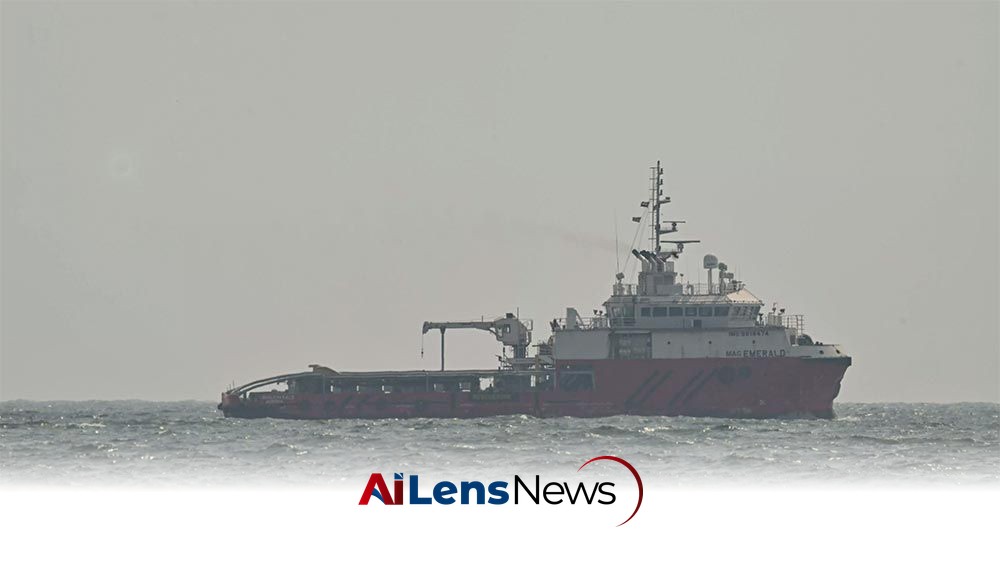


Iran's Islamic Revolutionary Guard Corps has announced the closure of the Strait of Hormuz, citing the end of U.S. interventions as a condition for reopening.
Kuwait City, Kuwait Jul 12, 2026 ALN: Iran’s Islamic Revolutionary Guard Corps (IRGC) navy has declared the closure of the Strait of Hormuz "until further notice." This significant announcement raises concerns over maritime security in a vital global shipping route that is critical for energy supplies worldwide. The Strait of Hormuz is a narrow passage that connects the Persian Gulf with the Gulf of Oman and is one of the most strategically important waterways in the world.
The Strait of Hormuz is not just a geographical feature; it serves as a crucial conduit for international trade, particularly for oil. Estimates suggest that approximately 20% of the world's oil supply passes through this narrow waterway, making it indispensable for energy security globally. The closure of the Strait could have immediate and far-reaching implications for global oil prices and energy security. Oil markets are sensitive to geopolitical tensions, and any disruption in the flow of oil can lead to significant price fluctuations, affecting economies worldwide.
In a statement reported by Iran’s TASNIM news agency, the IRGC emphasized, "The Strait of Hormuz is closed until further notice and until the end of America’s interventions in the region, and no vessel will be permitted to pass through." This declaration highlights ongoing tensions between Iran and the United States, particularly regarding military presence and influence in the region. The IRGC's assertion reflects Iran's longstanding grievances against U.S. policies in the Middle East, including sanctions, military operations, and support for rival nations. The IRGC has historically positioned itself as a defender of Iran's national interests, often taking aggressive stances against perceived threats, especially from the U.S. and its allies.
The closure of the Strait of Hormuz is not an isolated incident but part of a broader pattern of escalating tensions between Iran and the United States, particularly following the U.S. withdrawal from the Joint Comprehensive Plan of Action (JCPOA) in 2018 and the reimposition of sanctions on Iran. This withdrawal was met with significant backlash from Iran, which has since increased its military activities in the region, including missile tests and naval exercises. The IRGC, as a key military force in Iran, plays a central role in these operations and is often at the forefront of confrontations with U.S. forces in the Gulf.
The IRGC also reported that its forces had intercepted a ship that allegedly ignored multiple warnings, further demonstrating their commitment to enforcing this closure. This action indicates a willingness on the part of Iran to assert its influence over the Strait, potentially leading to confrontations with commercial vessels and navies operating in the region. Such incidents have occurred in the past, where Iran has seized vessels or engaged in aggressive maneuvers against ships it deems to be violating its territorial waters. The interception of vessels not only raises the stakes for commercial shipping but also increases the potential for military confrontations, as naval forces from other nations may feel compelled to respond or protect their interests.
The international community will be closely monitoring Iran's actions and the potential responses from other nations, particularly the United States, which has a vested interest in maintaining open shipping lanes. The U.S. has historically maintained a naval presence in the Gulf to ensure the security of maritime navigation and to deter Iranian aggression. In response to the closure, the U.S. may increase its military presence or conduct freedom of navigation operations to challenge Iran's claims and ensure the safety of commercial shipping. Such military maneuvers could heighten tensions further and lead to a cycle of retaliation.
In addition to military responses, diplomatic efforts may also be initiated to de-escalate tensions. Countries that rely heavily on oil imports from the Gulf region, such as Japan, South Korea, and members of the European Union, may seek to engage with Iran to find a resolution that allows for the reopening of the Strait. The closure not only affects oil prices but also has implications for global trade, as many goods are transported via maritime routes that intersect with the Strait of Hormuz. The interdependence of global economies means that disruptions in this region can have ripple effects, influencing everything from fuel prices to the cost of consumer goods.
Furthermore, the implications of the IRGC's decision extend beyond immediate economic concerns. The closure can exacerbate regional instability, as it may embolden other actors in the region to take aggressive actions. For instance, countries like Saudi Arabia and the United Arab Emirates, which have historically been at odds with Iran, may feel compelled to bolster their military readiness or engage in preemptive measures to protect their shipping interests. This could lead to an arms race or increased military confrontations in an already volatile region. The potential for miscalculation or accidental escalation is a significant concern, given the high stakes involved.
In conclusion, the IRGC's decision to close the Strait of Hormuz underscores the heightened tensions in the region and the potential for further escalation. Stakeholders in global trade and security will need to navigate these developments carefully. The situation remains fluid, and the international community's response will be crucial in shaping the future dynamics of the region. As nations assess their strategies in light of this closure, the potential for dialogue and conflict will play a significant role in determining the stability of the Strait of Hormuz and the broader Middle East. The interplay of military posturing, economic interests, and diplomatic negotiations will be critical in the coming days and weeks as the world watches closely.
To learn more about the latest developments in Wars & Conflicts, stay updated with our exclusive reports and analyses on AiLensNews.

