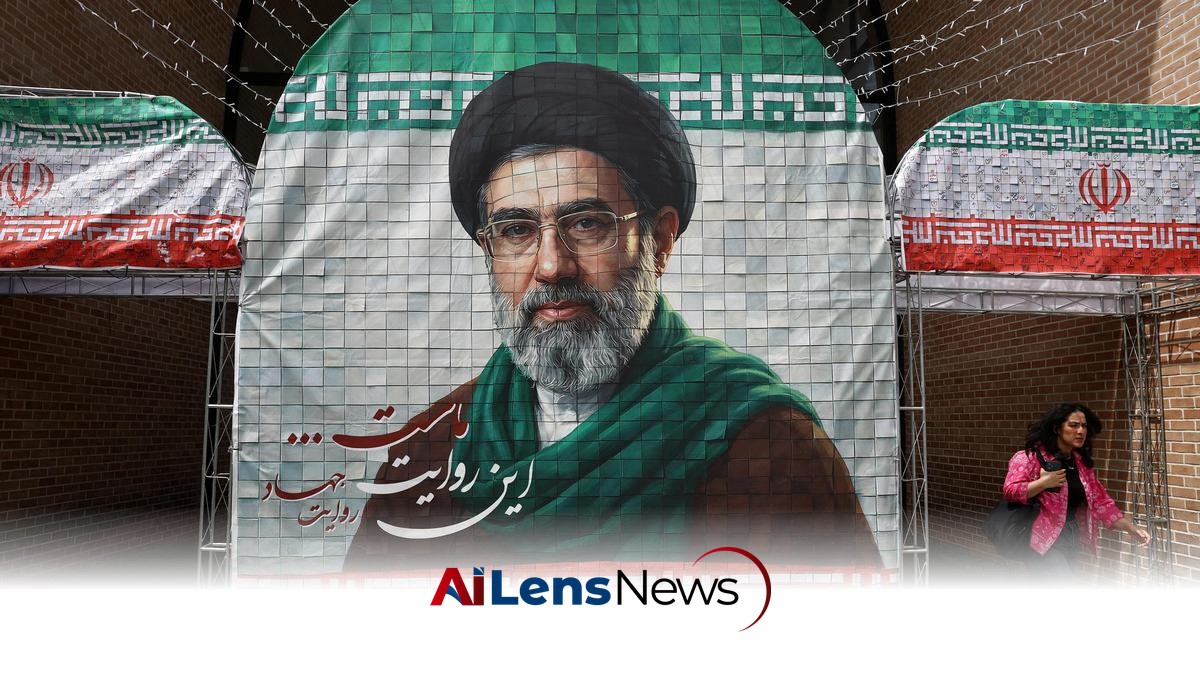


Iran's Supreme Leader Mojtaba Khamenei has vowed to avenge his father's killing, intensifying tensions with the U.S. after President Trump's threats.
Washington DC, United States Jul 12, 2026 ALN: The recent assassination of Ali Khamenei, the former Supreme Leader of Iran, has sent shockwaves through the region and beyond. His son, Mojtaba Khamenei, has taken on the mantle of leadership and has publicly vowed to seek vengeance against those responsible for his father’s death. The killing was reportedly orchestrated through coordinated strikes by U.S. and Israeli forces, a move that has escalated tensions between Iran and these two nations, both of which have long been at odds with the Islamic Republic.
Ali Khamenei had been a pivotal figure in Iranian politics for decades, having served as Supreme Leader since 1989. His leadership was marked by a staunch opposition to Western influence in the Middle East and a commitment to Iran's nuclear program. His assassination not only creates a power vacuum but also raises questions about the future direction of Iranian policy and its responses to external threats. The implications of this leadership change are profound, as the new Supreme Leader, Mojtaba Khamenei, is expected to continue his father's hardline approach.
Mojtaba Khamenei, who has now assumed the role of Supreme Leader, is seen as a hardliner, much like his father. In his first public statement following his father’s funeral, he declared, “Vengeance is the will of our nation and must inevitably be carried out.” This declaration signals a potential shift toward a more aggressive stance in Iran’s foreign policy, particularly against the U.S. and Israel, which could lead to further destabilization in an already volatile region. The younger Khamenei's rhetoric is indicative of a desire to rally nationalistic sentiments among the Iranian populace, potentially using the assassination as a rallying cry for unity against perceived external threats.
The implications of these developments are significant. The rhetoric from Mojtaba Khamenei indicates a commitment to a path of retaliation, which could manifest in various forms, including cyberattacks, direct military confrontations, or support for proxy groups in the region. Moreover, he mentioned that Iran has compiled a list of individuals to be targeted, suggesting that the Iranian leadership is already considering specific retaliatory actions. This list could include not only military targets but also individuals involved in intelligence and security operations against Iran, further heightening the risk of a broader conflict.
In response to these threats, former President Donald Trump issued a warning on his Truth Social platform, stating that any attempt to assassinate him would result in severe consequences for Iran. He claimed that the U.S. military was prepared to “completely decimate” Iran, with a significant arsenal of missiles ready to be deployed. This aggressive posture from Trump underscores the high-stakes nature of the current situation and the potential for escalation into open conflict. Trump's statements reflect a broader trend in U.S. foreign policy, characterized by a willingness to use military force as a means of deterring perceived threats. The rhetoric from both sides raises the specter of a military confrontation that could have catastrophic consequences for the region and beyond.
The backdrop of these threats is a complex geopolitical landscape. The U.S. and Iran have been engaged in a tit-for-tat cycle of provocations for years, particularly since the U.S. withdrew from the Joint Comprehensive Plan of Action (JCPOA) in 2018. The assassination of Ali Khamenei could be seen as a culmination of these tensions, leading to heightened fears of a military confrontation between the two nations. The JCPOA was a landmark agreement aimed at curbing Iran's nuclear ambitions in exchange for sanctions relief, but its collapse has led to increased hostility and a deterioration of relations. The assassination may further complicate any potential return to negotiations over Iran's nuclear program.
As both sides ramp up their rhetoric and military posturing, diplomatic efforts are underway to de-escalate the situation. Reports indicate that mediators, including a delegation from Qatar, are working to facilitate dialogue between Iran and the U.S. Qatar has positioned itself as a neutral party in the region, often acting as a mediator in conflicts involving Iran. The success of these diplomatic efforts is crucial, as failure to reach an agreement could lead to a significant escalation of hostilities. The involvement of a neutral party like Qatar may help to create a channel for communication that could prevent misunderstandings and miscalculations that might lead to military engagement.
Iran's Foreign Minister, Abbas Araghchi, has publicly stated that Tehran has adhered to its commitments under previous agreements with the U.S. He emphasized the importance of mutual compliance in any negotiations, indicating that Iran is open to diplomacy but expects reciprocal actions from the U.S. The challenge lies in bridging the gap between the two nations, as mutual distrust and a history of broken agreements complicate the diplomatic landscape. The Iranian leadership's willingness to engage in talks may be contingent on the U.S. demonstrating a commitment to easing sanctions and addressing Iran's security concerns.
The assassination of Ali Khamenei and the subsequent rise of Mojtaba Khamenei to power could also have implications for Iran's internal politics. The new Supreme Leader may seek to consolidate his authority by taking a hardline approach, appealing to nationalist sentiments within Iran. This could lead to increased domestic support for aggressive foreign policies, further complicating the prospects for peace and stability in the region. The internal dynamics within Iran, including the influence of hardline factions and the role of the Revolutionary Guard, will be critical in shaping the country's response to external threats.
In conclusion, the assassination of Ali Khamenei marks a pivotal moment in Iranian history, with potential ramifications that extend far beyond its borders. As Mojtaba Khamenei vows revenge and the U.S. responds with threats of military action, the situation remains precarious. The role of mediators like Qatar will be crucial in attempting to navigate this crisis, but the path to diplomacy is fraught with challenges. The coming weeks and months will be critical in determining whether the region can avoid a broader conflict or if the cycle of violence will continue unabated. The international community will be closely watching these developments, as the stakes are high not only for Iran and the U.S. but for regional stability and global security.
To learn more about the latest developments in International Politics, stay updated with our exclusive reports and analyses on AiLensNews.

