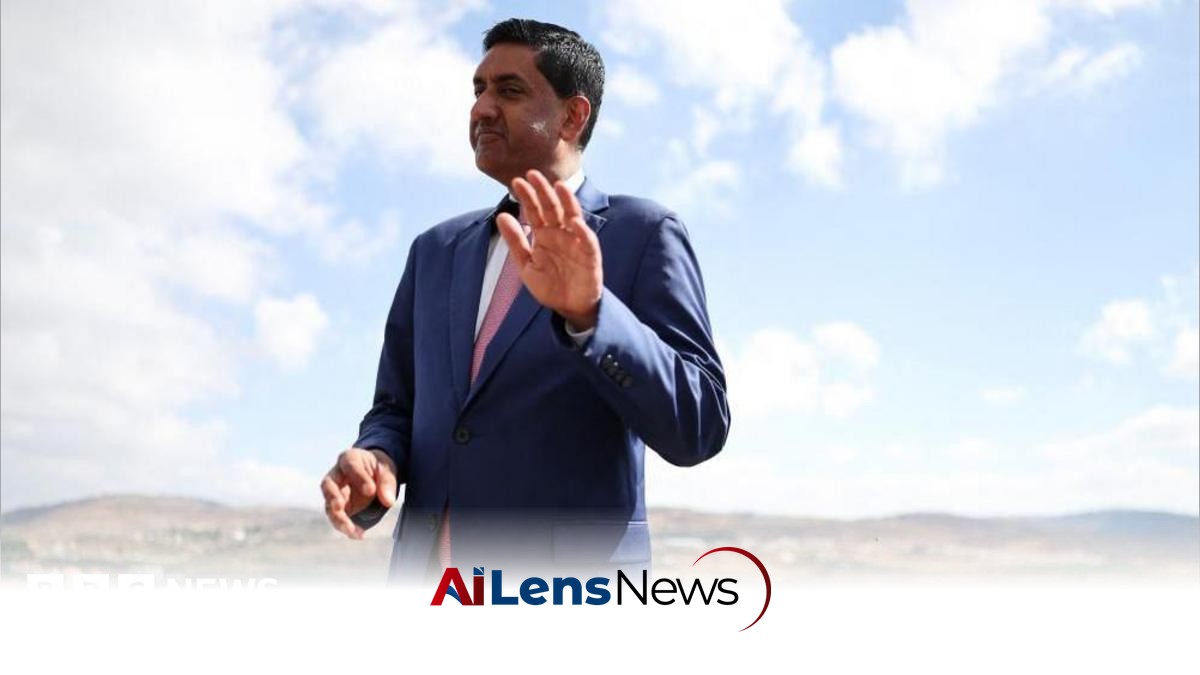


Congressman Ro Khanna claims he was held for 90 minutes by armed settlers during a visit to the occupied West Bank, highlighting tensions in the region.
New Delhi, India Jul 11, 2026 ALN: US congressman Ro Khanna says he was detained for 90 minutes by armed Israeli settlers during a visit to the occupied West Bank.
Khanna, 49, had been in a van with his team when they were surrounded by settlers wielding M4 rifles on Wednesday, he told Reuters agency. The incident highlights the increasingly volatile atmosphere in the West Bank, where tensions between Israeli settlers and Palestinians have escalated in recent years. This situation is not only a reflection of the ongoing conflict but also a manifestation of the broader geopolitical dynamics that play out in the region.
Writing on X, Khanna stated that when the Israel Defense Forces (IDF) arrived, "they sided with the settlers and continued our detention." This assertion raises questions about the role of the IDF in managing conflicts between settlers and Palestinians, as well as the implications of their actions for international observers in the region. The IDF's involvement in such incidents often draws scrutiny, particularly regarding its perceived impartiality and the enforcement of law and order in the occupied territories.
The BBC has reached out to the IDF for comment. The Israeli military said in a statement that troops and police officers took action after receiving a report that settlers had blocked vehicles in the area. "Upon their arrival, the troops dispersed the Israeli civilians and allowed the vehicles to continue on their way," the IDF added. However, Khanna's account presents a contrasting narrative, suggesting a lack of neutrality in the IDF's response to the situation. This discrepancy between official statements and eyewitness accounts can complicate the understanding of events on the ground and may contribute to the ongoing cycle of mistrust between the parties involved.
Khanna was visiting the ruins of Khirbet Zanuta, on a fact-finding mission to assess the impact of Israeli occupation in the area. The village, like many others in the West Bank, has faced significant challenges due to the expansion of Israeli settlements. These settlements often encroach on Palestinian land, leading to displacement and a loss of livelihood for local communities. The process of settlement expansion has been characterized by the demolition of Palestinian homes, the destruction of agricultural land, and the establishment of barriers that restrict movement, all of which contribute to the humanitarian crisis in the region.
The politician, who is a father of two, is contemplating a presidential run in 2028. His recent experiences in the West Bank may influence his political stance and campaign strategy, especially as public sentiment regarding the Israeli-Palestinian conflict continues to evolve in the United States. With increasing awareness of human rights issues and social justice movements, Khanna's firsthand experience could resonate with voters who prioritize these concerns in their political choices.
Khanna described the scene, saying, "We were at a village that Israeli settlers had destroyed; they had destroyed the school and the village itself, and we were just looking at it." His comments reflect the broader narrative of destruction and displacement that many Palestinian communities have faced due to the ongoing conflict. The systematic dismantling of Palestinian infrastructure has been a point of contention and a source of international criticism against Israeli policies in the region. Such destruction not only impacts the immediate community but also has long-term repercussions for future generations, affecting education, health, and economic opportunities.
"And these hoodlums come in with machine guns – M4, an American-made machine gun – and they detain us. They block off the road. And then they call the IDF, and the IDF is on their side, not on the side of the Americans," Khanna said. His choice of words underscores the frustration and anger many feel regarding the complicity of the Israeli military in the actions of settlers, particularly when those actions are perceived as aggressive or unjust. This sentiment is echoed by numerous human rights organizations that document incidents of violence and intimidation by settlers against Palestinians.
While detained, an aide accompanying Khanna mentioned that they made appeals to the US Embassy in Jerusalem for assistance, and they were released after a group of police officers intervened. This incident raises important questions about the effectiveness of diplomatic channels and the protection of American citizens abroad, particularly in conflict zones where tensions are high. The response from the US government in such situations can have significant implications for its diplomatic relations with Israel and its standing in the broader Middle East.
Israel has established around 160 settlements housing 700,000 Jews since it occupied the West Bank and East Jerusalem during the 1967 Middle East war. An estimated 3.3 million Palestinians live alongside these settlements, which are considered illegal under international law. The establishment and expansion of these settlements have been a major source of friction between Israelis and Palestinians, complicating peace efforts and fueling resentment. The international community has largely condemned the expansion of settlements, viewing them as an obstacle to peace and a violation of international law. However, the Israeli government has continued to support settlement growth, arguing that it is necessary for security and historical claims to the land.
In light of this incident, Khanna's experience underscores the ongoing tensions and complexities surrounding the Israeli-Palestinian conflict. His firsthand account of being detained by armed settlers, coupled with the IDF's response, illustrates the challenges faced by those who seek to understand and address the realities on the ground. As more American politicians and activists engage with the issue, the potential for increased scrutiny of US foreign policy in the region may arise, particularly regarding military aid to Israel and the US's role in facilitating peace negotiations. The growing awareness of human rights violations in the occupied territories could lead to calls for a reassessment of US support for Israel, especially among progressive factions within the Democratic Party.
Furthermore, Khanna's experience may resonate with constituents who are increasingly concerned about human rights issues globally, including those in the Palestinian territories. As discussions surrounding social justice and equity gain momentum in the United States, the implications of events like Khanna's detention could influence public opinion and policy-making in the years to come. The intersection of domestic social justice movements and international human rights advocacy is becoming more pronounced, and politicians who engage with these issues may find themselves at the forefront of a shifting political landscape.
In conclusion, the incident involving Ro Khanna serves as a stark reminder of the complexities and dangers inherent in the Israeli-Palestinian conflict. It highlights the precarious situation for both Palestinians and international visitors in the West Bank, where the presence of armed settlers and the response of the IDF can create a volatile environment. As the political landscape continues to evolve, the experiences of individuals like Khanna may play a crucial role in shaping the future of US engagement in the region. The potential for increased dialogue around the Israeli-Palestinian conflict, informed by personal experiences and grounded in human rights considerations, could pave the way for a more nuanced approach to US foreign policy in the Middle East.
To learn more about the latest developments in Regions & Countries, stay updated with our exclusive reports and analyses on AiLensNews.

