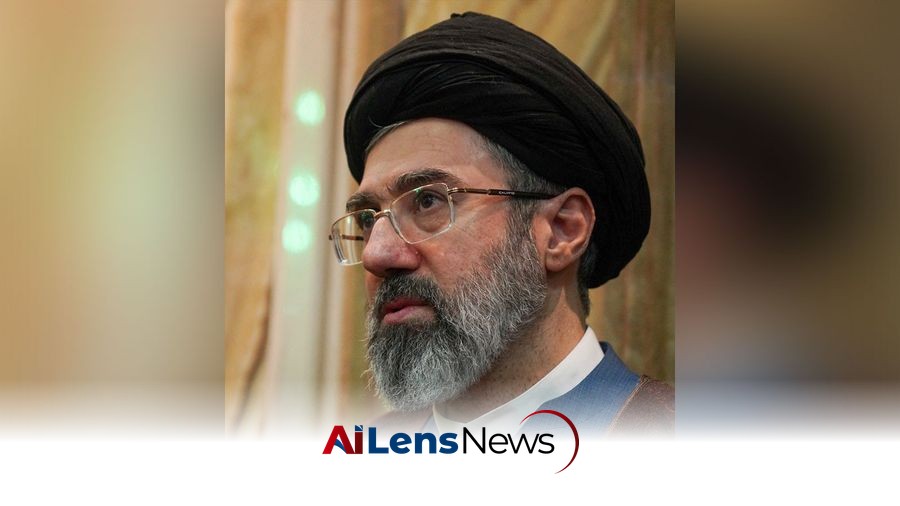


In a powerful address, Iran's Supreme Leader Mojtaba Khamenei promised to seek justice for his father, Ayatollah Ali Khamenei, assassinated earlier this year, emphasizing national responsibility and unity.
New Delhi, India Jul 11, 2026 ALN: In a significant and emotionally charged declaration, Iran's Supreme Leader Ayatollah Mojtaba Khamenei has vowed to avenge the death of his father, Ayatollah Ali Khamenei, who was assassinated earlier this year in strikes attributed to the United States and Israel. This incident has not only intensified tensions in the region but has also sparked a wave of nationalist sentiment within Iran, as Mojtaba Khamenei framed the assassination as a grievous affront to the Iranian people and their sovereignty.
The younger Khamenei described the assassination as a pivotal moment that demands retribution, emphasizing that it is a collective responsibility of the nation. His words resonate deeply within the context of Iran's historical narrative, which often portrays the country as a target of foreign aggression. The rhetoric of vengeance is not new to Iranian politics, but it has taken on a renewed urgency following the death of the elder Khamenei, who had been a central figure in Iran's political landscape since the 1979 Islamic Revolution.
In a message issued during the funeral and burial of the late leader, Mojtaba Khamenei stated that those responsible for the assassination would not escape justice, underscoring a commitment to accountability. "We pledge to avenge your pure blood and that of all the martyrs of these two wars from the criminal and dishonourable murderers. This revenge is the will of our nation and must be carried out without fail," he declared, evoking a sense of duty among Iranians to seek justice for their fallen leader.
His remarks highlight a broader narrative within Iranian society that equates martyrdom with honor and resistance against perceived oppressors. This cultural framework has been instrumental in shaping Iran's political and social identity, particularly in the face of external threats. The call for retribution may also serve to unify the populace under a common cause, particularly during a time of national mourning.
Mojtaba Khamenei further asserted that the pursuit of vengeance transcends individual actors within the government, suggesting that the desire for justice is ingrained within the fabric of Iranian society. He stated, "They should know that this matter does not depend on the existence of me or other officials. Whether we are there or not, this will be accomplished, and soon every free person around the world will fulfil a part of this divine mission." This statement not only reinforces his position as the new Supreme Leader but also seeks to galvanize support for a cause that he frames as both national and divine.
In addition to his calls for revenge, Mojtaba Khamenei expressed gratitude for the unprecedented public turnout during the six-day funeral ceremonies held across Iran and Iraq. He described the participation as "astonishing, enemy-breaking, and historic," reflecting the deep emotional connection many Iranians feel towards their leaders, especially those who have been martyred. The outpouring of grief and solidarity during the ceremonies underscores the significant role that religious and cultural symbolism play in Iranian society.
Ayatollah Ali Khamenei was laid to rest at the Holy Shrine of Imam Reza in Mashhad, a site of immense religious significance for Shia Muslims. His burial followed traditional rites that included the carrying of his coffin around the holy shrine, an act steeped in religious reverence and communal mourning. The funeral prayers were led by his eldest son, Mostafa Khamenei, marking a continuation of the Khamenei family's prominent role in Iran's political and religious leadership.
In his message, Mojtaba Khamenei invoked the legacy of Imam Hosayn, a revered figure in Shia Islam known for his martyrdom at the Battle of Karbala. He stated, "Our nation is the bloodthirsty one for Hosayn. This great nation sacrificed its children for many years in the cause of Hosayn and in the war against the enemies of Hosayn and the Hosayni cause. And now it is the bloodthirsty one for him and the Hosayni people of the time." This reference not only serves to elevate the narrative of martyrdom but also connects the contemporary struggle against foreign adversaries to a long-standing historical and religious context.
Mojtaba Khamenei's pledge to continue his father's path reflects a commitment to uphold the ideological framework established by Ali Khamenei. He stated, "Now that we bid farewell to your body with tearful eyes and broken hearts, we pledge with you to uphold your school and to walk the straight path you have drawn with perseverance and not be afraid of difficulties on this path, and like you, to take heart in the good news and promises of God." This commitment to continuity is crucial for maintaining stability within the Iranian regime, especially in light of the challenges posed by both internal dissent and external pressures.
In the concluding part of his message, Mojtaba Khamenei offered prayers for the deceased leader and those who died alongside him in the US-Israeli strikes, referring to them as martyrs who had attained divine honor. His invocation of martyrdom is significant in the context of Iranian politics, where the concept is often used to inspire loyalty and sacrifice among the populace. He expressed, "O martyr father of the nation, may you be blessed with the nectar of martyrdom that you have been longing for all your life... And you, his oppressed companions, who were unexpectedly attacked by the enemy and martyred, are blessed to be the guests of that Master... his safe neighbourhood has become your home." This language serves to frame the deceased leaders as heroic figures in a struggle against oppression, further solidifying their place in the national consciousness.
The assassination of Ali Khamenei on February 28 earlier this year has had profound implications for Iran and the broader West Asia region. The incident has triggered a widespread conflict, exacerbating existing tensions and leading to a reevaluation of alliances and enmities within the region. Following his death, Mojtaba Khamenei was appointed as the new Supreme Leader of the Islamic Republic, marking a significant transition in leadership that is being closely monitored both domestically and internationally. The fallout from this leadership change could have far-reaching consequences for Iran's foreign policy, its military strategies, and its relationships with neighboring countries and global powers.
As Iran navigates this tumultuous period, the rhetoric of vengeance and justice espoused by Mojtaba Khamenei will likely play a central role in shaping the nation's response to perceived threats. The framing of the assassination as a national tragedy serves to rally support around the new leadership while reinforcing the ideological underpinnings of the Iranian state. The coming months will be crucial in determining how Iran will respond to external pressures and whether the calls for retribution will translate into tangible actions on the ground.
To learn more about the latest developments in Wars & Conflicts, stay updated with our exclusive reports and analyses on AiLensNews.

