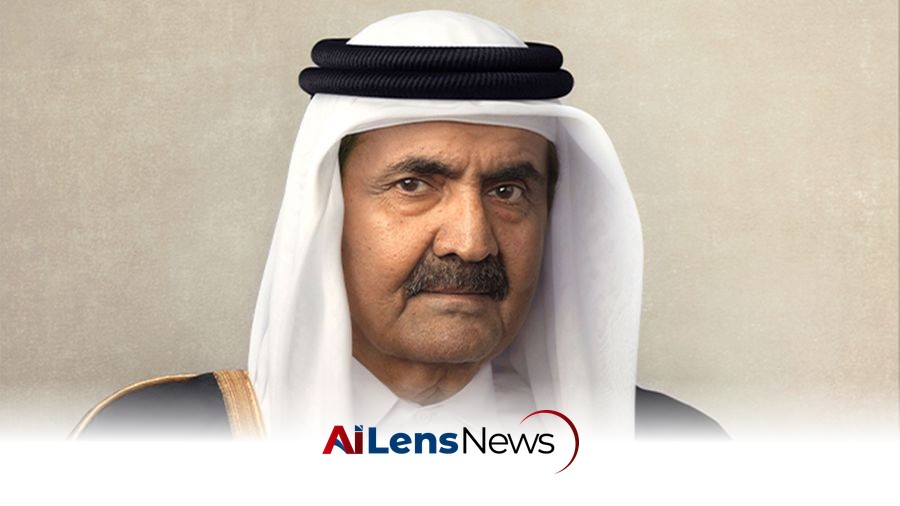


Prime Minister Narendra Modi mourns the death of Sheikh Hamad bin Khalifa Al Thani, recognizing him as a visionary leader who transformed Qatar.
Leh, India Jul 12, 2026 ALN: New Delhi: Prime Minister Narendra Modi on Sunday expressed his condolences on the passing of Sheikh Hamad bin Khalifa Al Thani, the former Amir of Qatar, describing him as a visionary leader who significantly advanced his nation’s development and prosperity.
The Prime Minister extended his sympathies to the current Amir of Qatar, Sheikh Tamim bin Hamad Al Thani, and the people of Qatar. "We deeply mourn the passing of Father Amir of the State of Qatar, HH Sheikh Hamad bin Khalifa Al Thani. A visionary leader who led Qatar to great levels of development and prosperity, we remember him also as a true friend whom I had the honour of meeting during my last visit to Qatar in February 2024. I convey my sincere condolences to the Amir of Qatar, HH Sheikh Tamim bin Hamad Al Thani, and the entire royal family and people of Qatar. May the departed soul rest in eternal peace," PM Modi stated in a post on X.
Sheikh Hamad bin Khalifa Al Thani passed away at the age of 74, as reported by the Amiri Diwan, State of Qatar. "With hearts steadfast in faith in God's decree and destiny, the Amiri Diwan mourns the great loss to the nation of the late - may God have mercy on him - His Highness the Father Amir Sheikh Hamad bin Khalifa Al Thani, who passed away this morning," the Amiri Diwan said in a statement.
Sheikh Hamad ruled Qatar from 1995 to 2013 and was instrumental in the country’s remarkable development. His leadership saw significant economic, social, and cultural advancements that enhanced Qatar's standing on the global stage. Under his reign, Qatar promulgated its first permanent constitution in 2004 and introduced municipal elections, allowing women to vote and stand as candidates.
His legacy as a leader who transformed Qatar into a modern state will be remembered for years to come. Sheikh Hamad bin Khalifa Al Thani was born on January 1, 1948, and was the fourth son of Sheikh Khalifa bin Hamad Al Thani. He was educated in Qatar and later in the United Kingdom, where he attended the Royal Military Academy Sandhurst. His military training and background played a significant role in shaping his leadership style and approach to governance.
In 1995, Sheikh Hamad staged a bloodless coup against his father, Sheikh Khalifa, which marked the beginning of a new era for Qatar. His ascension to power was characterized by a commitment to modernizing the country and diversifying its economy, which had been heavily reliant on oil and gas revenues. Under his leadership, Qatar invested heavily in infrastructure, education, and healthcare, laying the groundwork for a prosperous future.
One of Sheikh Hamad's most significant achievements was the establishment of the Qatar Foundation in 1995, which aimed to promote education, science, and community development. The foundation has since played a crucial role in transforming Qatar into a knowledge-based economy, supporting various educational institutions, including the prestigious branch of Weill Cornell Medicine-Qatar and the Doha Institute for Graduate Studies.
Sheikh Hamad also prioritized sports and culture, leading to Qatar's successful bid to host the FIFA World Cup in 2022, a historic event that marked the first time the tournament would be held in the Middle East. This achievement not only showcased Qatar's growing influence in the global sports arena but also served as a catalyst for further investments in infrastructure and tourism, which are expected to benefit the country long after the event.
In addition to his domestic policies, Sheikh Hamad was known for his active foreign policy, which sought to position Qatar as a mediator in regional conflicts and a supporter of various causes, including humanitarian efforts. His leadership style was often characterized by a blend of pragmatism and diplomacy, allowing Qatar to navigate complex geopolitical landscapes while maintaining strong relationships with both Western and Arab nations.
Sheikh Hamad's commitment to modernization and reform extended to social policies as well. His administration made significant strides in promoting women's rights, including initiatives to increase female participation in the workforce and political life. These efforts were part of a broader vision to create a more inclusive society that reflects the values of a rapidly changing world.
The passing of Sheikh Hamad bin Khalifa Al Thani marks the end of an era for Qatar. His contributions to the nation's development have left an indelible mark, and his leadership style will likely influence future generations of Qatari leaders. The current Amir, Sheikh Tamim bin Hamad Al Thani, who succeeded his father in 2013, has continued many of the policies initiated by Sheikh Hamad, focusing on economic diversification and social reform.
As Qatar enters a new chapter in its history, the legacy of Sheikh Hamad will serve as a guiding light for the nation. His vision for a prosperous and modern Qatar will continue to inspire future leaders and citizens alike. The outpouring of condolences from world leaders, including PM Modi, underscores the respect and admiration Sheikh Hamad garnered on the global stage during his lifetime.
In conclusion, the passing of Sheikh Hamad bin Khalifa Al Thani is not only a significant loss for the people of Qatar but also for the international community that recognized his contributions to peace, development, and diplomacy. As the nation mourns the loss of its Father Amir, it also reflects on the remarkable journey Qatar has undertaken under his leadership, a journey that has transformed the small Gulf state into a key player on the world stage.
Sheikh Hamad's reign was marked by a shift in Qatar's global positioning, as he championed initiatives that elevated the country’s profile in international affairs. His efforts in diplomacy, particularly in mediating conflicts in the Middle East, have been acknowledged by various international organizations and nations. The Al Jazeera network, which was established during his rule, became a powerful platform for news and information, influencing public opinion across the Arab world and beyond.
Moreover, Sheikh Hamad’s vision extended beyond economic and infrastructural development. His government focused on fostering a cultural renaissance, promoting arts, literature, and heritage preservation. This cultural investment is evident in the establishment of museums, such as the Museum of Islamic Art and the National Museum of Qatar, which celebrate the nation's rich history and cultural diversity.
As Qatar continues to navigate the complexities of the 21st century, the foundational work laid by Sheikh Hamad will be critical in addressing contemporary challenges. Issues such as climate change, economic sustainability, and social equity are increasingly at the forefront of global discourse, and Qatar's leadership is expected to draw on Sheikh Hamad’s legacy of innovation and reform to tackle these pressing matters.
In the wake of his passing, the international community is likely to reflect on the broader implications of his leadership for small states in global politics. Sheikh Hamad's ability to leverage Qatar's resources and strategic location to gain influence serves as a case study for other nations seeking to enhance their global standing without resorting to military might. His approach to foreign relations, characterized by soft power and diplomacy, may inspire future leaders in similar geopolitical contexts.
In summary, Sheikh Hamad bin Khalifa Al Thani's passing is not only a moment of mourning for Qatar but also an opportunity to reflect on the profound impact of his leadership on both the nation and the world. His vision and commitment to modernization, education, and diplomacy have left an enduring legacy that will influence generations to come, ensuring that Qatar remains a significant player on the global stage.
To learn more about the latest developments in Regions & Countries, stay updated with our exclusive reports and analyses on AiLensNews.

