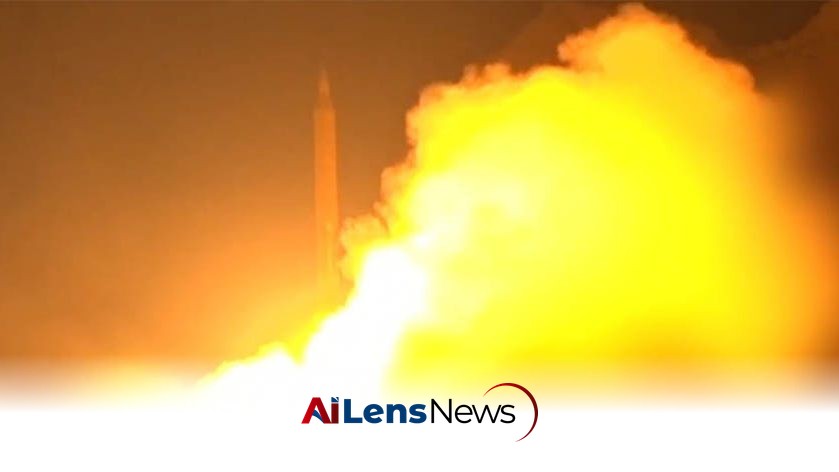


Iran has launched attacks on US military bases in Bahrain, Kuwait, and Qatar, responding to recent US airstrikes on Iranian territory.
New Delhi, India Jul 9, 2026 ALN: Iran's recent military actions targeting US bases in Bahrain, Kuwait, and Qatar mark a significant escalation in tensions between Tehran and Washington, following a series of US airstrikes on Iranian territory. This development comes amid a fraught geopolitical landscape, where regional stability hangs in the balance due to ongoing conflicts and historical grievances.
The Iranian government confirmed on Monday that it had conducted strikes on what it termed US military installations and strategic sites across the Gulf region. These attacks were characterized as a direct response to US airstrikes that had occurred over the previous two nights, which Iranian officials claimed had resulted in civilian and military casualties across various locations, including Bushehr, Chabahar, Bandar Abbas, and Sirik, all of which are strategically significant areas near the Strait of Hormuz.
According to Iranian authorities, the US strikes on their territory led to the deaths of at least 14 individuals and injuries to 78 others. These figures, while reported by Iranian sources, may be subject to scrutiny given the complexities surrounding information dissemination in conflict zones. The strikes reportedly caused damage to critical infrastructure, including two railway bridges, raising concerns about the broader implications for civilian life and economic stability in the affected areas.
In response to the heightened military activity, Bahrain's government took precautionary measures by activating nationwide warning sirens and advising residents to remain calm while seeking shelter. This reflects not only the immediate threat perceived from the conflict but also the broader anxiety among Gulf states regarding the potential for wider regional instability. Bahrain, which hosts the US Navy's Fifth Fleet, is particularly sensitive to developments that could escalate into direct conflict.
The Iranian Foreign Ministry condemned the US operations, labeling them a violation of the UN Charter and existing ceasefire agreements. Iranian officials rejected the US justification for the strikes, which was framed as a response to attacks on vessels in the strategically vital Strait of Hormuz. The ministry characterized this rationale as a “false pretext,” suggesting that the US actions were more about asserting dominance in the region than about addressing legitimate security concerns.
The Strait of Hormuz, through which a significant percentage of the world’s crude oil passes, has been a flashpoint for tensions between Iran and the United States for decades. Any disruption in this critical waterway not only affects regional players but also has far-reaching implications for global energy markets. Following the recent military exchanges, commercial shipping through the strait has slowed dramatically, with reports indicating that vessel movement has been restricted primarily to a northern route approved by Iran, while the southern corridor, supported by Oman and the US, has seen little activity.
Shipping data from Kpler, as reported by Bloomberg News, highlights a stark decline in maritime traffic through the Strait of Hormuz. In the weeks following an interim understanding between the US and Iran aimed at reopening the strait to commercial traffic, there had been an average of 34 transits per day, peaking at 59 on June 24. However, the recent hostilities have led to daily crossings plummeting to fewer than 20 in many instances, indicating a significant downturn in commercial shipping activity.
This reduction in shipping traffic raises concerns about the broader economic implications for countries reliant on oil exports and imports. The Gulf states, particularly those like Qatar and Kuwait, which depend heavily on maritime trade routes, may face economic repercussions if the situation continues to escalate. The increased military presence and potential for conflict in the region could deter shipping companies from operating in these waters, leading to higher shipping costs and disruptions in supply chains.
The escalation of hostilities also invites analysis of the strategic calculations made by both Iran and the United States. For Iran, retaliating against US military assets serves not only as a demonstration of military capability but also as a means of rallying domestic support amid a backdrop of economic hardship exacerbated by international sanctions. The Iranian leadership may perceive these strikes as a necessary assertion of sovereignty and deterrence against perceived aggression from the US.
On the other hand, the US response to Iranian provocations is indicative of its broader strategy in the Middle East, which has long focused on containing Iranian influence while ensuring the security of its allies in the region. The recent airstrikes could be seen as an attempt to reassert US military presence and influence, signaling to both allies and adversaries that the US remains committed to protecting its interests in the Gulf.
As the situation continues to evolve, the potential for further military escalation remains a pressing concern. Diplomatic efforts to de-escalate tensions may be hampered by the mutual distrust that characterizes US-Iran relations. The implications of this conflict extend beyond the immediate parties involved, as regional allies and global powers watch closely, cognizant of the potential for a wider conflict that could destabilize the entire Middle East.
In conclusion, the recent attacks by Iran on US bases and the subsequent US airstrikes represent a significant turning point in an already volatile region. The unfolding events underscore the fragility of peace and stability in the Gulf, highlighting the urgent need for diplomatic engagement to address the underlying issues that fuel such conflicts. As both nations navigate this precarious situation, the international community remains vigilant, aware that the repercussions of these hostilities could reverberate well beyond the borders of Iran and the Gulf states.
To learn more about the latest developments in Wars & Conflicts, stay updated with our exclusive reports and analyses on AiLensNews.

