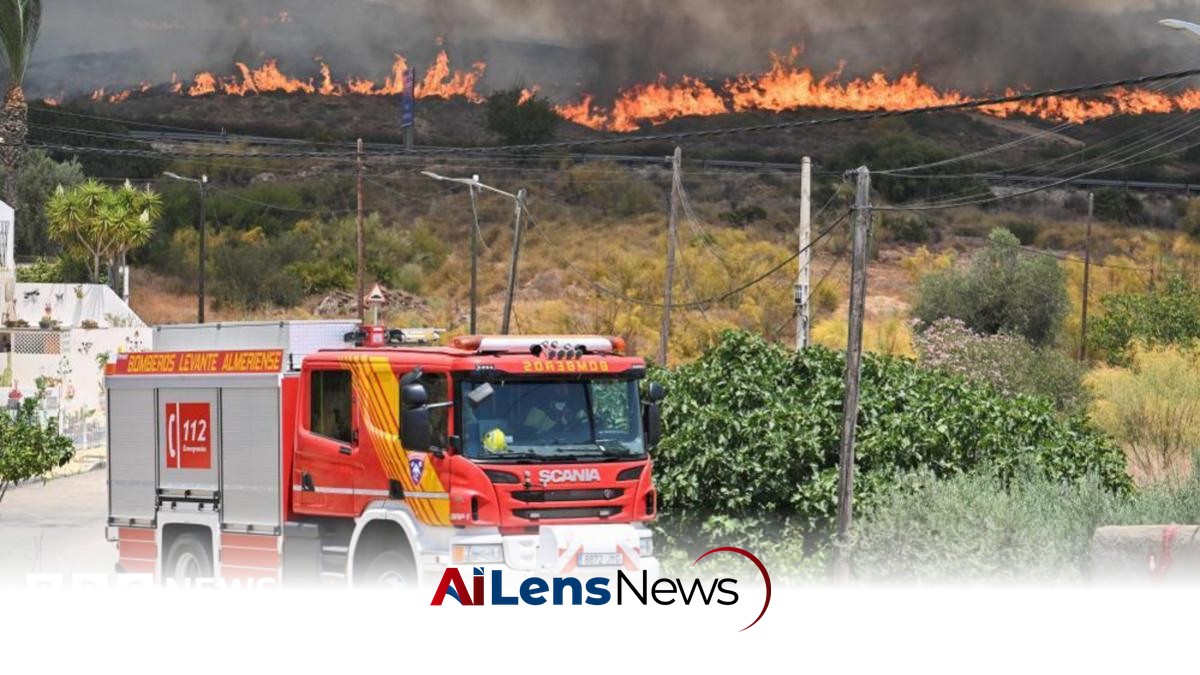


A devastating wildfire in Andalusia has resulted in at least 12 fatalities and 23 individuals reported missing, with officials indicating that some victims may be British.
New Delhi, India Jul 10, 2026 ALN: At least 12 people have died and 23 others are missing in a wildfire in southern Spain, Andalusia's regional leader Juanma Moreno has said.
Four of the victims may be British, according to officials in the region. This tragic incident highlights the increasing severity of wildfires in Southern Europe, a phenomenon that has been exacerbated by extreme weather conditions and climate change.
The wildfire, which has devastated the area around Los Gallardos in Almería, reportedly began when a power line fell, igniting dry vegetation in the region. As firefighters and emergency services mobilized, the fire rapidly spread due to a sustained heatwave that has gripped Southern Europe this summer, with temperatures soaring to around 40 degrees Celsius (104 degrees Fahrenheit).
This summer has seen a significant increase in wildfire incidents across Southern Europe, with countries such as France, Portugal, and Spain battling major blazes. Thousands of residents have been forced to evacuate their homes, and the situation has raised alarms about the growing threat of wildfires in the region, particularly during the hotter months.
The bodies of the deceased were discovered in and around the small village of Bédar, located just outside Los Gallardos. Antonio Sanz, Andalusia's health and emergencies minister, described the fire as complex and rapid, indicating that the majority, if not all, of the victims were likely foreign nationals. Four individuals were reportedly found trapped in their vehicle, while eight others were discovered attempting to escape the flames.
Sanz confirmed that the four individuals found in the car were believed to be of British origin, as indicated by the vehicle's right-hand steering wheel. The UK Foreign Office has since reached out to Spanish authorities to ascertain the situation of British nationals in the area. Additionally, Belgian Foreign Minister Maxime Prévot noted that many Belgians have second homes in Spain and that consular services were actively trying to contact those who had not been reachable.
Juanma Moreno expressed his deep sorrow over the tragedy, stating that the deaths were a significant loss and warned that the death toll could potentially rise further. "Our hearts are heavy and we are devastated by grief," he shared on social media, reflecting the communal anguish felt in the wake of this disaster.
In addition to the fatalities, four individuals have been hospitalized with serious burns, while another four are reported to have sustained less severe injuries, including minor burns and respiratory issues from heavy smoke inhalation. The rapid spread of the fire and the chaotic evacuation efforts have underscored the challenges faced by emergency responders in such dire circumstances.
Moreno indicated that preliminary investigations suggest the fire may have been triggered by the collapse of a power line pole, although he noted that a thorough investigation would be necessary to confirm this. He also stated that those responsible for the maintenance of the power lines would be held accountable for any negligence. However, this assertion has been contested by the electricity company Endesa, which claimed that the fallen power line was inactive and did not belong to them, raising questions about the reliability of the information provided by local authorities.
Witnesses to the fire, such as Peter Chapman and his wife Shelagh, who own a holiday home nearby, described the scene as surreal. Initially mistaking the darkening sky for an approaching storm, they were shocked to realize it was a wildfire. Chapman likened the experience to his mother’s descriptions of the London bombings during War II, emphasizing the unexpected nature of such a disaster in a typically peaceful holiday destination. He expressed deep concern for the lives lost, stating, "It's just terrible. People come away for a holiday and don't imagine something like this happening. To think that people may have lost their lives is very, very sad."
The wildfire has also resulted in significant disruptions, including road closures and the evacuation of approximately 1,000 residents, as emergency services worked tirelessly to manage the crisis. Spain's Military Emergency Unit (UME) has deployed 220 soldiers and 70 vehicles to assist in combating the blaze, while the civil guard has contributed 160 law enforcement personnel to aid in evacuation efforts, traffic control, and investigations into the fire's origin.
The current wildfire incident is already among the deadliest in Spanish history, with a grim historical context highlighting the severity of such events. In 2005, 11 members of a firefighting team tragically lost their lives when they became trapped by flames in Riba de Saelices, east of Madrid. Similarly, in 1984, a fire on the Canary Island of La Gomera claimed the lives of 20 individuals, and in 1979, a forest fire near Lloret de Mar resulted in the deaths of 21 people, including nine children.
Earlier this year, Prime Minister Pedro Sánchez announced plans for Spain to deploy its largest-ever summer wildfire response, a proactive measure in anticipation of the heightened wildfire risk. This follows alarming trends observed over the past few years; in June, Spain recorded its highest daily average temperatures since 1950, with some areas forecasting highs of up to 42 degrees Celsius (107.6 degrees Fahrenheit). Last year, a record 393,000 hectares (approximately 971,000 acres) burned across Spain, significantly exceeding the national average from 2006 to 2024.
The increasing frequency and intensity of wildfires in Spain and across Europe can be largely attributed to climate change. The Copernicus climate service has indicated that Europe is warming at a rate twice that of the global average, leading to more frequent and severe heatwaves, increased pressure on water supplies, and a heightened risk of wildfires. The European Union experienced its worst wildfire season on record last year, with over one million hectares burned, an area comparable to half the size of Wales.
Research conducted by the Weather Attribution group at Imperial College London has directly linked the worsening fire seasons in the Mediterranean to climate change, highlighting the urgent need for comprehensive strategies to mitigate the impacts of rising temperatures. Experts warn that without significant intervention, the trend of increasingly severe wildfires across Europe is likely to continue, posing a persistent threat to lives, property, and the environment.
To learn more about the latest developments in Climate & Environment, stay updated with our exclusive reports and analyses on AiLensNews.

