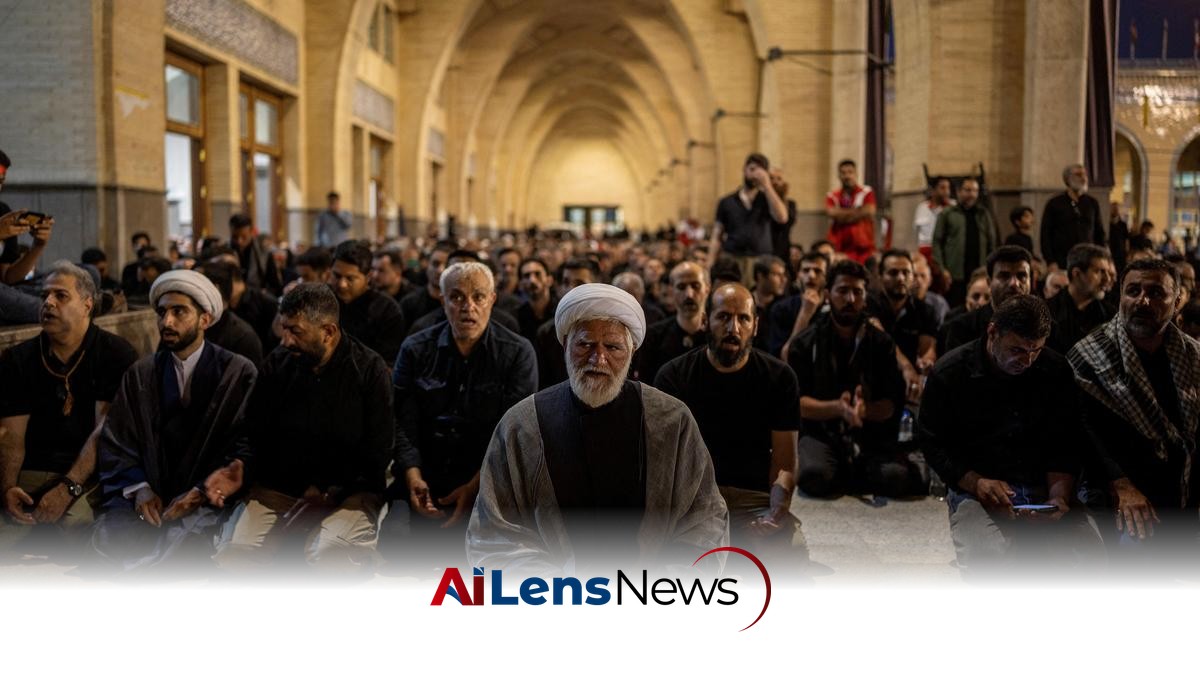


Live updates on the state funeral of Ayatollah Ali Khamenei, including foreign delegate arrivals and Iran's leadership transition.
Tehran, Iran Jul 5, 2026 ALN: The death of Ali Khamenei, the late supreme leader of Iran, marks a significant turning point in the country’s political landscape. Khamenei, who ruled Iran for over three decades, was killed in an airstrike on February 28, coinciding with the onset of the West Asia war, a conflict that has already drawn international attention and concern. His leadership spanned a tumultuous period marked by both internal strife and external pressures, including sanctions, military confrontations, and diplomatic negotiations. Khamenei's tenure saw Iran navigating the complexities of regional geopolitics, especially in relation to its neighbors and Western powers, particularly the United States.
As the nation grapples with the reality of his absence, the funeral ceremonies have become a focal point for both mourning and political expression. The ceremonies commenced on a somber note, with thousands of Iranians gathering to pay their final respects. The sheer scale of the crowds reflects Khamenei's influence and the complex emotions surrounding his death. His leadership style, characterized by a mix of hardline stances and occasional diplomatic overtures, has left a lasting imprint on Iran's identity and its role in the region. Khamenei's approach to governance often involved a balancing act between maintaining strict ideological control and managing the demands of a populace that has increasingly sought reform.
During the funeral, prayers were to be said over Khamenei's casket, although it remains uncertain whether a prominent religious figure or a family member would lead these prayers. This uncertainty underscores the transitional phase Iran is entering, with many looking to the next steps in leadership as a harbinger of the country's future direction. Mojtaba Khamenei, the late leader's son and now the designated successor, has not made a public appearance since the announcement of his new role, raising questions about his readiness to assume such a significant position of power. Reports indicate that he may have sustained injuries during the airstrike that killed his father, adding to the uncertainty surrounding the leadership transition. The question of succession is particularly critical in Iran, where the supreme leader's authority is deeply intertwined with both religious legitimacy and political power.
In light of Khamenei's death, the Iranian government has declared a public holiday, allowing citizens to participate in the mourning process. The Grand Mosalla complex, where Khamenei's body is currently lying in state, is expected to be the focal point of a series of processions through Tehran. These processions are not only a tribute to the late leader but also a demonstration of the political sentiments that may arise among different factions within the country. The presence of various political and religious leaders at the funeral will be closely scrutinized, as it may indicate potential alignments and divisions within the Iranian political landscape.
The atmosphere during the funeral has been described as tense, with various groups within Iran voicing their opinions on the future of the nation. This tension reflects the underlying divisions within Iranian society, which have been exacerbated by Khamenei's authoritarian governance style. As different factions vie for influence, the funeral has become a platform for expressing both grief and political aspirations. The presence of anti-American sentiments, highlighted by a performer calling for the death of former President Donald Trump, illustrates the charged political environment. Such expressions can serve to unify factions within Iran against a common external adversary while simultaneously complicating diplomatic relations with Western nations. The rhetoric surrounding the U.S. and its allies has historically been a rallying point for various groups within Iran, often used to deflect attention from domestic issues.
Internationally, reactions to Khamenei's death have been swift, with foreign dignitaries expected to attend the funeral to pay their respects. Analysts and political observers are closely monitoring the situation, particularly the implications of Mojtaba Khamenei's ascension to power. The transition of leadership is critical, as it may signal shifts in Iran's domestic and foreign policies. The new leadership must navigate a landscape marked by significant challenges, including ongoing tensions with Western nations, particularly the United States, as well as internal dissent fueled by economic hardship and calls for reform. The international community is particularly concerned about how Iran's policies may evolve in response to the power vacuum created by Khamenei's death.
The challenges facing the Iranian government are manifold. Domestically, the economy is under severe strain due to a combination of international sanctions and mismanagement. The populace has been vocal about their dissatisfaction, and the new leadership will need to address these grievances to maintain stability. Economic indicators have shown a decline in living standards, rising inflation, and unemployment, which have all contributed to public discontent. The new regime will also have to deal with various social movements that have emerged in response to economic challenges and calls for greater freedoms. Externally, Iran's relationships with other countries, particularly in the West, are fraught with tension. The recent conflict in West Asia has further complicated these dynamics, as regional actors reassess their strategies in light of the power vacuum created by Khamenei's death.
As the days unfold following Khamenei's funeral, the will be watching closely to see how Mojtaba Khamenei and the Iranian government respond to these challenges. The coming weeks will be critical in determining whether the new leadership can unify the country and forge a path forward that addresses both internal and external pressures. The implications of this transition are far-reaching, not only for Iran but for the entire region, as geopolitical dynamics continue to evolve in response to the changing leadership landscape. The potential for shifts in Iran's foreign policy, particularly regarding its nuclear program and relationships with regional allies, will be of particular interest to global powers.
In conclusion, the death of Ali Khamenei has set in motion a series of events that will shape the future of Iran. The funeral ceremonies serve as both a moment of national mourning and a reflection of the complex political realities that lie ahead. As the nation transitions to new leadership, the eyes of the remain fixed on Iran, anticipating how the new regime will navigate the myriad challenges it faces. The future direction of Iran's policies, both domestically and internationally, will likely depend on the ability of Mojtaba Khamenei and his administration to respond effectively to the pressing issues confronting the nation, including economic instability, social unrest, and regional tensions.
To learn more about the latest developments in Wars & Conflicts, stay updated with our exclusive reports and analyses on AiLensNews.

