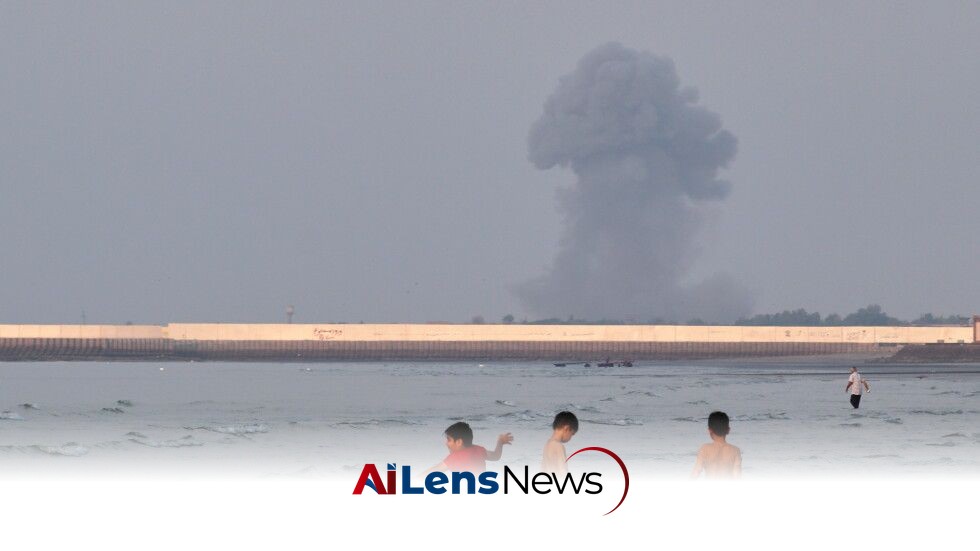


The United States has intensified its military operations in Iran, targeting key infrastructure and signaling a shift in strategy amidst ongoing tensions.
Washington DC, United States Jul 25, 2026 ALN: The United States has gradually expanded the scope of its attacks against Iran over the course of two weeks of punishing airstrikes that increasingly resemble the war’s opening salvos. President Donald Trump stated on Friday that the U.S. is “locked and loaded” as he weighs a possible major strike on Iran, while also indicating that “serious” negotiations are continuing.
In recent days, U.S. airstrikes have focused on critical infrastructure, including bridges and military installations, as tensions between the two nations escalate. The strikes are part of a broader strategy to weaken Iran's military capabilities and deter further aggression in the region. The U.S. government has cited intelligence reports indicating that Iran has been involved in supporting militant groups in neighboring countries, which has heightened concerns about Tehran's influence in the Middle East. This has led to a series of military responses aimed at disrupting Iran’s operational capabilities.
Military analysts suggest that targeting infrastructure is a calculated move by the U.S. to undermine Iran’s logistical capabilities, which are essential for the movement of troops and supplies. By striking bridges and military facilities, the U.S. aims to create a strategic disadvantage for Iran, potentially limiting its ability to respond to further provocations. The escalation of airstrikes marks a significant shift in U.S. military policy in the region, moving from a primarily defensive posture to a more aggressive stance.
This shift in strategy is not without precedent. Historically, the U.S. has employed similar tactics in other conflicts, aiming to diminish the enemy's ability to wage war by targeting infrastructure. The rationale behind such operations is often rooted in the belief that crippling an adversary's logistical and operational capabilities can lead to a quicker resolution of conflict and reduce the risk of prolonged engagements. However, this approach has also drawn criticism for its potential to exacerbate humanitarian crises and increase civilian suffering.
The airstrikes have raised concerns about the impact on civilian life in Iran. Reports indicate that infrastructure damage has led to disruptions in daily activities, with many citizens expressing fear and uncertainty about the future. Essential services such as transportation and communication have been affected, leading to increased difficulties for the civilian population. The humanitarian implications are becoming increasingly apparent as the conflict deepens, with international organizations warning of potential humanitarian crises if the violence continues.
Human rights groups have voiced alarm over the potential for civilian casualties and the broader impact of military actions on non-combatants. The situation has led to a growing number of displaced individuals within Iran, as families flee conflict zones in search of safety. The international community is calling for measures to protect civilians and ensure that humanitarian assistance can reach those in need. The United Nations and various non-governmental organizations have urged both the U.S. and Iran to prioritize the safety of civilians and adhere to international humanitarian law.
The challenge of delivering aid in conflict zones is compounded by the ongoing hostilities. Access to affected areas is often restricted, and the fear of further military actions can deter humanitarian workers from operating effectively. This situation creates a vicious cycle where the needs of the civilian population are increasingly unmet, leading to a deterioration of living conditions and a potential increase in anti-government sentiments.
Global leaders are closely monitoring the situation, with calls for restraint from various international organizations. The escalation of military actions has prompted discussions about potential diplomatic solutions to avoid further conflict. Countries that have traditionally maintained a relationship with Iran, including Russia and China, have condemned the U.S. strikes, arguing that they violate international law and threaten regional stability.
In contrast, some U.S. allies in the region have expressed support for the military actions, viewing them as a necessary response to Iran's perceived aggressions. This division among global powers highlights the complex geopolitical landscape surrounding the conflict. The potential for a diplomatic resolution remains uncertain, as both sides appear entrenched in their positions, with the U.S. demanding that Iran cease its destabilizing activities and Iran insisting on its right to defend its sovereignty.
The geopolitical implications of the U.S. actions extend beyond the immediate conflict. Countries in the region are reevaluating their security strategies in light of the increasing tensions. For instance, nations like Saudi Arabia and Israel, which have historically viewed Iran as a threat, may feel emboldened to take more aggressive stances in their own military postures. Conversely, nations that advocate for diplomacy may find themselves in a precarious position, caught between supporting U.S. actions and maintaining relations with Iran.
The ongoing military operations may have long-lasting implications for U.S.-Iran relations and the stability of the Middle East. Analysts warn that continued aggression could lead to a broader conflict, impacting not only the two nations involved but also their allies in the region. The potential for an expanded military confrontation raises concerns about the risk of a wider war that could draw in multiple countries and exacerbate existing tensions.
Furthermore, the economic repercussions of the conflict are also a critical consideration. Sanctions against Iran, combined with military strikes, could lead to further destabilization of the Iranian economy, which has already been under pressure from previous sanctions. Such economic turmoil may result in increased anti-American sentiment within Iran and could bolster hardline factions that oppose diplomatic engagement with the West.
The broader implications of the conflict also touch on global energy markets. Iran is a significant player in the oil market, and any disruptions caused by military actions could lead to fluctuations in oil prices, affecting economies worldwide. Countries reliant on Iranian oil may seek alternatives, further complicating international relations and economic stability.
As the U.S. continues its military operations in Iran, the situation remains fluid. The international community watches closely, hoping for a resolution that prioritizes peace and stability in the region. The path forward is fraught with challenges, as both diplomatic and military options are weighed against the backdrop of escalating tensions. The potential for miscalculation on either side could lead to unintended consequences, making it imperative for leaders to engage in dialogue and seek solutions that avoid further conflict.
Ultimately, the future of U.S.-Iran relations hinges on both nations' willingness to engage in meaningful dialogue. The complexities of the situation require a nuanced approach, balancing military readiness with diplomatic efforts. As the world observes the unfolding events, the hope remains that a peaceful resolution can be achieved, one that addresses the underlying issues driving the conflict and paves the way for a more stable Middle East.
To learn more about the latest developments in Culture & Society, stay updated with our exclusive reports and analyses on AiLensNews.

