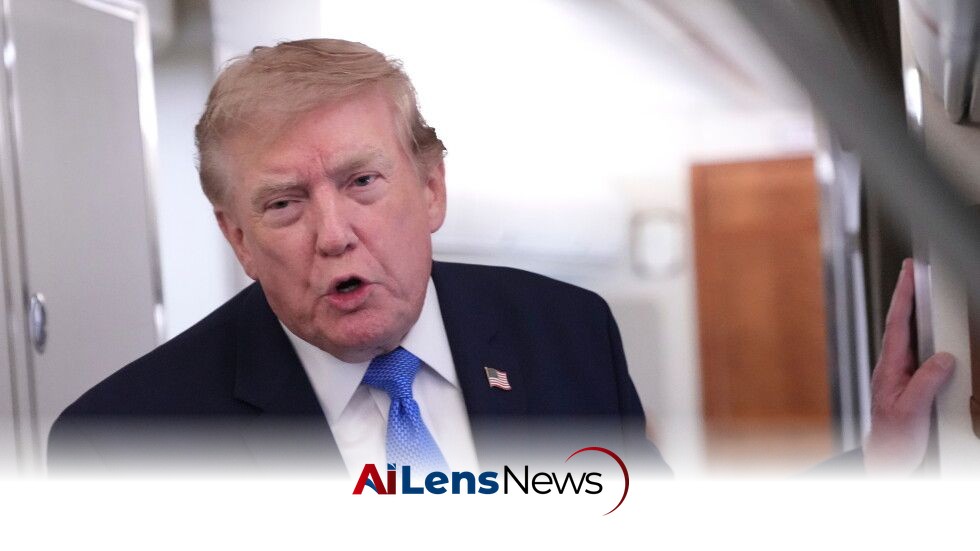


U.S. President Donald Trump announced he will postpone military action against Iran, attributing the decision to discussions with Gulf allies.
Washington DC, United States Aug 3, 2026 ALN: In a significant shift in U.S. military strategy, President Donald Trump has decided to hold off on ordering new strikes against Iran. This decision comes after extensive discussions with leaders from Gulf nations, who provided input that Trump described as pivotal. The move reflects a broader strategy to reassess U.S. military engagement in the Middle East, particularly in light of the complex geopolitical dynamics at play in the region.
During a recent press briefing aboard Air Force One, Trump emphasized the importance of the perspectives shared by Gulf leaders in shaping his decision. He noted that these discussions helped outline the parameters of a potential diplomatic resolution to ongoing tensions in the region. The consultations reportedly included discussions with leaders from countries such as Saudi Arabia, the United Arab Emirates, and Qatar, all of whom have vested interests in the stability of the Middle East and the prevention of military escalation.
The Gulf nations have long been wary of Iran's growing influence in the region, particularly its military activities and its support for proxy groups in countries such as Iraq, Syria, and Yemen. The leaders conveyed their concerns to Trump, urging caution and advocating for diplomatic solutions rather than military confrontation. This input appears to have resonated with Trump, who has often highlighted the need for a collaborative approach in dealing with Middle Eastern affairs.
The backdrop of this decision involves escalating tensions between the U.S. and Iran, particularly concerning Iran's nuclear program and military activities in the Persian Gulf. The United States has been critical of Iran's nuclear ambitions, which it perceives as a threat to regional and global security. The Trump administration has previously indicated a willingness to take military action if deemed necessary, particularly in response to Iran's aggressive posturing and actions, such as attacks on oil tankers and drone strikes against Saudi oil facilities.
In recent months, the situation has become increasingly precarious, with both sides engaging in a series of provocations. The U.S. has imposed stringent economic sanctions on Iran, aimed at curbing its nuclear program and regional influence. In response, Iran has gradually breached the terms of the 2015 nuclear deal, which had initially placed limits on its nuclear activities in exchange for sanctions relief. This cycle of escalation has raised fears of a military confrontation, prompting calls for a reassessment of U.S. strategy.
While specific details of the discussions have not been disclosed, sources indicate that Gulf leaders expressed concerns about the potential fallout from military strikes, including the risk of broader conflict in the region. The Gulf states, which have historically been aligned with U.S. interests, are particularly sensitive to the implications of military action on their own security and stability. Their input appears to have played a crucial role in persuading Trump to reconsider immediate military action.
Moreover, the Gulf nations have been vocal about their desire for a diplomatic resolution to the crisis with Iran. They have advocated for a multilateral approach that includes not only the U.S. but also European allies and regional powers. This reflects a recognition that military strikes could lead to retaliatory actions from Iran, potentially destabilizing the entire region and impacting global oil markets.
This decision to delay military action could have significant implications for U.S.-Iran relations and the broader geopolitical landscape in the Middle East. Analysts suggest that a diplomatic approach may open avenues for negotiations regarding Iran's nuclear program and regional influence. The potential for renewed talks could lead to a new framework for addressing the complexities of Iran's role in the region, particularly if it involves concessions from both sides.
Furthermore, this shift in strategy may also affect U.S. relations with its allies in the Gulf. While the Gulf states welcomed the focus on diplomacy, they might also be wary of what they perceive as a lack of commitment to countering Iran's influence. The U.S. has historically been seen as a guarantor of security in the region, and any perceived retreat from military readiness could lead to concerns among Gulf allies about their own security.
Additionally, the implications of this decision extend beyond the immediate U.S.-Iran dynamic. It may influence other regional actors, including Israel, which has expressed strong opposition to Iran's nuclear ambitions. Israel may view a U.S. pivot toward diplomacy as a potential threat to its security, prompting it to consider unilateral actions to counter Iran's influence.
As the situation continues to evolve, the role of Gulf allies in U.S. foreign policy is likely to remain critical. Trump's decision to prioritize dialogue over military action reflects a nuanced approach to a complex and volatile issue. By engaging with Gulf leaders and considering their perspectives, the U.S. may be able to foster a more stable environment in the Middle East, though the path forward remains fraught with challenges.
Ultimately, the success of this diplomatic overture will depend on the willingness of both the U.S. and Iran to engage in meaningful negotiations. The international community will be closely watching how this situation unfolds, as the stakes are high for regional stability and global security.
U.S.-Iran relations have been fraught with tension since the 1979 Iranian Revolution, which resulted in the overthrow of the Shah and the establishment of the Islamic Republic. The subsequent hostage crisis, where American diplomats were held for 444 days, marked the beginning of a long-standing adversarial relationship. Over the years, the U.S. has imposed various sanctions on Iran, particularly in response to its nuclear program, which the international community fears could lead to the development of nuclear weapons.
In 2015, the Joint Comprehensive Plan of Action (JCPOA) was reached between Iran and six world powers, including the U.S. The agreement aimed to limit Iran's nuclear activities in exchange for relief from economic sanctions. However, in 2018, President Trump announced the U.S. withdrawal from the JCPOA, citing concerns over Iran's regional behavior and ballistic missile program, leading to a re-imposition of sanctions.
The Middle East is characterized by a complex web of alliances and rivalries, with Iran's influence extending through various proxy groups. Countries like Hezbollah in Lebanon, the Houthis in Yemen, and various militias in Iraq and Syria have been supported by Iran, leading to heightened tensions with neighboring countries, particularly Saudi Arabia and Israel. The U.S. has often found itself in a position of supporting its allies while attempting to contain Iran's influence, leading to a delicate balancing act.
The ongoing conflict in Syria and the humanitarian crisis in Yemen further complicate the situation, as these conflicts have drawn in multiple actors, each with their own interests and agendas. The U.S. has engaged in military operations against ISIS in Syria and has supported Saudi Arabia's military intervention in Yemen against Iranian-backed Houthi rebels, which has resulted in significant civilian casualties and international criticism.
International organizations, including the United Nations, have attempted to mediate tensions and promote dialogue between the U.S. and Iran. However, the effectiveness of these efforts has often been undermined by the lack of trust between the parties involved. The UN has also been involved in addressing humanitarian issues in Yemen and Syria, but the political solutions have remained elusive.
As the U.S. navigates its foreign policy in the region, the role of international organizations may become increasingly important in facilitating dialogue and promoting stability. The potential for renewed negotiations with Iran could also provide an opportunity for the U.S. to re-engage with its allies in Europe, who have expressed a desire to maintain the JCPOA framework and pursue diplomatic solutions.
In summary, President Trump's decision to delay military action against Iran is a reflection of the complexities of U.S. foreign policy in the Middle East. The input from Gulf leaders underscores the importance of regional perspectives in shaping U.S. strategy. As tensions remain high, the potential for diplomatic engagement could pave the way for a more stable and secure Middle East, though it will require careful navigation of the intricate relationships and rivalries that define the region.
The international community will be watching closely, as the implications of this decision extend beyond just U.S.-Iran relations to encompass broader regional stability and security. The path forward will necessitate a concerted effort to foster dialogue, build trust, and ultimately find a resolution to the longstanding conflicts that have plagued the Middle East for decades.
To learn more about the latest developments in Culture & Society, stay updated with our exclusive reports and analyses on AiLensNews.

