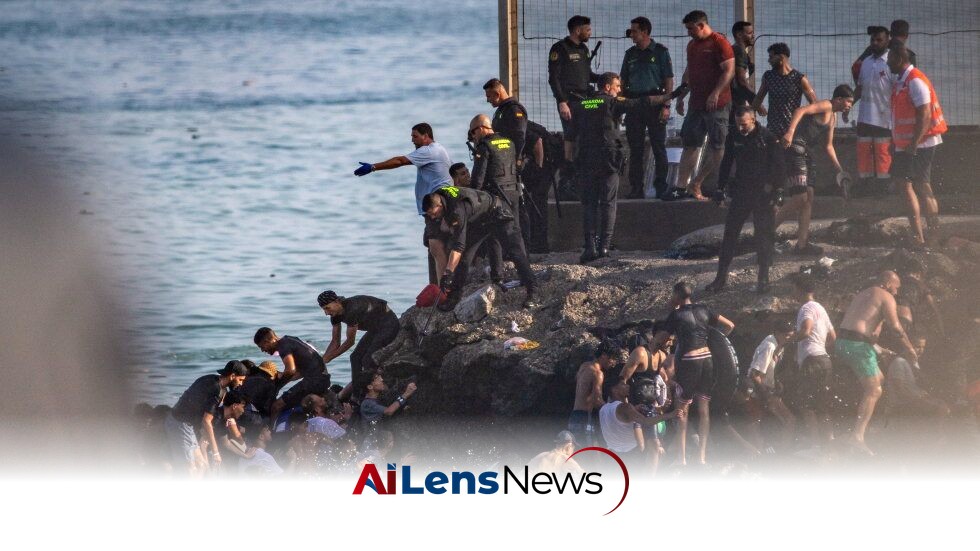


In response to a surge of migrants crossing from Morocco into Ceuta, Spain has deployed military forces after at least nine people died during the incident.
Washington DC, United States Jul 31, 2026 ALN: In a significant escalation of the ongoing migration crisis, Spain has deployed military forces to the enclave of Ceuta following a massive influx of migrants from Morocco. Thousands of individuals breached the border, leading to tragic consequences, including the deaths of at least nine people.
The situation unfolded on Thursday, July 30, 2026, when a large crowd of migrants, primarily from Morocco, began crossing into Ceuta, a Spanish territory located on the northern coast of Africa. Ceuta, along with Melilla, is one of two Spanish enclaves on the African continent, making it a focal point for migration attempts from Africa to Europe. Video footage captured the chaotic scenes as individuals navigated the breakwaters at Tarajal beach, attempting to reach local roads. Such crossings are not uncommon, but the scale of this particular incident has raised alarm among local and national authorities.
The migration crisis in Ceuta is not an isolated incident; it is part of a broader trend of increasing migration pressure on Europe from North Africa. Many migrants undertake perilous journeys in search of better living conditions, safety, and opportunities, often fleeing conflict, persecution, or dire economic circumstances in their home countries. The Mediterranean Sea has become a graveyard for many who attempt to make the crossing, and the land border at Ceuta has similarly turned into a dangerous route.
Local officials in Ceuta urgently requested assistance from the Spanish national government in Madrid, calling for a declaration of a national emergency. The rapid influx of migrants prompted fears of a humanitarian crisis, leading to the military's involvement to restore order at the border. The deployment of military personnel is a significant move, indicating the Spanish government's recognition of the severity of the situation and its implications for national security.
In response to the crisis, Spain's Prime Minister Pedro Sanchez held emergency meetings with his cabinet to discuss immediate measures to control the situation. The government has emphasized the importance of protecting human rights while also ensuring the safety of its borders. This balancing act is particularly challenging in the context of rising anti-immigrant sentiment in parts of Europe, which complicates the political landscape surrounding migration policies.
As the situation escalated, reports emerged of multiple casualties among the migrants attempting to cross. The exact circumstances surrounding the deaths remain unclear, but they highlight the dangers faced by individuals seeking refuge in Europe. Eyewitness accounts describe harrowing scenes where individuals struggled against the elements and crowded conditions, leading to panic and chaos. Authorities are now grappling with the immediate needs of those who have successfully crossed, as well as the broader implications for migration policy.
The tragic loss of life has sparked outrage and concern among humanitarian organizations, which have long warned about the risks associated with irregular migration routes. These organizations stress the need for comprehensive policies that address the root causes of migration rather than merely focusing on border control. They argue that countries must work together to create safe and legal pathways for migrants, as well as provide adequate support for those who are displaced.
This incident raises significant questions regarding Spain's immigration policies and its relationship with Morocco. The Spanish government, led by Prime Minister Pedro Sanchez, is under pressure to address the root causes of migration while ensuring the safety and security of its borders. The relationship between Spain and Morocco is complex, characterized by cooperation on security and migration issues, but also by tensions over issues such as territorial sovereignty and economic disparities.
Spain's approach to managing migration has often involved working closely with Moroccan authorities to prevent departures from Moroccan shores. However, the recent surge in crossings indicates that these measures may not be sufficient. Critics of the current approach argue that a more humane and comprehensive strategy is needed, one that addresses the socio-economic factors driving migration and provides support for both migrants and the communities affected by their arrival.
In light of the recent events, Spain is expected to reassess its border control measures and engage in discussions with Moroccan authorities to manage migration flows more effectively. The deployment of military forces underscores the seriousness of the situation and the need for a coordinated response to prevent further tragedies. This may involve increased patrols along the border, enhanced surveillance, and improved facilities for processing migrants.
Additionally, Spain may seek to collaborate with other European countries to develop a unified approach to migration that balances security concerns with humanitarian obligations. The European Union has faced criticism for its handling of migration, often perceived as fragmented and inconsistent. There is growing recognition that a collective effort is necessary to address the challenges posed by migration, which requires not only border security measures but also investment in development initiatives in countries of origin.
The deployment of military personnel to Ceuta marks a critical moment in Spain's ongoing struggle with migration issues. As the situation develops, the focus will remain on humanitarian aid for those affected and the broader implications for regional security and international relations. The recent events serve as a stark reminder of the complexities surrounding migration and the urgent need for effective and compassionate solutions that respect human rights while ensuring the safety of all individuals involved.
To learn more about the latest developments in Culture & Society, stay updated with our exclusive reports and analyses on AiLensNews.

