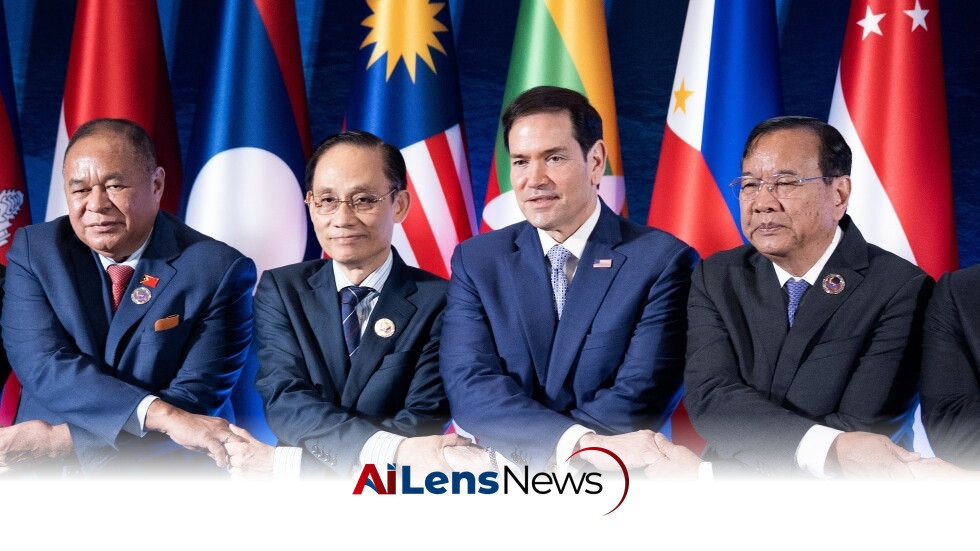


U.S. Secretary of State Marco Rubio cautions Asian leaders that Iran's control demands over the Strait of Hormuz threaten global trade and navigation freedoms.
Washington DC, United States Jul 23, 2026 ALN: In a recent address in Manila, U.S. Secretary of State Marco Rubio expressed serious concerns regarding Iran's demands for control over the Strait of Hormuz. He warned that such a move could set a dangerous precedent, potentially jeopardizing the global economy and freedom of navigation in one of the world's most critical maritime chokepoints. The Strait of Hormuz is not only a narrow passage but also serves as a vital artery for international trade, particularly for oil transportation, making it a focal point of geopolitical tension.
The Strait of Hormuz is a vital waterway through which a significant portion of the world's oil supply passes. Roughly 20% of the world's oil exports transit through this strait, making it an essential route for energy security not only for countries in the region but also for economies around the globe. Rubio emphasized that any attempt by Iran to exert control over this strategic route would have far-reaching implications not only for regional stability but also for international trade and energy security. Should Iran succeed in its demands, it could embolden other nations or non-state actors to pursue similar aggressive territorial claims, leading to increased tensions and potential conflicts in other sensitive maritime regions.
The implications of such a scenario extend beyond immediate economic concerns. A disruption in the flow of oil through the Strait of Hormuz could lead to skyrocketing oil prices, which would have a cascading effect on global markets, potentially triggering inflation and economic instability in countries that depend heavily on oil imports. The interconnectedness of the global economy means that disturbances in one region can have ripple effects worldwide, affecting everything from transportation costs to consumer prices.
Despite Iran's recent outreach efforts to engage in discussions with the United States, Rubio noted that the U.S. remains cautious. He stated, “As of now, despite their direct outreaches, unfortunately, so far, even though we have reached agreements, they have not kept their commitments.” This statement underscores the skepticism surrounding Iran's intentions and the reliability of any agreements made. The history of U.S.-Iran relations is fraught with mistrust, characterized by a series of negotiations that have often fallen short of their intended goals. The Joint Comprehensive Plan of Action (JCPOA), an agreement aimed at curbing Iran's nuclear program, is a prime example where commitments were not honored, leading to the U.S. withdrawal from the agreement in 2018. This backdrop of broken promises contributes to the current U.S. stance of caution and skepticism toward Iran's diplomatic overtures.
The U.S. approach to Iran has evolved over the years, influenced by various geopolitical developments and shifting alliances in the Middle East. The complexities of Iranian politics, coupled with its regional ambitions, have made it difficult for the U.S. and its allies to forge a consistent and effective strategy. Rubio's caution reflects a broader sentiment among U.S. officials who view Iran's actions as part of a larger pattern of behavior that undermines regional stability.
Rubio reiterated the U.S. position of being open-minded and willing to engage in negotiated settlements to resolve differences with Iran. However, he stressed that any negotiations must ensure the protection of global trade routes and uphold international maritime laws. The emphasis on international maritime laws highlights the importance of adhering to established norms and agreements that govern the use of international waters. The U.S. seeks to maintain a rules-based order in maritime affairs, which is crucial for ensuring that trade can flow freely and safely. This position is supported by many nations that rely on these trade routes for their economic stability.
International maritime law, particularly the United Nations Convention on the Law of the Sea (UNCLOS), provides a framework for the rights and responsibilities of states in their use of the world's oceans. The U.S. and its allies have often cited these laws in their efforts to counteract perceived threats to navigation and trade. The call for adherence to these laws is not merely a legalistic stance but a recognition of the interconnected nature of global commerce and the need for cooperative approaches to security.
Asian leaders attending the meeting expressed their concerns over the potential destabilization of the region should Iran's demands be met. Many emphasized the need for a unified approach to ensure the security of maritime routes and to deter any aggressive actions by Iran. Countries such as Japan, South Korea, and India, which are heavily reliant on oil imports from the Gulf region, have a vested interest in the stability of the Strait of Hormuz. The potential for increased shipping costs and oil prices due to disruptions in this vital waterway could have cascading effects on their economies.
For Japan and South Korea, both of which import a significant percentage of their oil from the Middle East, any disruption in the Strait of Hormuz could lead to energy shortages and increased costs for consumers. India, as one of the largest importers of oil globally, shares similar concerns, recognizing that its economic growth is closely tied to stable energy supplies. Additionally, regional allies of the U.S., including Saudi Arabia and the United Arab Emirates, are closely monitoring the situation as they view Iran's actions as a direct threat to their national security.
The geopolitical landscape in the Middle East is already fraught with tension, and any perceived aggression from Iran could prompt a stronger military response from its neighbors, potentially leading to an arms race or open conflict. The stakes are high, and the implications of Iran's demands extend beyond mere economic concerns to encompass broader issues of national security and regional stability.
As tensions continue to rise in the region, the international community watches closely. The U.S. remains committed to safeguarding freedom of navigation and ensuring that any agreements with Iran are honored and upheld. The situation in the Strait of Hormuz remains a focal point for discussions on global security and economic stability. The potential for conflict in this region underscores the importance of diplomatic efforts to resolve tensions and the need for a concerted international response to maintain the status quo in maritime security. The stakes are high, and the implications of any changes in control over the Strait of Hormuz could reverberate throughout the global economy, affecting everything from oil prices to international trade relations.
In summary, the concerns raised by Secretary Rubio reflect a broader anxiety shared by many nations regarding Iran's ambitions in the Strait of Hormuz. The potential for increased conflict not only threatens regional stability but also poses significant risks to the global economy. As discussions continue, the international community must navigate these complex dynamics carefully, balancing the need for diplomatic engagement with the imperative to protect vital trade routes and uphold international law. The future of the Strait of Hormuz and its implications for global trade and security hangs in the balance, and stakeholders must work collaboratively to avert a crisis that could have far-reaching consequences.
To learn more about the latest developments in Culture & Society, stay updated with our exclusive reports and analyses on AiLensNews.

