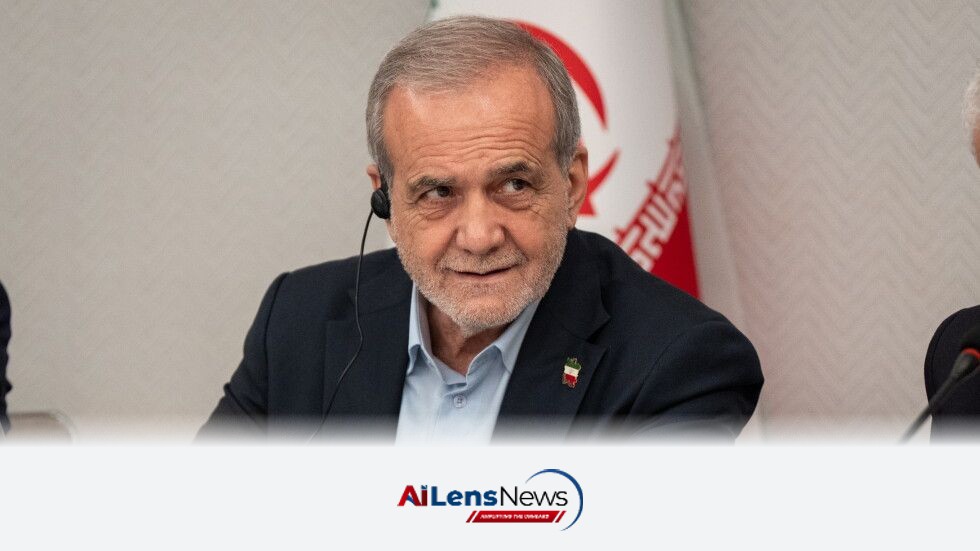



Iran's top security official declares that any support for new U.S. sanctions would be perceived as an act of war, escalating regional tensions.
Washington DC, United States Aug 24, 2026 ALN: The head of Iran’s Supreme National Security Council, Ali Shamkhani, has issued a stark warning regarding the potential for new U.S. sanctions against Iran. He stated that any country supporting such measures would be seen as engaging in an 'act of war' against the Islamic Republic. This declaration comes amid heightened tensions in the Middle East, particularly in light of ongoing conflicts and diplomatic strains. The warning is significant not only for its immediate implications but also for the broader geopolitical landscape in which it is situated.
Shamkhani's comments reflect Iran's deep-seated concerns over U.S. foreign policy, particularly the sanctions that have severely impacted its economy. The Iranian government has consistently portrayed these sanctions as unjust and a violation of its sovereignty. Since the U.S. exited the Joint Comprehensive Plan of Action (JCPOA), commonly known as the Iran nuclear deal, in May 2018, Iran has faced a series of escalating sanctions. These measures have targeted various sectors of the Iranian economy, including oil exports, banking, and trade, leading to a significant economic downturn.
The Iranian leadership views these sanctions as a form of economic warfare, aimed at destabilizing the country and undermining its regional influence. The sanctions have not only affected the economy but have also led to widespread discontent among the Iranian populace, with protests erupting over rising prices and unemployment. In this context, Shamkhani's warning serves as a rallying cry for the Iranian government to unify its citizens against perceived external threats.
Responses to Shamkhani's statements have varied across the region. Some countries, particularly those with historical ties to Iran, have expressed solidarity with the Islamic Republic, emphasizing the need for diplomatic solutions rather than escalatory measures. For instance, nations like Iraq and Lebanon, which have significant Iranian influence, have called for dialogue and negotiations to resolve differences peacefully.
Conversely, countries aligned with U.S. interests, such as Saudi Arabia and the United Arab Emirates, have reiterated their support for sanctions as a means to curb Iran's influence and activities in the region. These nations have long viewed Iran as a destabilizing force, particularly in the context of its involvement in conflicts in Syria, Yemen, and Iraq. The contrasting reactions highlight the divisions within the region regarding Iran's role and the effectiveness of sanctions as a policy tool.
The relationship between the U.S. and Iran remains fraught with tension, particularly following the U.S. withdrawal from the Iran nuclear deal in 2018. Since then, Iran has gradually stepped away from its commitments under the agreement, leading to a cycle of sanctions and retaliatory actions. The potential for new sanctions could further complicate any efforts at diplomatic engagement.
In recent months, there have been sporadic attempts at dialogue, but these have largely been overshadowed by mutual distrust and accusations. The Biden administration has expressed a willingness to return to negotiations regarding the nuclear deal, but Iran has demanded the lifting of sanctions as a precondition for talks. This stalemate has left both parties in a precarious position, where any new sanctions could provoke a strong response from Iran, potentially escalating into military confrontations.
International observers are closely monitoring the situation, as any escalation could have broader implications for global security. Analysts suggest that a miscalculation on either side could lead to unintended consequences, potentially drawing in other nations and exacerbating existing conflicts. The geopolitical ramifications of a conflict involving Iran could extend beyond the Middle East, affecting global oil markets and international relations.
Moreover, the situation has implications for U.S. alliances in the region. Countries that have historically relied on U.S. support may find themselves in a difficult position if tensions escalate, as they balance their own national interests with the need to maintain good relations with Iran. The potential for conflict raises questions about the effectiveness of U.S. foreign policy in the region and the long-term strategy for addressing Iranian influence.
As tensions continue to rise, the international community faces the challenge of navigating a complex geopolitical landscape. The stakes are high, and the potential for conflict looms large, particularly if diplomatic efforts fail to address the underlying issues at play. The warning from Shamkhani serves as a reminder of the fragile state of affairs in the Middle East, where the interplay of national interests, regional alliances, and global dynamics can lead to unpredictable outcomes. It remains to be seen whether diplomatic channels can be effectively utilized to de-escalate the situation, or if the cycle of sanctions and threats will continue to dominate U.S.-Iran relations.
To learn more about the latest developments in Culture & Society, stay updated with our exclusive reports and analyses on AILensNews.

