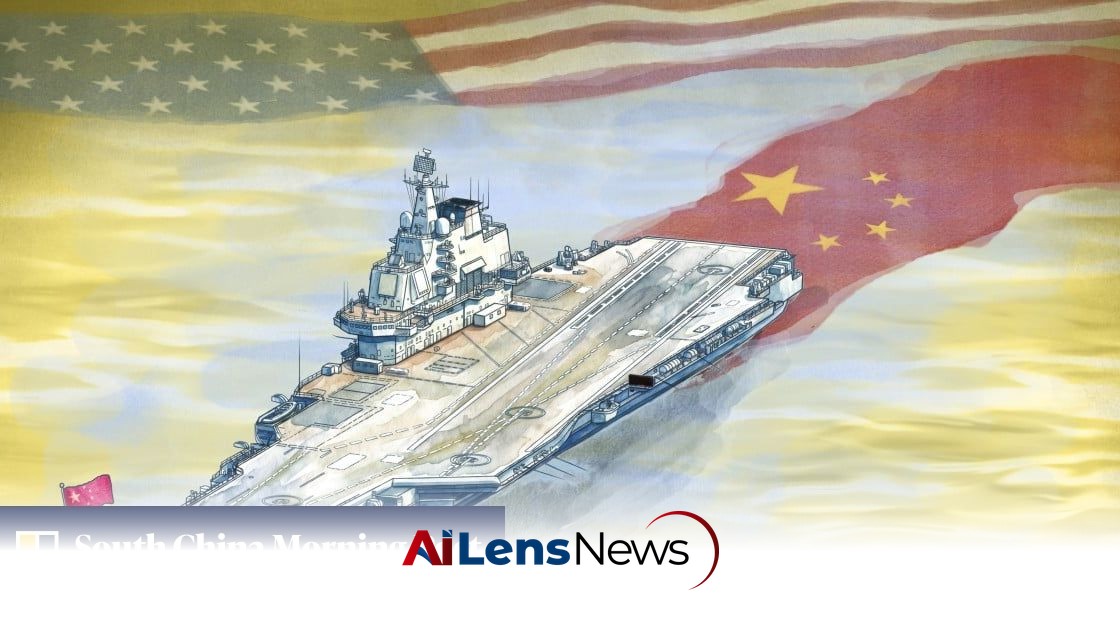



Experts highlight that China's aircraft carrier fleet is designed to complement land forces and extend military reach, diverging from U.S. naval strategies.
London, United Kingdom Aug 12, 2026 ALN: Having marked its 99th anniversary on August 1, the People’s Liberation Army (PLA) is now just a year away from its centenary goals, with its evolution highlighting the past, present, and future of China’s military strategy. The PLA has undergone significant transformations since its establishment, shifting from a predominantly land-based force to one that increasingly emphasizes naval capabilities. This evolution is particularly evident in the context of China's aircraft carrier strategy, which is a critical component of its broader military modernization efforts.
In the sixth part of a series examining this topic, it is important to consider not only the number of carriers China plans to build but also the strategic implications of these vessels. Debate over China’s aircraft carrier ambitions has long centered on how many carriers it will build, with the Pentagon last year estimating that Beijing planned to expand its fleet to nine by 2035. This projection reflects a growing recognition of the importance of naval power in modern warfare and international relations.
However, behind the high-profile ship launches and ambitious plans, experts argue that quieter changes in pilot recruitment, command structures, and fleet integration are equally telling. These elements point to a carrier doctrine that is distinct from the American model. Brendan Mulvaney, director of the China Aerospace Studies Institute, emphasizes that “the biggest misconception among Western analysts is the tendency to evaluate the [Chinese navy] through the doctrinal mirror of the US Navy.” This perspective underscores the need to understand China's military strategy on its own terms, rather than through the lens of Western military paradigms.
Just because China has developed similar types of equipment to the US Navy does not imply that it will employ these assets in the same manner. The goals, missions, and challenges faced by the Chinese military are fundamentally different from those of the United States. Consequently, it is expected that China will devise solutions tailored to its unique circumstances. This approach is reflective of a broader trend in Chinese military thinking, which seeks to adapt and innovate based on national priorities and regional security dynamics.
China’s carrier force is evolving under strategic conditions that differ significantly from those that shaped the American naval doctrine of using carriers to project power thousands of kilometers from home. The United States has historically relied on its aircraft carriers to serve as mobile airbases, enabling power projection across the globe. In contrast, China’s aircraft carriers seem to be intended primarily to complement its existing land-based air power, long-range anti-ship missiles, integrated air-defense systems, and rocket forces along its coastline. This strategy is designed to enhance the PLA’s ability to operate in the western Pacific and beyond.
The development of China’s aircraft carrier capabilities must be understood within the context of its broader military modernization efforts. Over the past few decades, China has made significant investments in its naval forces, with a particular emphasis on enhancing its blue-water capabilities. This shift has been driven by various factors, including the need to protect maritime interests, secure vital trade routes, and assert territorial claims in the South China Sea and beyond.
As China continues to expand its naval presence, the implications for regional and global security are profound. The South China Sea, a critical maritime corridor for global trade, has become a focal point of tensions between China and its neighbors, as well as the United States. The deployment of aircraft carriers in this region could alter the balance of power and raise the stakes in ongoing territorial disputes.
Moreover, the strategic use of aircraft carriers by China reflects its broader ambitions to establish itself as a dominant maritime power. This ambition is not only about military capability but also about projecting influence and asserting sovereignty in contested waters. The development of carriers is part of a multi-faceted approach that includes advancements in naval technology, increased shipbuilding capacity, and enhanced training for naval personnel.
In light of these developments, it is essential to consider the implications of China’s evolving aircraft carrier strategy for international relations. The rise of China as a naval power has prompted responses from neighboring countries, many of which are enhancing their own military capabilities in response to perceived threats. This arms buildup can lead to increased tensions and competition in the region, particularly as countries seek to safeguard their interests in the face of a more assertive Chinese military.
Furthermore, the United States, as a long-standing maritime power, is closely monitoring China’s naval developments. The Pentagon has expressed concerns over China's expanding naval capabilities and their potential impact on regional stability. In response, the US has reaffirmed its commitment to maintaining a presence in the Indo-Pacific region, conducting freedom of navigation operations, and strengthening alliances with regional partners.
As China approaches its centenary goals, the evolution of its aircraft carrier strategy will likely continue to be a focal point of its military modernization efforts. The interplay between China’s naval ambitions and the responses of other nations will shape the future security landscape in the Indo-Pacific region. The development of a distinct Chinese carrier doctrine, informed by its unique strategic context, underscores the need for a nuanced understanding of military capabilities and the geopolitical dynamics at play.
In conclusion, China's aircraft carrier strategy represents a critical aspect of its broader military evolution. By examining the nuances of its approach, it becomes clear that China is not merely emulating existing naval powers but is instead crafting a strategy that aligns with its national interests and regional objectives. As the PLA continues to develop its naval capabilities, the implications for global security and the balance of power in the Indo-Pacific will be profound and warrant close attention from policymakers and analysts alike.
To learn more about the latest developments in Culture & Society, stay updated with our exclusive reports and analyses on AILensNews.

