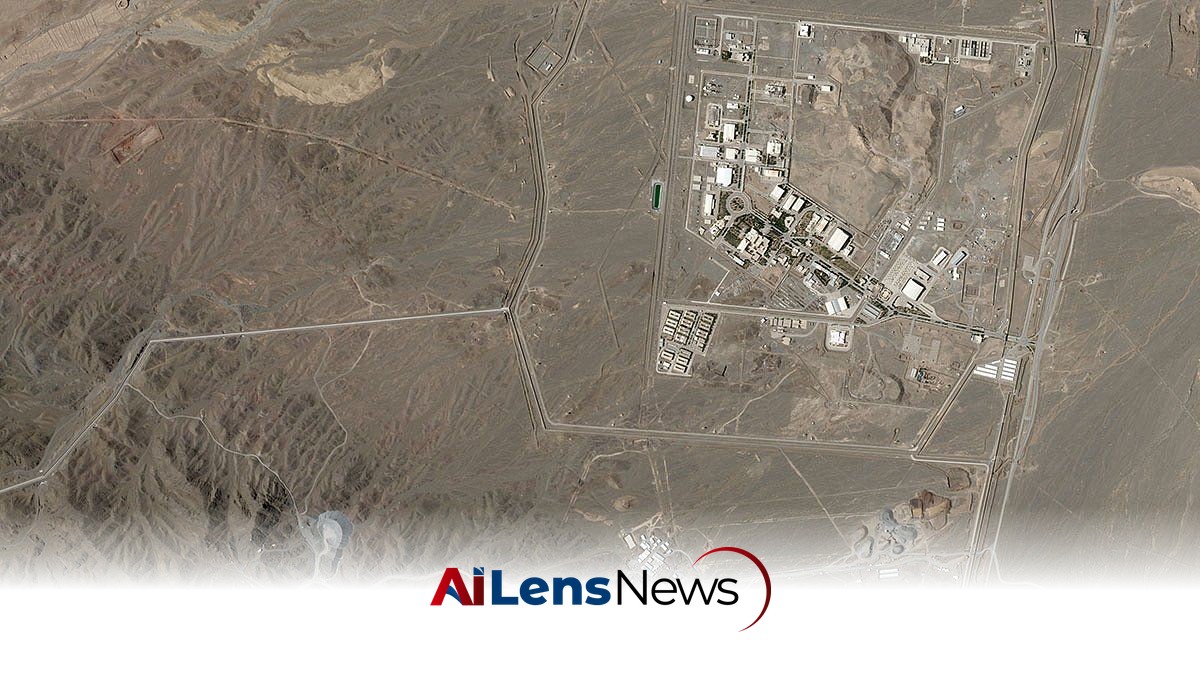


Exploring the implications of Trump's threats against Iran's nuclear facilities at Pickaxe Mountain and its significance for the country's atomic ambitions.
Abu Dhabi, United Arab Emirates Jul 22, 2026 ALN:
For decades, Iran's nuclear program has raised alarms in the West, with concerns rooted in historical, political, and security dynamics that stretch back to the late 20th century. The tensions escalated significantly in 2025 when the US conducted airstrikes on Iranian nuclear sites at Fordo, Isfahan, and Natanz, all of which were involved in uranium enrichment. These airstrikes were a culmination of years of rising tensions and were aimed at crippling Iran's nuclear capabilities, which many Western nations believe could lead to the development of nuclear weapons.
The backdrop of these events is a complex narrative involving Iran's 1979 Islamic Revolution, which led to a significant shift in its foreign policy and relations with Western nations. Following the revolution, Iran's nuclear ambitions became a focal point of suspicion, particularly after the country pursued a nuclear program that was initially developed with assistance from the United States in the 1970s. However, after the revolution, Iran's nuclear aspirations became shrouded in secrecy, leading to increased skepticism from Western countries.
During the 2025 conflict, both Israel and the US aimed to prevent Iran from developing nuclear weapons. The rationale behind these military actions stems from a long-standing belief in the West that a nuclear-armed Iran would pose an existential threat to regional stability and international security. This belief has been fueled by Iran's history of hostility towards Israel and its support for militant groups opposed to Western interests in the Middle East. The ongoing Israeli-Palestinian conflict, coupled with Iran's backing of groups like Hezbollah and Hamas, has further intensified these fears.
Despite Iran's claims of a peaceful nuclear program, the International Atomic Energy Agency (IAEA) and Western nations have not recognized any military nuclear ambitions since 2003. This assertion is based on Iran's failure to provide full transparency regarding its nuclear activities and its previous clandestine operations. The IAEA has continually expressed concerns about the potential military dimensions of Iran's nuclear program, which has led to a series of sanctions and diplomatic efforts aimed at curbing its nuclear ambitions. The agency's reports have often highlighted discrepancies in Iran's declarations, leading to suspicions about its true intentions.
Israel is widely regarded as the only nuclear-armed state in the Middle East, having developed its nuclear capabilities in secrecy, which has contributed to the ongoing tension in the region. The existence of Israel's nuclear arsenal has led to a complex security dynamic, where other nations, particularly Iran, feel compelled to pursue their own nuclear capabilities as a counterbalance. This situation has created a precarious balance of power in the region, with nuclear capabilities becoming a focal point of national security strategies.
In recent years, Iranian officials have increasingly hinted at pursuing nuclear weapons. The late Supreme Leader Ayatollah Ali Khamenei, who was killed on February 28 during the war, had issued a fatwa declaring nuclear weapons un-Islamic, which was intended to signal Iran's commitment to a peaceful nuclear program. However, his successor, Mojtaba Khamenei, has yet to clarify his stance on nuclear armament, leaving the international community in a state of uncertainty regarding Iran's true intentions. This ambiguity has been a source of concern for Western nations, as they grapple with the implications of a potentially nuclear-armed Iran.
To develop a functional nuclear weapon, Iran would need to enrich uranium to 90% purity. This level of enrichment is significantly higher than what is required for civilian nuclear power, which typically operates at around 3-5% purity. Achieving this level of enrichment is a complex and technically challenging process that requires sophisticated technology and infrastructure, much of which Iran has been developing over the years. The knowledge and expertise gained from its nuclear program could potentially facilitate a rapid advancement towards weaponization if Iran chooses to pursue that path.
Subsequently, Iran would have to construct a bomb and miniaturize it for delivery via a ballistic missile. This intricate process could take months or even years, with the constant risk of detection by Israeli or US intelligence agencies. The timeline for developing a nuclear weapon is uncertain and depends on various factors, including the level of international scrutiny and the availability of resources. The potential for outside intervention, whether through military means or diplomatic pressure, could also affect Iran's calculations regarding its nuclear ambitions.
The implications of Iran successfully developing nuclear weapons would be profound, not just for the Middle East but for global security as well. A nuclear-armed Iran could trigger a regional arms race, prompting other nations in the Middle East to pursue their own nuclear capabilities in response. This could destabilize an already volatile region, potentially leading to conflicts that could have far-reaching consequences. The specter of a nuclear arms race in the Middle East raises alarms about the potential for miscalculations or escalations that could spiral out of control.
Moreover, the presence of nuclear weapons in Iran could embolden the Iranian regime, allowing it to exert greater influence over its neighbors and support for proxy groups throughout the region. This scenario raises concerns about the potential for nuclear proliferation and the risks associated with nuclear weapons falling into the hands of non-state actors. The international community has long been wary of the possibility that terrorist organizations could gain access to nuclear materials or technology, which would pose an unprecedented threat to global security.
The international community has attempted to address these concerns through various diplomatic measures, including the Joint Comprehensive Plan of Action (JCPOA), which was established in 2015. The JCPOA aimed to limit Iran's nuclear program in exchange for the lifting of economic sanctions. However, the agreement has faced numerous challenges, particularly after the US withdrew from the deal in 2018, leading to increased tensions between Iran and Western nations. The withdrawal not only undermined the diplomatic framework established by the JCPOA but also prompted Iran to gradually step back from its commitments under the agreement, further complicating the situation.
In light of the current geopolitical climate, the future of Iran's nuclear program remains uncertain. The ongoing conflict and the recent airstrikes have further complicated the situation, making diplomatic solutions more challenging to achieve. As the world watches closely, the actions taken by both Iran and the international community in the coming months will be crucial in determining the trajectory of Iran's nuclear ambitions and the broader implications for regional and global security. The potential for renewed negotiations or increased military actions could shape the landscape of international relations in the Middle East.
In conclusion, the situation surrounding Iran's nuclear program is a complex interplay of historical grievances, geopolitical strategies, and national security concerns. As the threat of a nuclear-armed Iran looms, the stakes have never been higher for all parties involved. The need for a comprehensive approach that balances diplomatic engagement with firm measures to prevent nuclear proliferation is more critical than ever as the international community grapples with the challenges posed by Iran's nuclear ambitions. The pursuit of a stable and secure Middle East will require concerted efforts from global powers to navigate the intricate web of alliances and rivalries that define the region.
To learn more about the latest developments in Culture & Society, stay updated with our exclusive reports and analyses on AiLensNews.

