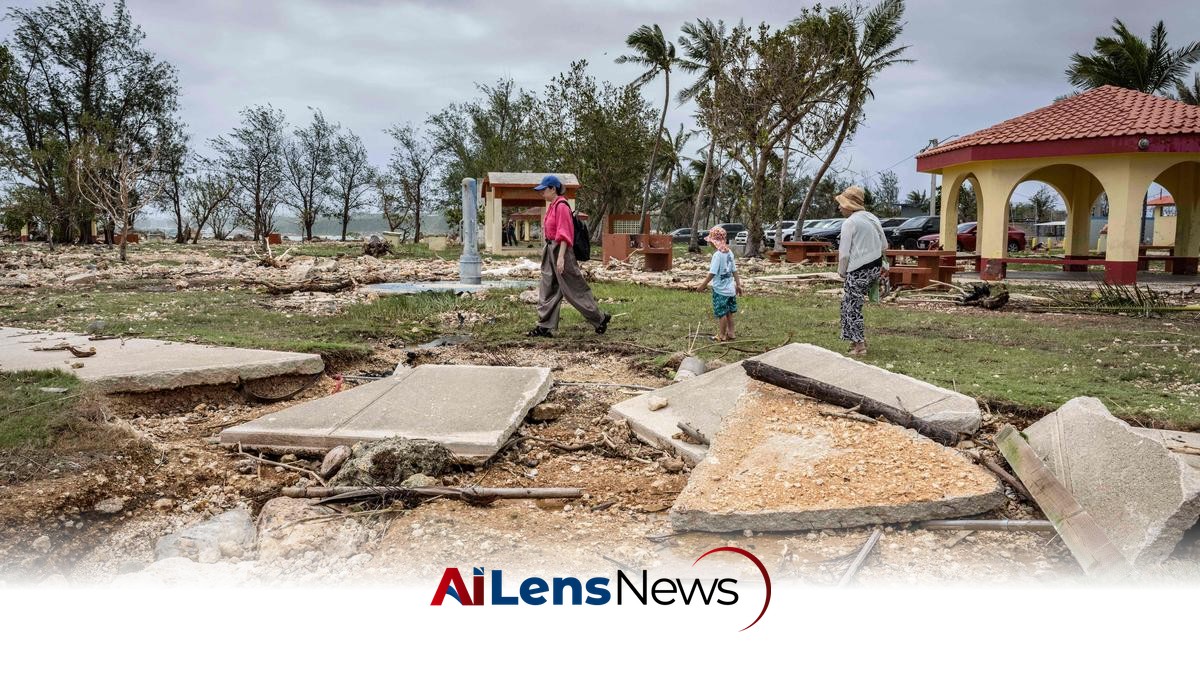


Tens of thousands lose power in U.S. Pacific islands as Super Typhoon Bavi causes severe damage and essential service outages.
Washington DC, United States Jul 7, 2026 ALN: Tens of thousands of people were without power on Tuesday (July 7, 2026) on Guam and the Northern Marianas after a super typhoon tore through the U.S. Pacific territories, with no casualties reported. The storm, known as Super Typhoon Bavi, made landfall on Monday (July 6, 2026) and was characterized by winds reaching up to 290 km (180 miles) per hour, resulting in substantial devastation across the region.
The small Island of Rota was the worst affected after a direct hit from the super typhoon. Reports indicate that the storm caused extensive damage, bringing down trees and power lines, and knocking out water supplies. Residents faced dire conditions as the storm left many without basic necessities. "Many homes have suffered severe damage, with countless roofs completely torn off... Across the island, there is no electricity, no running water, and no mobile network service," said Rota resident Masum Dhali, 24, who described the chaos that ensued following the storm's passage.
Local authorities have been working diligently to assess the damage and restore services. Lou Rosario, a spokeswoman for the Municipal Operations Center on Rota, confirmed on Tuesday (July 7, 2026), "As of now, still no water and electricity." The Rota Mayor's office later issued an all-clear to residents but cautioned them to be careful of live fallen power lines, unstable buildings, floods, and debris on roads. This advisory reflects the ongoing risks that linger even after the storm has passed, as infrastructure remains compromised.
Local media captured images of a long line of cars on Rota—home to some 1,500 people—queueing to get drinking water as temperatures reached a hot and humid 29°C (85°F). The demand for clean water highlights the immediate needs of the residents, many of whom are struggling to secure basic supplies following the storm.
Saipan and Tinian, the two main islands of the Northern Marianas, which are home to around 40,000 people, also lost power, as did parts of nearby Guam, a separate U.S. territory that hosts major military bases. The impact of Super Typhoon Bavi was felt across a wide area, with reports of fallen trees, debris, and damaged vehicles in Guam. The island, located less than 80 km (50 miles) from Rota, saw significant disruption, with fallen trees, bits of streetlamps, and rocks strewn over the roads. At least one car was reported flipped on its side, illustrating the force of the storm.
Despite the widespread disruptions caused by Super Typhoon Bavi, the damage in the region of around 210,000 people was reported to be less severe than after Sinkalu, another super typhoon that struck in April. This context is important as it indicates the varying levels of resilience and preparedness among the communities in the face of increasingly frequent and severe weather events.
The aftermath of Super Typhoon Bavi has left many residents grappling with loss and uncertainty. For instance, Guam resident Marie and her partner, who were clearing up debris with an excavator, had to move out of their house after Typhoon Sinlaku and were living in a van when Typhoon Bavi struck. "All of our stuff (in the van) got wet from this typhoon now, so we ended up coming here to our car because we have nowhere else to go," 37-year-old Ms. Marie shared, highlighting the precarious living conditions faced by many in the wake of the storm.
Others, like handyman Bob Benavente, reported that while some rainwater leaked into his house, he and his neighbors had not suffered major damage. "Everybody goes out and gets gas, water, all the supplies (before storms arrive). Everyone's used to it here. It's part of the island lifestyle," the 61-year-old remarked. This sentiment reflects a culture of preparedness that has developed among island residents, who often face the threat of tropical storms and typhoons.
The occurrence of Super Typhoon Bavi is set against a backdrop of changing climate conditions that have been influencing the frequency and intensity of storms in the Pacific region. According to the European Union's Copernicus Marine Service, oceans experienced their hottest June on record and could set fresh highs in the months ahead. Warmer oceans contribute to the intensification of tropical storms and increase moisture, which can lead to heavy rainfall. This trend is alarming, as it suggests that the conditions conducive to severe weather events are becoming more prevalent.
Adding to the situation is the return of El Niño this year, a natural climate phenomenon that warms Pacific surface temperatures and typically occurs every two to seven years. Its effects can include drought across parts of the Amazon, Indonesia, and Australia, disrupted monsoons in India, and an increase in tropical storms and typhoons in the Pacific. The interplay between El Niño and the changing climate raises concerns about the potential for more frequent and severe weather events in the future.
Charles "Chip" Guard, 80, a meteorologist who worked for years with the National Weather Service in Guam, recalled 11 super typhoons in the Pacific in 1997, a year marked by a strong El Niño. He noted, "This is a strong El Niño year, but you know the season's only just started and we already had a couple." His observations underscore the unpredictability of weather patterns in the region and the need for ongoing monitoring and preparedness as climate conditions evolve.
As communities begin to recover from the impact of Super Typhoon Bavi, the focus will likely shift to rebuilding and improving infrastructure to withstand future storms. The lessons learned from this event, combined with the growing body of research on climate change and its effects on weather patterns, will be crucial in shaping the region's response to similar challenges in the future. Policymakers and local leaders will need to prioritize resilience and sustainability in their planning efforts to mitigate the risks posed by increasingly severe weather events.
In summary, the aftermath of Super Typhoon Bavi serves as a stark reminder of the vulnerabilities faced by island communities in the Pacific. As they navigate the recovery process, the interplay between climate change, natural phenomena like El Niño, and local preparedness will play a critical role in shaping the future resilience of these territories.
To learn more about the latest developments in Climate & Environment, stay updated with our exclusive reports and analyses on AiLensNews.

