

Fishing crews in Sierra Leone claim large Chinese ships are illegally depleting local fish stocks, threatening their livelihoods and food security.
New Delhi, India Jul 6, 2026 ALN: The villagers are shouting as they haul on the ropes to pull the net in from the sea.
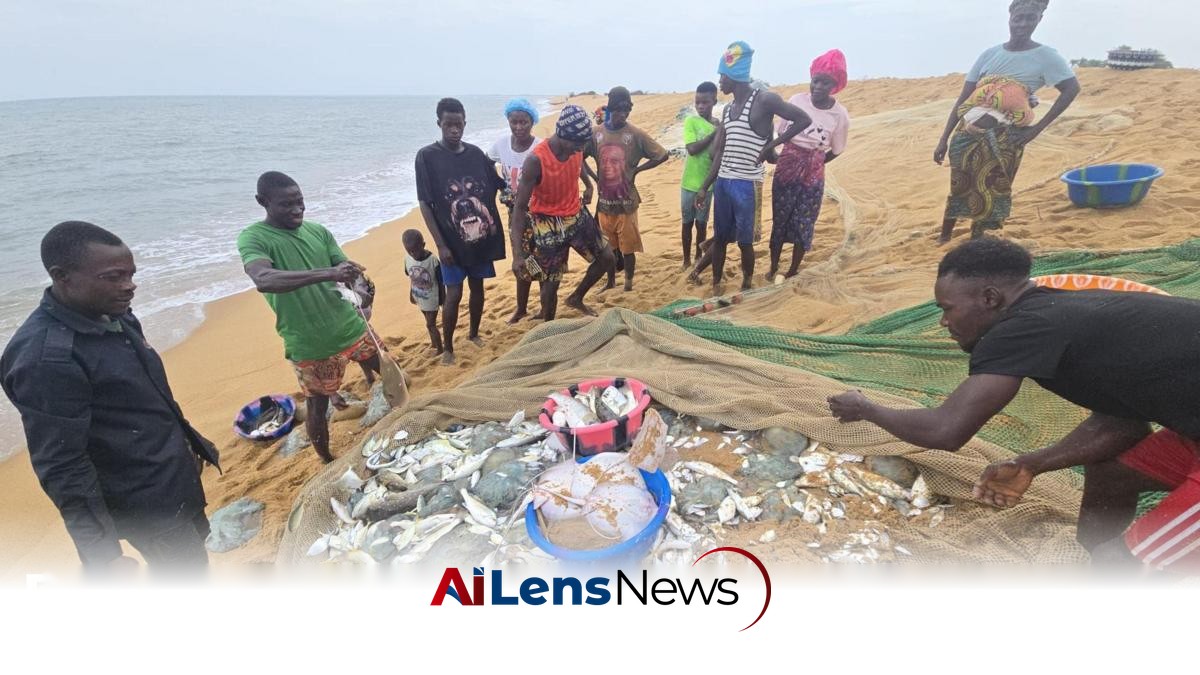
It takes a big collective effort of a dozen or more people to drag the wriggling mass of snapper, mackerel, barracuda, rays, and many more fish besides, onto the beach. This traditional method of fishing, known as shore fishing, has been a way of life for the communities on Sierra Leone's Sherbo Island, located approximately 75 miles (120km) south of the capital, Freetown. However, the villagers are increasingly concerned about the declining fish stocks in their waters. Many local fishermen and women attribute this decline to the aggressive practices of large, foreign fishing vessels that operate in the region.
Marie Pierre, a local fisherwoman, is seen picking sardines from among the discarded jellyfish as she recounts her frustrations. She claims that international trawlers are entering the coastal waters illegally in ever-increasing numbers, despite the existence of an official exclusion zone designed to protect local fisheries. This exclusion zone is intended to ensure that local fishermen can access the fish stocks without competition from larger, often industrial-scale fishing operations.
Fisherman Musa Gassimo adds to the narrative by alleging that these foreign trawlers are engaging in more than just illegal fishing. "We cast our nets in the evening and return to shore. In the night, the trawlers have come and [deliberately] cut the lines," he states, emphasizing the deliberate sabotage that local fishermen face. He points towards the distant large foreign ships on the horizon, expressing frustration over the financial burden this situation imposes on them, with nets costing as much as $250 (£189) to replace each time they are damaged.
West Africa has been identified as the global epicenter for illegal fishing, with a staggering 40% of unlicensed catches traced back to its waters, according to a global report released in 2024. This illegal activity is estimated to cost West African nations a combined total of $10 billion in lost revenues annually, while simultaneously threatening the food security of millions of people who rely on fishing as a primary source of sustenance and income. The ongoing situation has not shown significant improvement over the past two years, leading to heightened concerns among local communities and fishing organizations.
Thomas Turay, president of Sierra Leone's Fishermen's Union, confirms the troubling trend, stating that the average catches for his members have decreased by approximately 40% in recent years. He firmly places the blame on illegal fishing activities, saying, "The illegal fishing is too much. The sea belongs to us, but for the foreign trawlers, they come at night and violate the seven-mile exclusion zone, they come right into the shore here." Turay’s observations reflect a broader sentiment among local fishermen who feel that their livelihoods and traditional practices are under siege.
During an interview at Tombo harbour, close to Freetown, Turay points out several large trawlers anchored just outside the exclusion zone. He notes that despite being positioned outside the legally designated area, these vessels frequently encroach upon local fishing grounds, particularly at night when monitoring is less stringent. This pattern of behavior has led to numerous confrontations and complaints among local fishermen.
Many fishermen have personal stories of conflict with these foreign vessels. Abou Waisissé, a 70-year-old local fisherman, recounts an incident where multiple small fishing boats had their nets cut by a foreign trawler, a clear act of aggression that undermines the community’s fishing efforts. Another fisherman, Mohamedi Kamara, 55, shares his experience of a collision with a large international trawler that damaged his fishing craft, further illustrating the risks local fishermen face in their daily endeavors.
As the conversation shifts to the nationalities of the foreign ships operating off the coast of Sierra Leone, Steve Trent, CEO and co-founder of the global campaign group Environmental Justice Foundation (EJF), highlights the overwhelming presence of Chinese vessels. He notes, "In the past, we've seen South Korean vessels there, we've seen Taiwanese, we see European vessels there doing bad things. But now when you look across that region, it is overwhelmingly Chinese." This trend raises questions about the sustainability of fishing practices in the region and the broader implications for international fishing regulations.
Despite the numerous complaints lodged by local fishermen to the Fisheries Ministry, many feel that their voices go unheard. Kamara expresses a common sentiment among fishermen, stating that their grievances are often ignored, and their complaints do not result in any meaningful action. Turay attributes this lack of response to official corruption, suggesting that government authorities may be reluctant to confront illegal fishing operations due to the financial power and influence of those involved in the illicit activities. "I know that somebody who is doing this illegal business has the money to bribe and pay," he asserts, highlighting a systemic issue that undermines efforts to protect local fisheries.
In contrast, Sheku Sei, director at the Sierra Leone Ministry of Fisheries, disputes claims of widespread illegal fishing, asserting that the situation has improved significantly in recent years. He points to measures implemented by the government, such as requiring international vessels to carry transponders for tracking their movements and deploying inspectors to monitor compliance. However, when questioned about the reliability of these tracking systems, particularly in light of allegations that some vessels switch off their transponders to evade detection, Sei maintains that this does not occur in Sierra Leone's waters.
Sei also emphasizes the existence of financial penalties for breaching the seven-mile international exclusion zone, arguing that these penalties serve as a strong deterrent against illegal fishing. Yet, he is unable to provide specific examples of penalties being enforced over the past decade, raising skepticism about the effectiveness of these regulatory measures.
The Chinese Chamber of Commerce in Sierra Leone did not respond to requests for comment regarding the allegations of illegal fishing activities. However, the Chinese Foreign Ministry recently issued a blanket denial in response to accusations of illegal fishing in Latin American waters, asserting, "China is a responsible fishing nation, strictly enforcing the regulation of its distant-water fishing activities and engaging in mutually beneficial fisheries cooperation with relevant countries in accordance with international law." This statement reflects China's broader narrative of promoting responsible fishing practices, despite growing evidence of illegal activities associated with its fishing fleet.
Trent from the EJF criticizes the Chinese government's response, describing it as a "head-in-the-sand approach." He argues that the Chinese government is not doing enough to regulate its fishing fleet, stating, "It's simply not credible for them to carry on in this way. China, to date, still is not doing nearly enough to control its fleet. In fact, I would say they're enabling it, through subsidies, through a lack of oversight and control." This perspective underscores the complexities of international fishing regulations and the challenges faced by countries like Sierra Leone in protecting their marine resources.
Trent advocates for a multi-faceted solution that includes better tracking of commercial vessels and increased international pressure on China, including from consumers around the . He points out that the fish taken from West Africa's rich coastal waters are often sold for consumption in various markets globally. "You can choose, do you want to take a product that's been fished illegally, probably unsustainably, stolen from a poor third-party nation, or do you want a product that you actually enjoy eating?" This call to action emphasizes the role of consumers in advocating for sustainable fishing practices and supporting local fishing communities.
To learn more about the latest developments in Regions & Countries, stay updated with our exclusive reports and analyses on AiLensNews.

