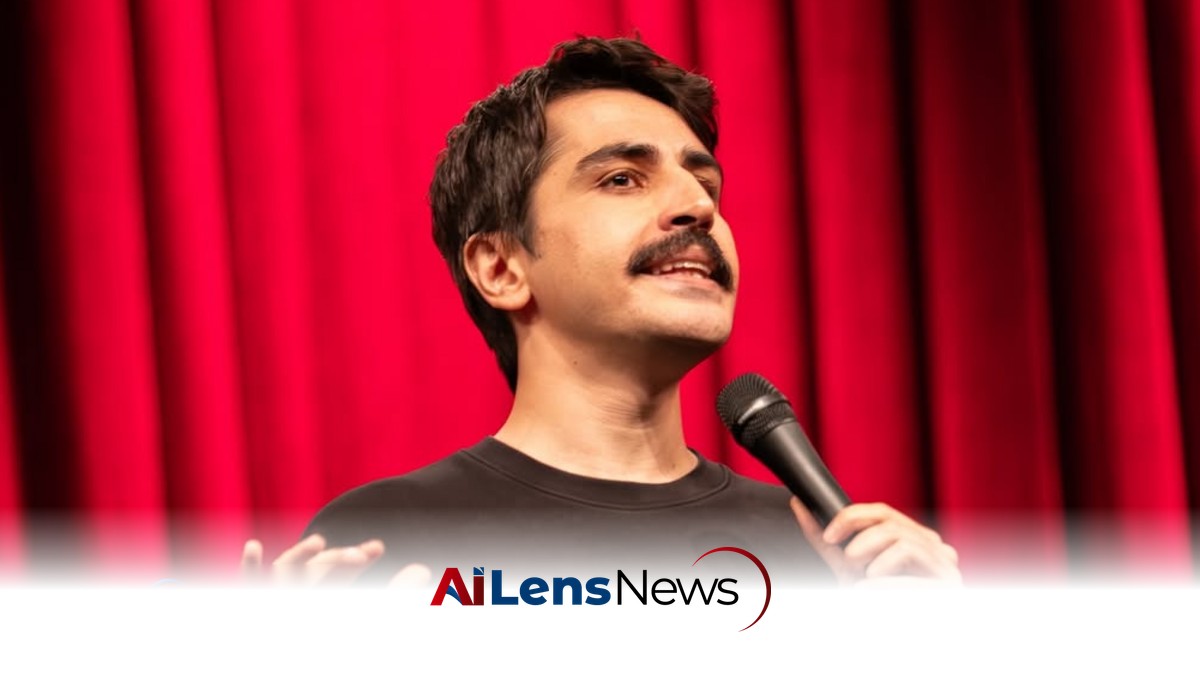


Deniz Göktaş, a popular Turkish comedian, has been arrested for allegedly inciting hatred through his performance, amid a broader crackdown on dissent in Turkey.
New Delhi, India Jul 3, 2026 ALN: Stand-up comedian Deniz Göktaş has been placed under arrest by a court in Istanbul after he was held at the city's main airport over a performance that has attracted 9.4 million views on YouTube.
Göktaş is accused of "inciting hatred and hostility" in his stage routine, as well as insulting President Recep Tayyip Erdoğan. His arrest has raised significant concerns regarding freedom of expression and the increasing crackdown on dissent in Turkey, particularly against those who criticize the government or address sensitive subjects such as politics and religion in their work.
Göktaş is the latest performer to be hit by a crackdown on dissent in Turkey that has also targeted campaigners, journalists, and other public figures. This trend has intensified in recent years, particularly as Turkey's political climate has grown more polarized and authoritarian under Erdoğan's administration. Critics argue that the government seeks to stifle any form of opposition, including artistic expression, which is often seen as a vital component of a healthy democracy.
In recent weeks, access to the social media accounts of numerous LGBT+ organizations and activists has been blocked, while more than 200 people have been detained ahead of next week's NATO leaders' summit in the capital Ankara. This summit is particularly significant as it will host key global leaders, including US President Donald Trump and Ukraine's Volodymyr Zelensky, amidst ongoing geopolitical tensions. The increased security measures and detentions ahead of the summit reflect the government's heightened sensitivity to dissent and criticism during this politically charged time.
Tens of thousands of security personnel are being deployed for the 7-8 July summit hosted by Erdoğan. The extensive security measures have raised concerns about civil liberties, as authorities have imposed a ban on demonstrations in Ankara until 10 July. This ban has drawn criticism from various human rights organizations, which argue that it is an attempt to suppress public dissent during a crucial political event.
Independent Turkish media outlets have complained of being denied accreditation to the summit, further highlighting the challenges faced by journalists and media organizations in Turkey. NATO has stated that it relies on the host nation to ensure access for media, but has also indicated that it is in contact with Turkish authorities regarding the situation. This reliance on the host nation raises questions about the extent to which international organizations can advocate for press freedoms in countries where such rights are under threat.
Among those detained late in June were volunteers from one of Turkey's best-known environmental organizations, the Tema Foundation. Tema stated that many of those detained were retired individuals returning from a nature trip, and most were later released. This incident underscores the broader pattern of detaining individuals who are perceived as dissenters or who engage in activism that challenges the government's narrative.
Deniz Göktaş was arrested as he returned to Istanbul from a holiday, and images of the performer being led away with his hands handcuffed behind his back drew immediate criticism from supporters. This public reaction reflects the growing frustration among citizens regarding the government's approach to dissent and the treatment of those who engage in critical discourse.
After the comedian was questioned by prosecutors at the Çağlayan courthouse in Istanbul on Friday, the court agreed to a request for his pre-trial detention over part of the performance that covered Erdoğan and the Quran. The charges against him highlight the precarious balance between freedom of expression and the government's efforts to protect its image and authority. Istanbul's chief public prosecutor's office stated that authorities had received 185 complaints about Göktaş's video, indicating the sensitivity of the subject matter addressed in his performance.
Turkey's religious affairs directorate mentioned the stand-up show, without naming Göktaş, in its weekly sermon on Friday, which is read out in all the country's mosques. The top mufti's office expressed concerns that the use of digital platforms "and occasional mockery of our sacred values under the guise of humor are distancing our children from our values day by day." This statement reflects the broader societal tensions in Turkey, where discussions about religion and politics often intersect, leading to heightened sensitivities among various groups.
In his statement to the prosecutor, Göktaş stated that he had absolutely no intention of offending anyone religious. He emphasized that his performances had been well-received in various Turkish cities over nearly three years, and he argued that his use of the word "dictator" was a topic widely discussed in Turkey. His video was recorded at Istanbul's best-known open-air performance venue on 1 June and released on YouTube on 24 June, gaining significant traction and viewership.
Göktaş pointed out that more than 100,000 people had watched this performance, and not a single complaint had been made by anyone saying they were offended by this particular section. This assertion raises questions about the motivations behind the complaints that led to his arrest and the broader implications for artistic expression in Turkey.
Critics see Göktaş's detention as part of a broader pattern in Turkey targeting public figures. Human Rights Watch has warned of "far-reaching restrictions on the main political opposition party, the media, and freedom of expression in general." This sentiment is echoed by many who believe that the government is increasingly intolerant of dissent and criticism, particularly as it prepares for significant political events such as the NATO summit.
Erdoğan's biggest political rival, Istanbul Mayor Ekrem İmamoğlu, has been in jail for more than a year and went on trial last March on numerous charges including corruption. İmamoğlu's ongoing legal troubles have raised concerns about the state of democracy in Turkey, with many viewing his imprisonment as an attempt to eliminate political opposition. The opposition Republican People's Party (CHP), which İmamoğlu leads, has faced a broader crackdown, which the CHP has condemned as a "judicial coup" against Turkish democracy.
In May, a court in Ankara removed the CHP's entire leadership including chairman Özgür Özel, replacing him with veteran party figure Kemal Kılıçdaroğlu, who lost to Erdoğan in the last presidential election. This change in leadership has been viewed by many as an attempt to weaken the opposition and consolidate power within the ruling party. A crowd turned out on Friday at the Çağlayan courthouse in Istanbul in support of the detained comedian, and chants of "traitor" were heard inside the courthouse as Kılıçdaroğlu arrived. This public display of support for Göktaş illustrates the growing discontent among citizens regarding the government's treatment of dissenters and the broader implications for freedom of expression in Turkey.
Kılıçdaroğlu has criticized Göktaş's airport arrest in handcuffs, stating that he should be released. However, opposition supporters view his reinstatement as CHP leader as an official attempt to neutralize the party. This perception of political maneuvering further complicates the already fraught political landscape in Turkey, where accusations of authoritarianism and repression are increasingly common.
Protesters have also partially blamed Kılıçdaroğlu, who is 77 years old, for young people being targeted by authorities. This generational divide within the opposition reflects broader societal tensions and differing views on how to effectively challenge the ruling government. The freedom-of-speech monitor, Media and Law Studies Association, stated that Göktaş was facing prison "for telling jokes," emphasizing the importance of satire in a democratic society. They pointed out that satire is protected under Turkey's constitution and the European Convention on Human Rights, highlighting the legal and moral implications of Göktaş's arrest.
The implications of Göktaş's arrest extend beyond his individual case, as they signal a troubling trend in Turkey's approach to dissent and free expression. As the government continues to crack down on those who challenge its authority, the space for open dialogue and criticism shrinks, raising concerns about the future of democracy in the country. The international community is watching closely, and the outcome of Göktaş's case may influence perceptions of Turkey's commitment to human rights and freedom of expression in the years to come.
To learn more about the latest developments in Culture & Society, stay updated with our exclusive reports and analyses on AiLensNews.

