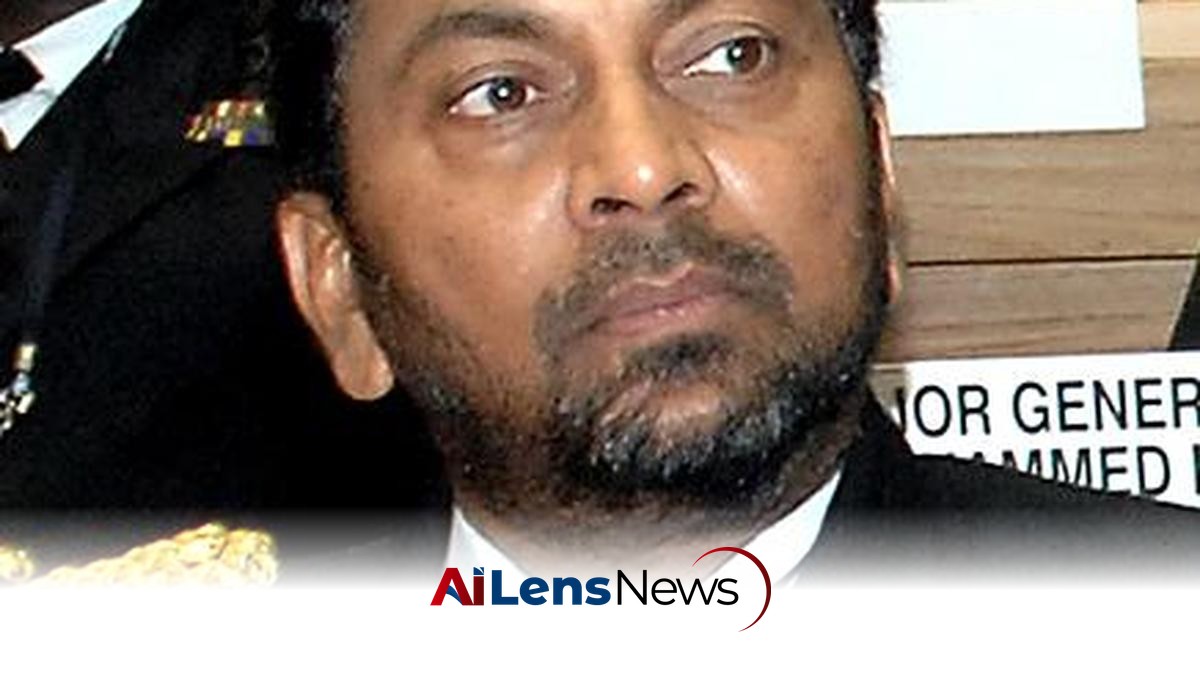


Sri Lanka's former Navy Commander Wasantha Karannagoda was arrested for the illegal recruitment of Yoshitha Rajapaksa, son of former President Mahinda Rajapaksa, and later granted bail.
Sri Lanka, Sri Lanka Jul 4, 2026 ALN: Colombo
Sri Lanka has been embroiled in political turmoil and corruption scandals over the past few years, with high-profile arrests making headlines. One such significant event occurred on July 3, 2026, when former Navy Commander Wasantha Karannagoda was arrested by the country’s anti-graft authorities. This arrest is linked to the alleged illegal recruitment and overseas training of Yoshitha Rajapaksa, the son of former President Mahinda Rajapaksa, raising questions about nepotism and corruption within the military and government sectors.
The Commission to Investigate Allegations of Bribery or Corruption (CIABOC) stated that Admiral of the Fleet Karannagoda was taken into custody due to his involvement in the “unlawful recruitment” of Mr. Yoshitha as a cadet executive officer. Reports indicate that Yoshitha Rajapaksa did not meet the necessary qualifications for this position, which raises concerns about the integrity of the recruitment process within the Sri Lankan Navy. Furthermore, it has been alleged that Karannagoda facilitated Yoshitha’s training at the prestigious Royal Naval Academy in the United Kingdom, with the expenses covered by the state, which has sparked outrage among citizens who are concerned about the misuse of public funds.
Wasantha Karannagoda’s military career has been marked by significant events, including his leadership during the Sri Lankan military’s successful offensive against the Liberation Tigers of Tamil Eelam (LTTE), which concluded the country’s nearly three-decade civil war in May 2009. His command during this tumultuous period earned him the rank of Admiral of the Fleet in 2019, a title that reflects significant recognition within the military hierarchy. However, his career has not been without controversy. He has previously faced serious allegations in connection with the “Navy 11” case, where he was accused of abduction and conspiracy to murder linked to the mysterious disappearance of 11 youths in 2008 and 2009. This case drew international scrutiny, with organizations such as the United Nations and various human rights groups expressing concern over military abuses and the treatment of victims' families.
In that case, investigators alleged that the young men were victims of a ransom scheme orchestrated by Navy personnel, which highlighted systemic issues within the military and raised questions about accountability. Although charges against Karannagoda were dropped in October 2021 during the administration of President Gotabaya Rajapaksa, his subsequent appointment as the Governor of the North Western Province sparked outrage among victims’ families and human rights advocates, who viewed this as a blatant disregard for justice.
The political landscape in Sri Lanka shifted significantly when President Anura Kumara Dissanayake took office in September 2024. His administration has made a commitment to combat corruption and ensure that those responsible for high-profile crimes are brought to justice. This shift has led to renewed calls from victims’ families for the revival of the “Navy 11” case and other unresolved issues related to military misconduct. In March 2025, the United Kingdom imposed sanctions on Karannagoda, citing serious human rights violations, further complicating his standing both domestically and internationally.
The recent arrest of Karannagoda is part of a broader trend in Sri Lanka where high-profile individuals, particularly those connected to the Rajapaksa family, are facing scrutiny and legal challenges primarily on corruption charges. Yoshitha Rajapaksa himself is currently out on bail after being arrested by graft authorities for allegedly misusing public funds for his overseas training, which underlines the ongoing issues of corruption and nepotism within the Sri Lankan government.
The political climate in Sri Lanka has been tumultuous, particularly following the 2019 Easter Sunday bombings, which resulted in approximately 270 deaths and hundreds of injuries. In February 2026, the Criminal Investigation Department arrested former intelligence chief Major General Suresh Sallay in connection with these bombings. This incident has had lasting implications for national security and has raised questions about the effectiveness of the intelligence and security apparatus in preventing such tragedies. Additionally, a Colombo court recently imposed a foreign travel ban on former President Gotabaya Rajapaksa as part of the ongoing investigation into the Easter Sunday attacks, indicating that the legal repercussions for former officials are far from over.
The implications of these developments are profound. The arrest of high-ranking officials like Karannagoda signals a potential shift towards accountability within the Sri Lankan government and military. However, it also raises concerns about the stability of the current administration and the potential for backlash from powerful political factions that have historically been linked to the Rajapaksa family. As investigations continue and more arrests are made, the public will be watching closely to see if there is a genuine commitment to reform and justice or if these actions are merely superficial attempts to placate growing discontent among the populace.
In conclusion, the arrest of Wasantha Karannagoda is emblematic of the broader struggles facing Sri Lanka as it grapples with corruption, accountability, and the legacy of its civil conflict. As the country navigates these complex issues, the outcomes of ongoing investigations and legal proceedings will likely shape the future of governance and civil-military relations in Sri Lanka for years to come.
To better understand the context of these events, it is essential to consider the historical backdrop of Sri Lanka's political landscape, which has been marred by civil conflict, ethnic tensions, and allegations of human rights abuses. The civil war, which lasted from 1983 to 2009, pitted the Sri Lankan government against the LTTE, a militant organization seeking an independent Tamil state. The end of the conflict was marked by significant military victories but also by allegations of war crimes and human rights violations, leading to ongoing debates about accountability and reconciliation.
In the aftermath of the civil war, the Rajapaksa family emerged as a dominant political force, with Mahinda Rajapaksa serving as President from 2005 to 2015. His administration was characterized by a focus on national security and infrastructure development, but it also faced criticism for alleged authoritarianism and corruption. Following his defeat in 2015, the Rajapaksa family continued to wield considerable influence, culminating in Mahinda's brother, Gotabaya Rajapaksa, being elected President in 2019. However, Gotabaya's presidency was marred by economic mismanagement, leading to widespread protests and his eventual resignation in 2022.
The current administration under President Anura Kumara Dissanayake represents a departure from the Rajapaksa era, with promises to address corruption and promote transparency. This has led to a renewed focus on accountability for past abuses, particularly those involving military personnel. The challenges facing Dissanayake's government are considerable, as it seeks to balance the demands for justice with the need for political stability in a country still grappling with the legacies of its tumultuous past.
As the investigations into Karannagoda and other high-profile cases unfold, they will not only impact the individuals involved but also the broader societal dynamics in Sri Lanka. The public's reaction to these developments will be crucial in determining the future of governance in the country. Citizens are increasingly demanding accountability and transparency, and how the government responds to these calls will shape the political landscape in the years to come.
In summary, the arrest of Wasantha Karannagoda serves as a critical juncture in Sri Lanka's ongoing struggle with corruption, accountability, and the quest for justice. The implications of this arrest extend far beyond the individual, touching upon the very foundations of governance, civil-military relations, and the future direction of the nation as it seeks to heal from its past and build a more just society.
To learn more about the latest developments in International Politics, stay updated with our exclusive reports and analyses on AiLensNews.

