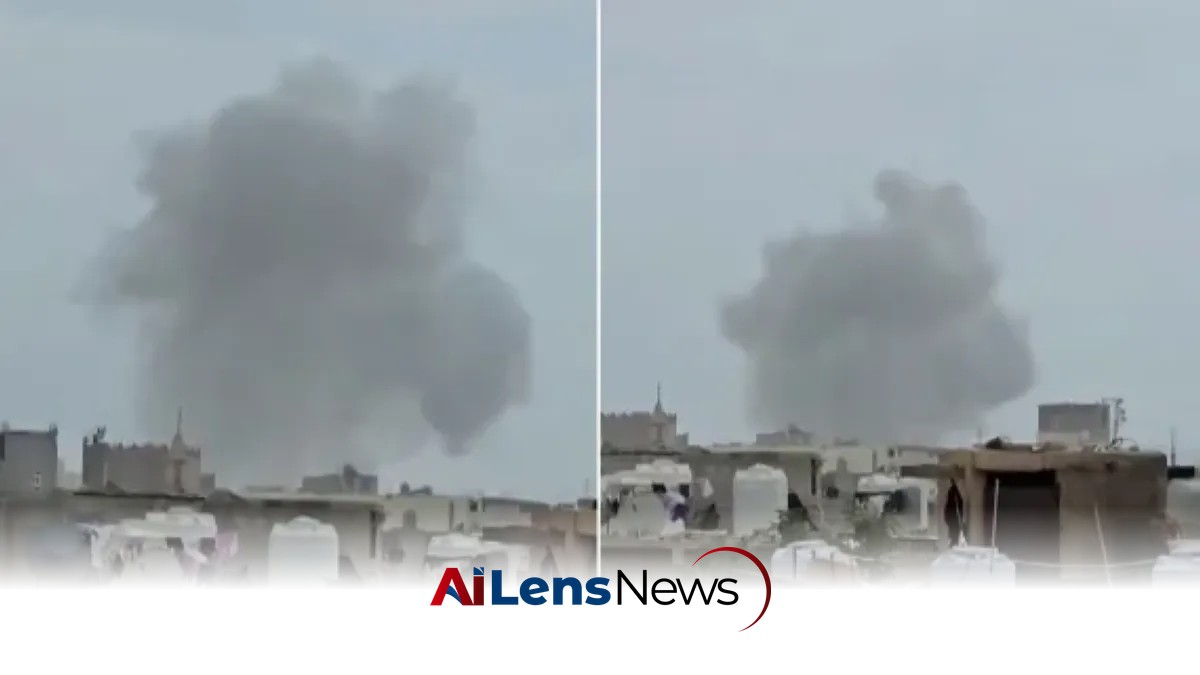


Yemeni government forces struck the runway at Sanaa International Airport to prevent an Iranian plane from landing, citing violations of sovereignty.
Riyadh, Saudi Arabia Jul 14, 2026 ALN: SANAA — Yemeni government forces struck the runway at Houthi-controlled Sanaa International Airport on Monday to prevent an Iranian aircraft from landing, the Yemeni Defense Ministry said. This incident underscores the ongoing tensions in Yemen, where a complex civil war has been exacerbated by foreign involvement, particularly from Iran and Saudi Arabia, leading to a humanitarian crisis and a significant geopolitical struggle in the region.
The Yemeni Defense Ministry, in a statement carried by the Saba news agency, alleged that the Houthis had prevented Yemen's national carrier from landing at Sanaa airport while allowing an Iranian aircraft to approach. This action was described as a violation of Yemeni sovereignty, a term that reflects the broader context of the conflict where issues of national integrity and foreign influence are at the forefront. The ministry stated, "As a result, the airport runway was targeted," indicating that the strike was a direct response to what it perceived as an infringement on the country's airspace and sovereignty.
In a precautionary measure, the Defense Ministry had earlier urged civilians to evacuate the airport and avoid the surrounding area, warning that the armed forces would respond to any violation of Yemeni airspace. This warning highlights the precarious situation in Yemen, where civilian safety is often compromised due to military actions and the ongoing conflict. The Yemeni government has frequently emphasized its commitment to protecting its airspace, which has become increasingly contested due to the involvement of foreign powers and non-state actors.
Flight-tracking data circulating online showed that an Airbus A340 operated by Iran's Mahan Air was en route from Tehran to Sanaa, drawing widespread attention after the Yemeni government's warnings. Mahan Air, which has been linked to the Iranian military and has faced sanctions from the United States, has been involved in transporting goods and personnel to Yemen, often to support the Houthi movement. The presence of such flights has raised alarms within the Yemeni government and its allies, who view Iranian support for the Houthis as a direct threat to their sovereignty and stability.
The strike on the airport runway came just hours after the Defense Ministry reiterated that the armed forces would take action against any unauthorized use of Yemeni airspace. This declaration reflects the heightened state of alert and the Yemeni government's determination to assert control over its territory. The ministry stressed that the government had exhausted political and diplomatic avenues before resorting to military measures, indicating a reluctance to escalate the conflict but underscoring the severity of the situation.
Earlier in the day, Chairman of the Presidential Leadership Council Rashad Al-Alimi blamed the Houthis for the escalation, accusing the group of rejecting government initiatives to regulate flights through Yemen's national carrier and respect the country's sovereignty. This accusation points to the broader struggle for power in Yemen, where the Houthis, backed by Iran, have established control over significant territories, including the capital, Sanaa. The Yemeni government's inability to enforce its authority in these areas has led to a fragmented political landscape, complicating efforts for peace and stability.
The implications of this incident are profound, as it not only highlights the ongoing conflict between the Yemeni government and the Houthis but also emphasizes the role of foreign actors in the war. Iran's support for the Houthis has become a focal point in the regional struggle for influence, particularly as Saudi Arabia and its allies continue to oppose Iranian expansionism in the Arabian Peninsula. The Yemeni government's actions against the Iranian aircraft can be seen as a signal to both domestic and international audiences that it is willing to take military action to protect its sovereignty.
The situation in Yemen remains dire, with millions of civilians suffering from the consequences of the prolonged conflict. The United Nations has repeatedly warned of a humanitarian crisis, with widespread famine and disease affecting large segments of the population. The strike on the airport and the ongoing military actions reflect a broader unwillingness to engage in meaningful dialogue, as both sides remain entrenched in their positions.
As the conflict continues, the international community watches closely, with calls for a ceasefire and renewed peace talks becoming increasingly urgent. The involvement of foreign powers, particularly Iran and Saudi Arabia, complicates these efforts, as both nations have vested interests in the outcome of the conflict. The Yemeni government's military response to the Iranian aircraft may further heighten tensions and lead to a cycle of retaliation that could have devastating consequences for the already suffering civilian population.
In conclusion, the targeting of Sanaa International Airport by Yemeni forces marks a significant escalation in the ongoing conflict between the Yemeni government and the Houthis. It reflects the complex interplay of local grievances and international dynamics, where issues of sovereignty, foreign influence, and military action converge. As Yemen continues to grapple with the consequences of war, the need for a comprehensive and lasting solution becomes ever more critical, not only for the stability of the region but for the humanitarian needs of its people.
The conflict in Yemen, which began in 2014, has roots in political instability and economic grievances that have been exacerbated by the Arab Spring uprisings. The Houthis, a group from the Zaidi sect of Shia Islam, initially rose against the Yemeni government, which they accused of corruption and mismanagement. The situation escalated when Saudi Arabia intervened militarily in 2015, leading a coalition to restore the internationally recognized government of President Abdrabbuh Mansur Hadi. This intervention has drawn criticism for causing widespread civilian casualties and contributing to the humanitarian crisis.
The involvement of Iran in Yemen is often viewed through the lens of its broader regional ambitions, particularly its desire to counter Saudi influence. The Houthis have received military and logistical support from Iran, which has been a source of contention for Saudi Arabia and its allies. This proxy conflict has intensified the violence in Yemen, making peace negotiations increasingly difficult. The complexity of the Yemeni conflict is further heightened by the presence of various factions, including al-Qaeda in the Arabian Peninsula (AQAP) and the Southern Transitional Council (STC), which have their own agendas and grievances.
The humanitarian implications of the conflict are staggering. Millions of Yemenis are facing food insecurity, with the United Nations estimating that over 16 million people are in need of humanitarian assistance. The blockade imposed by the Saudi-led coalition has severely restricted the flow of essential goods, including food and medical supplies, exacerbating the suffering of civilians. The ongoing violence has also hindered humanitarian access, making it difficult for aid organizations to operate effectively.
As the international community grapples with how to address the crisis, the need for a coordinated response that prioritizes humanitarian assistance while also seeking a political resolution is paramount. The recent strike on Sanaa International Airport serves as a stark reminder of the fragility of the situation and the urgent need for diplomatic efforts to de-escalate tensions and foster dialogue among the conflicting parties.
In light of these developments, the future of Yemen remains uncertain. The potential for further military actions and retaliatory strikes raises concerns about the possibility of an all-out war that could engulf the region. The international community must remain vigilant and proactive in seeking a resolution to the conflict, ensuring that the voices of the Yemeni people are heard and that their humanitarian needs are addressed in the face of ongoing violence.
To learn more about the latest developments in Culture & Society, stay updated with our exclusive reports and analyses on AiLensNews.

