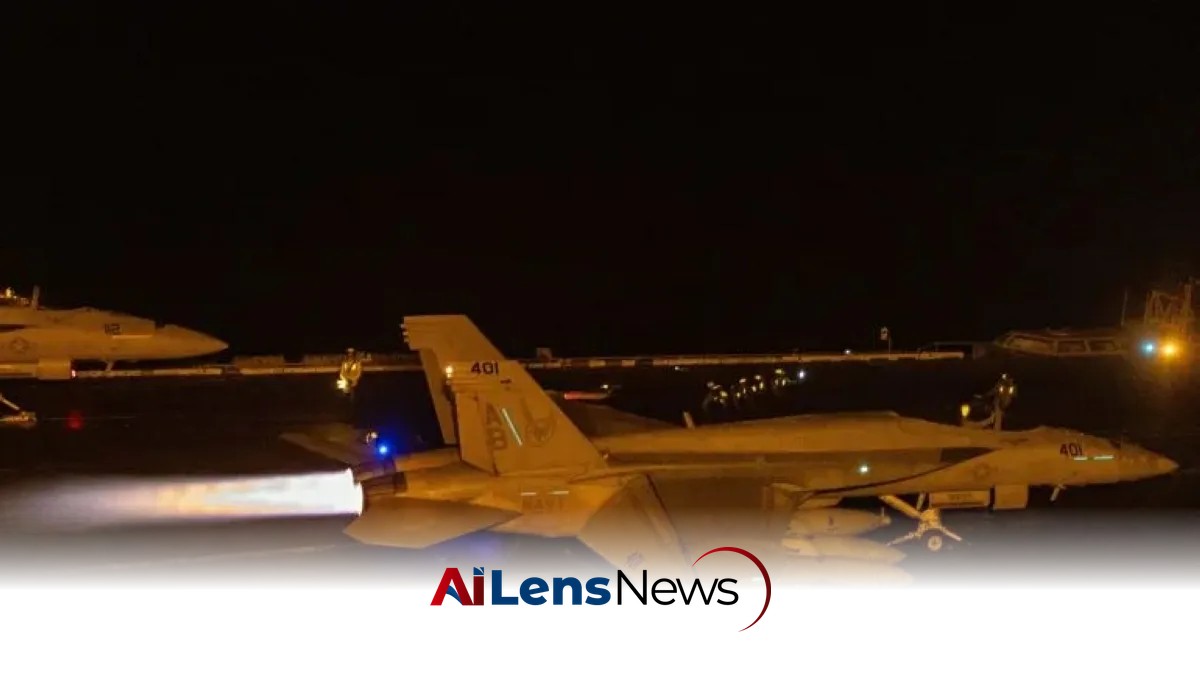


The United States has launched new air strikes against Iran, targeting military capabilities as President Trump warns Tehran to 'behave'.
Riyadh, Saudi Arabia Jul 16, 2026 ALN: The United States said it had launched a new wave of air strikes against Iran on Wednesday evening as President Donald Trump warned Tehran it "better behave." This development marks a significant escalation in the ongoing tensions between the two nations, which have been fraught with conflict for decades, particularly since the U.S. withdrew from the Joint Comprehensive Plan of Action (JCPOA) in 2018. The air strikes come amidst a backdrop of heightened military activity and diplomatic strain in the region.
The U.S. Central Command announced that American forces targeted a range of Iranian military infrastructure, including command centers, air defense sites, missile and drone capabilities, and coastal surveillance facilities. Notably, these strikes occurred in several strategic locations, including Bandar Abbas, a vital port city that serves as a hub for Iran's military and commercial shipping operations. The U.S. military reported that the strikes were aimed at disabling Iranian military capabilities that threaten vessels navigating the critical Strait of Hormuz, a narrow waterway through which a significant portion of the world's oil supply is transported.
In conjunction with the air strikes, the U.S. military engaged in maritime operations, firing on a ship that was attempting to breach the renewed blockade of Iranian ports. This blockade, which has been reimposed as part of the U.S. strategy to exert economic pressure on Iran, aims to restrict the flow of goods and resources to and from the country. Reports from Iranian media indicated that explosions were heard across various locations, including Qeshm Island, Bandar Abbas, and Chabahar, highlighting the widespread impact of the military actions.
The Iranian health ministry reported significant casualties resulting from the air strikes, with more than 300 people injured and at least 35 fatalities since the initiation of this recent round of attacks. The scale of the violence has raised alarms about the humanitarian implications of the conflict, particularly in densely populated urban areas where civilian infrastructure may be affected. In Ahvaz, for instance, reports indicated that a hospital was targeted, leading to its evacuation and damage to critical medical facilities.
The U.S. military's actions form part of a broader strategy to neutralize Iranian military capabilities before undertaking more complex operations against Tehran. According to three U.S. officials who spoke on condition of anonymity, the strikes are designed to open the Strait of Hormuz for commercial shipping while simultaneously degrading Iran's ability to project power in the region. This strategy reflects a long-standing U.S. policy of countering Iranian influence in the Middle East, which has been a source of contention between the two nations for decades.
The backdrop to this escalation includes Iran's recent claims of having struck U.S. military targets in the region, further complicating the already fraught relationship. The hostilities have strained a preliminary agreement aimed at ending the ongoing conflict, which has now entered its fifth month. Despite suffering significant military setbacks due to U.S. and Israeli operations that began on February 28, Iran has managed to retain substantial drone and missile capabilities, enabling it to continue attacking passing tankers and threatening its Gulf neighbors.
In response to the renewed U.S. military actions, Iranian officials have expressed defiance. Iran's top negotiator, Mohammad Bagher Ghalibaf, stated that Tehran had "no reason" to abide by any agreements if they did not yield tangible benefits for the country. Trump's threats of further military action, including targeting bridges and power plants, reflect a hardline approach that has characterized his administration's dealings with Iran. When asked about potential deadlines for negotiations, Trump indicated a reluctance to provide specifics, suggesting instead that Iran was aware of the consequences of its actions.
Ghalibaf further asserted that Iran's national security is contingent upon maintaining its strategic arrangements in the Strait of Hormuz. He emphasized that both negotiation and warfare are integral components of Iran's strategy in what he termed an "existential" conflict with the United States. This perspective underscores the complexity of the situation, where diplomatic efforts are often overshadowed by military engagements.
The latest U.S. strikes marked the second wave of military actions carried out during daylight hours on Wednesday. The military stated it had "further degraded Iran's ability to attack commercial shipping in the Strait of Hormuz" earlier in the day, utilizing a 90-minute wave of air strikes to target Iran's coastal defenses and missile storage facilities on Greater Tunb Island. This tactical approach reflects a concerted effort to disrupt Iranian operations while minimizing the risk of escalation into a broader conflict.
In response to the renewed U.S. blockade, Iran's Revolutionary Guard Corps (IRGC) issued a warning to the United States, indicating that it should "expect the closure of other oil and gas export routes that serve the interests of the United States and its allies." While the IRGC did not specify which routes might be affected, such threats underscore the potential for further escalation in the region. The ongoing hostilities have highlighted the strategic importance of the Strait of Hormuz to the global economy, as disruptions in this key shipping lane can lead to significant fluctuations in oil prices, impacting markets worldwide.
The situation remains fluid, with both sides seemingly entrenched in their positions. The U.S. military's ongoing operations in the region, coupled with Iran's resilient military capabilities, suggest that the conflict may continue to evolve in unpredictable ways. As diplomatic efforts falter, the potential for further military escalation remains a pressing concern for regional stability and international relations.
In summary, the recent air strikes by the United States against Iranian military targets signify a critical juncture in the long-standing conflict between the two nations. The implications of these actions extend beyond the immediate military objectives, touching upon broader geopolitical dynamics, economic interests, and humanitarian considerations that will shape the future of U.S.-Iran relations and the stability of the Middle East.
To learn more about the latest developments in Culture & Society, stay updated with our exclusive reports and analyses on AiLensNews.

