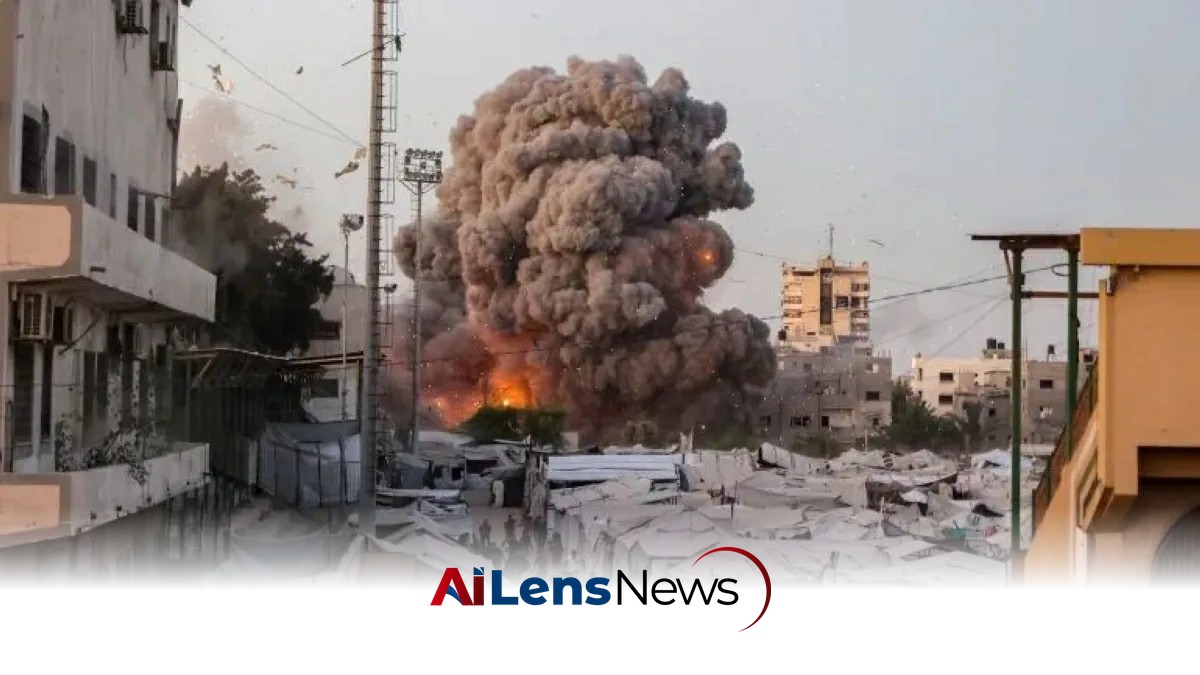



Hamas agrees to a disarmament plan in Gaza, marking a significant step towards peace, as announced by President Trump.
Riyadh, Saudi Arabia Aug 1, 2026 ALN: In a significant development for the ongoing Israeli-Palestinian conflict, Hamas and other Palestinian factions have reached an agreement outlining a plan for their disarmament in Gaza. This agreement has been heralded by United States President Donald Trump as a “monumental step” toward achieving peace and security in the region. The announcement has raised hopes for a more stable future in Gaza, which has been marred by violence and conflict for decades.
A senior Hamas official confirmed to the BBC that the group has consented to the terms laid out in the Board of Peace's disarmament plan, with an official statement expected to follow shortly. This agreement comes after prolonged negotiations that have been characterized by complexity and sensitivity, reflecting the deep-rooted tensions that have historically defined the Israeli-Palestinian relationship.
The agreement, announced on a Thursday, stipulates that a detailed disarmament roadmap must be prepared within 14 days, although extensions can be granted with the approval of an international verification body and consensus from all involved parties. This timeline is critical as it sets the stage for what could be a transformative shift in the dynamics of power and control in Gaza.
The Board of Peace, which has taken a central role in mediating the conflict, stated that this agreement concludes months of “intensive, good faith negotiations.” The focus now shifts to implementation, which is often the most challenging phase of such agreements. The Board emphasized that the successful execution of the disarmament plan is essential for the broader goals of peace and stability in the region.
This agreement is part of the second phase of a U.S.-brokered Gaza ceasefire plan, which also includes the withdrawal of Israeli troops and the reconstruction of Gaza’s devastated infrastructure. The ceasefire, which has been in effect since October, was intended to halt hostilities and provide a foundation for future negotiations. However, the path to lasting peace remains fraught with obstacles.
Ghazi Hamad, a member of Hamas’s negotiating delegation, remarked on the difficulty of the negotiations, stating that the team worked hard to find the best achievable outcome while remaining committed to the rights of the Palestinian people. His comments underscore the delicate balance that must be maintained between disarmament and the political realities on the ground.
Hamad also indicated that the issue of disarmament is closely linked to Israel’s withdrawal from Gaza and the broader reconstruction efforts. This connection highlights the interdependence of various aspects of the peace process, where progress in one area is often contingent upon advancements in another. The negotiations reflect the complexities of addressing both security concerns and humanitarian needs.
In his announcement, Trump credited Egypt, Qatar, and Turkey for their roles in brokering what he described as a “historic breakthrough.” He emphasized that the agreement would be implemented gradually, with an International Stabilization Force (ISF) working alongside a new Palestinian police force to ensure security in Gaza. This international involvement is intended to provide a layer of oversight and support, potentially increasing the likelihood of successful implementation.
However, Hamad clarified in remarks to Al Jazeera that Israel would not play a role in the disarmament process. Instead, a Palestinian national committee would oversee the disarmament, which raises questions about the feasibility of such an arrangement without Israeli cooperation. Hamad stressed that Hamas would not proceed with disarmament unless Israel fulfills its obligations under the agreement, indicating that trust remains a significant barrier to progress.
The issue of Hamas’s disarmament has been a contentious point in the advancement of the ceasefire deal, which has been in place since October. Despite the ceasefire, violence has persisted in Gaza, with reports of Israeli strikes resulting in casualties, including the deaths of at least four individuals on Thursday, two of whom were children. Such incidents serve as a stark reminder of the volatile situation on the ground and the challenges faced by negotiators seeking to establish a lasting peace.
The ceasefire was established under Trump’s 20-point plan for Gaza, which is being overseen by the Board of Peace that he chairs. The plan is ambitious, aiming to address not only disarmament but also the broader socio-economic challenges facing Gaza, which has suffered from years of conflict and blockade. The humanitarian situation in the territory remains dire, with significant infrastructure destruction and a high number of casualties resulting from ongoing hostilities.
In the wake of the announcement, Cairo is set to host a meeting of Gaza truce mediators, including representatives from the United States. While the exact timing of the meeting has not been disclosed, it is expected to focus on implementing the second phase of the ceasefire plan, which includes the disarmament roadmap that has recently been agreed upon by Hamas and other Palestinian factions.
Under Trump’s 20-point peace plan, the second phase of the ceasefire is designed to involve Hamas’s disarmament and a gradual withdrawal of Israeli forces from Gaza. This phased approach reflects a recognition of the complexities involved in navigating the political landscape and the need for careful planning to ensure that all parties feel secure in the process.
The plan also envisions the establishment of a group of Palestinian technocrats, known as the National Committee for the Administration of Gaza (NCAG), to manage day-to-day governance during Gaza’s transitional phase out of war. The creation of such a body is aimed at facilitating a smoother transition to a more stable governance structure, which is vital for the long-term recovery and development of the region.
A source familiar with the negotiations indicated that the roadmap would create a process for the elimination of all tunnels, weapon depots, and any facilities used for weapons production. This comprehensive approach reflects an understanding that disarmament must be thorough and inclusive to be effective. The source emphasized that all weapons, both heavy and light, would come under the control of the NCAG, in coordination with the ISF, underscoring the importance of a unified command structure in maintaining security.
Despite these developments, challenges remain. A Hamas source indicated that the movement is awaiting an Israeli response to recent amendments submitted to the mediators. These amendments pertain to specific articles in the roadmap, highlighting the ongoing negotiations and the potential for further adjustments as both sides seek to reach a mutually acceptable agreement.
On the Israeli side, a political source expressed concerns that the proposed deal does not adequately address Israeli demands for complete disarmament, including the removal of weapons from Gaza and full demilitarization of the territory. This insistence on stringent conditions reflects Israel's longstanding security concerns regarding Hamas and other militant groups operating in Gaza.
Furthermore, it was noted that the issue of Gaza did not come up during a recent meeting between Israeli Prime Minister Netanyahu and Trump in Washington, suggesting that while negotiations are progressing, there may still be significant gaps in understanding and agreement between the parties involved.
The backdrop of this agreement is the ongoing humanitarian crisis in Gaza, which has seen devastating losses over the years. Reports indicate that Israel's military operations have resulted in a staggering number of casualties, with over 73,000 Palestinians killed and more than 174,000 injured, many of whom are women and children. The destruction of approximately 90% of Gaza's infrastructure has compounded the suffering of the population, making the need for a comprehensive peace agreement more urgent than ever.
As the situation continues to evolve, the international community watches closely, aware that the outcomes of these negotiations could have far-reaching implications not only for Gaza but for the broader Middle East region. The path to peace remains fraught with challenges, but the recent agreement represents a potential turning point in the long-standing conflict, offering a glimmer of hope for a more secure and stable future for the people of Gaza.
To learn more about the latest developments in Culture & Society, stay updated with our exclusive reports and analyses on AILensNews.

