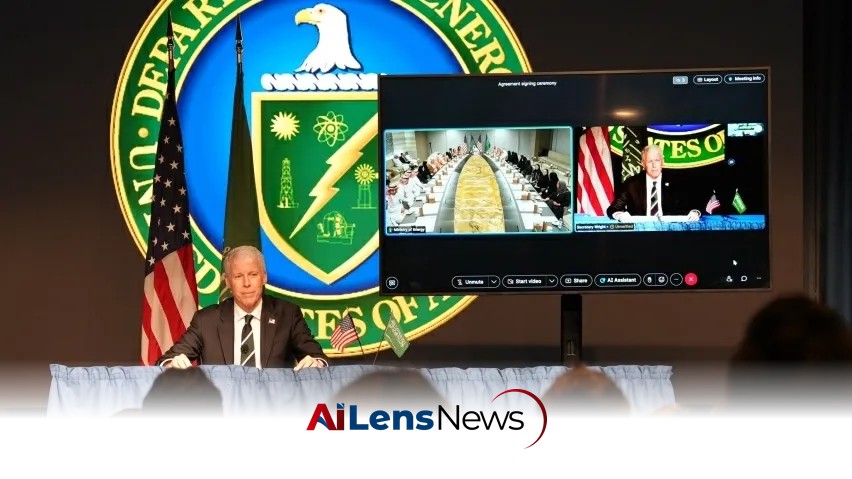


The United States and Saudi Arabia have signed a landmark civilian nuclear cooperation agreement, establishing a framework for long-term collaboration on the Kingdom's nuclear energy program.
Riyadh, Saudi Arabia Jul 23, 2026 ALN: Saudi Arabia and the United States signed a landmark civilian nuclear cooperation agreement on Wednesday, establishing the legal framework for long-term collaboration on the Kingdom's peaceful nuclear energy program.
Saudi Minister of Energy Prince Abdulaziz bin Salman and U.S. Energy Secretary Chris Wright signed the agreement, commonly known as a 123 Agreement, along with a bilateral safeguards agreement. This agreement is named after Section 123 of the U.S. Atomic Energy Act, which governs civilian nuclear cooperation between the United States and other countries. The significance of this agreement lies not only in its legal ramifications but also in its potential to reshape energy dynamics in the region and beyond.
The signing of the agreement marks a significant development in U.S.-Saudi relations, reflecting a mutual interest in expanding energy cooperation amidst a backdrop of changing energy needs and geopolitical dynamics. The agreement comes at a time when Saudi Arabia is seeking to diversify its energy portfolio, reduce its reliance on oil, and meet the growing demand for electricity within the Kingdom. With a rapidly expanding population and an ambitious economic reform plan, known as Vision 2030, Saudi Arabia aims to generate a substantial portion of its energy from nuclear and renewable sources. This vision is part of a broader strategy to modernize the Kingdom's economy, reduce its dependence on oil revenues, and create a sustainable energy future.
According to the U.S. Department of Energy, the agreements establish the legal foundation for a decades-long partnership aimed at expanding Saudi Arabia's civilian nuclear energy program while upholding international standards for nuclear safety, security, and nonproliferation. The inclusion of safeguards is particularly significant, as it ensures that the nuclear technology and materials provided by the U.S. will be used solely for peaceful purposes and will not contribute to the proliferation of nuclear weapons. This is a critical component, especially in a region marked by historical tensions and the presence of nuclear programs in neighboring countries.
The agreement is expected to provide opportunities for American companies to participate in the Kingdom's nuclear energy sector, while helping Saudi Arabia meet its growing energy needs. American firms, which have extensive experience in nuclear technology, stand to benefit from contracts related to the construction, operation, and maintenance of nuclear facilities in Saudi Arabia. This could lead to substantial economic benefits for both nations, including job creation in the U.S. nuclear industry. The economic implications extend beyond immediate job creation; they include the potential for technology transfer and the strengthening of supply chains that support the nuclear energy sector.
The U.S. Department of Energy stated that the agreements also strengthen regional security by reinforcing high standards for nuclear safety and nonproliferation and enhancing U.S. competitiveness in civilian nuclear technology. By ensuring that Saudi Arabia adheres to strict safety and security protocols, the agreement aims to mitigate concerns over nuclear proliferation in a region that has been historically fraught with tensions and conflicts. The inclusion of robust safety measures is intended to provide assurances not only to Saudi Arabia's neighbors but also to the international community regarding the peaceful intentions of the Kingdom's nuclear program.
"This agreement reflects our two nations' shared commitment to strengthening U.S.-Saudi commercial relations, delivering prosperity at home and security to our allies abroad," Wright said. His remarks underscore the broader implications of the agreement, which extend beyond mere energy cooperation to encompass economic growth and geopolitical stability. The partnership is indicative of a strategic alignment between the U.S. and Saudi Arabia, which has been a key ally in the Middle East for decades.
He added that the agreement maintains the highest standards of nuclear safety and nonproliferation while relying on advanced U.S. nuclear technology, marking another step in expanding American civilian nuclear exports under President Donald Trump's administration. The Trump administration had previously emphasized the importance of nuclear energy as a key component of U.S. energy policy, and this agreement aligns with that vision by promoting the export of U.S. nuclear technology to allied nations. This alignment reflects a broader trend in U.S. foreign policy, where energy cooperation is increasingly seen as a tool for strengthening alliances and promoting stability in volatile regions.
The partnership is expected to expand U.S. nuclear technology exports, create high-paying jobs in the United States, strengthen energy and national security cooperation, reinforce global nonproliferation standards, and deepen the strategic partnership between Washington and Riyadh. This deepening relationship is particularly relevant given the shifting landscape of global energy markets and the increasing importance of nuclear energy as a low-carbon alternative to fossil fuels. As countries around the world grapple with climate change and the need for cleaner energy sources, nuclear energy is gaining renewed attention as a viable option for meeting energy demands sustainably.
Saudi Arabia's interest in developing a nuclear energy program is not without controversy. Critics have raised concerns about the potential for nuclear proliferation, given the Kingdom's regional rivalries, particularly with Iran, which has its own contentious nuclear program. The U.S. agreement includes provisions aimed at preventing the enrichment of uranium and the reprocessing of spent fuel, which are critical components in the development of nuclear weapons capabilities. These safeguards are designed to reassure both regional and international stakeholders that Saudi Arabia's nuclear ambitions are strictly for peaceful purposes. The focus on nonproliferation is essential not only for regional stability but also for maintaining the global nonproliferation regime that has been in place since the mid-20th century.
Furthermore, the agreement comes as part of a broader trend of increasing nuclear cooperation between the U.S. and other countries in the Middle East. Several nations in the region are exploring nuclear energy as a means to diversify their energy sources and reduce carbon emissions. The U.S. aims to position itself as a leader in this emerging market, promoting its technology and expertise while simultaneously addressing nonproliferation concerns. As more countries in the region pursue nuclear energy, the U.S. will likely face challenges in balancing its economic interests with the imperative of preventing nuclear proliferation.
In conclusion, the signing of the nuclear cooperation agreement between Saudi Arabia and the United States represents a pivotal moment in the evolution of their bilateral relationship. It reflects a shared commitment to advancing energy security, economic cooperation, and regional stability while adhering to the highest standards of nuclear safety and nonproliferation. As both nations move forward with this partnership, the implications will extend beyond the energy sector, influencing geopolitical dynamics and economic opportunities in the years to come. The success of this agreement will depend on effective implementation and ongoing dialogue to address any concerns that may arise as the partnership develops.
To learn more about the latest developments in Culture & Society, stay updated with our exclusive reports and analyses on AiLensNews.

