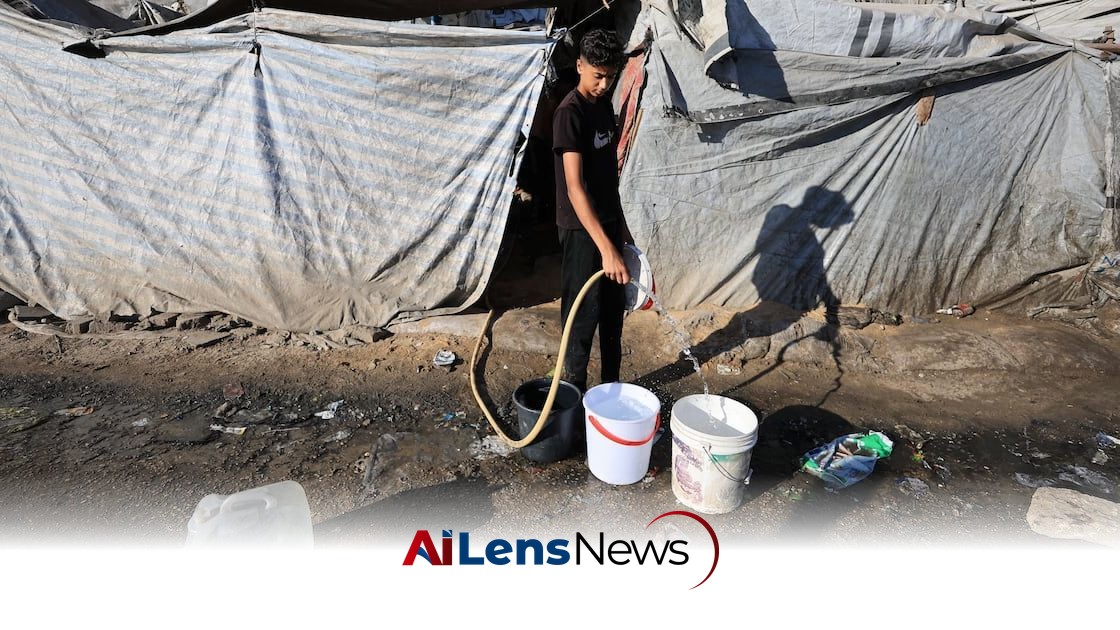


The proposed 'humanitarian city' in Rafah has sparked mixed reactions among Palestinians, with concerns about displacement and fragmentation of Gaza.
Riyadh, Saudi Arabia Jul 30, 2026 ALN: Palestinians in Gaza are currently facing a significant and contentious debate regarding the proposed 'Humanitarian City' initiative in Rafah, a plan that has sparked a spectrum of opinions among the population. While some view the initiative as a potential lifeline from the dire living conditions that have plagued the region for years, others express deep-seated concerns that it may serve to further entrench Israeli control and contribute to the fragmentation of the Gaza Strip.
The initiative, which is being overseen by the Board of Peace led by former US President Donald Trump, aims to reconstruct parts of Gaza and establish a technocratic administration. This plan is part of a broader strategy that seeks to stabilize the region following years of conflict and humanitarian crises. The proposal includes the deployment of international troops to monitor a fragile ceasefire, with the immediate focus on creating a “humanitarian zone” that would provide temporary housing and essential services to those in need.
Rafah, located in the southern part of Gaza, has been chosen as the initial site for this project. The selection of Rafah is significant, as the city has faced its share of challenges, including high levels of poverty, unemployment, and destruction from previous conflicts. The plan is set to commence in the coming weeks, with the hope that it will alleviate some of the suffering experienced by the residents. Rafah’s history is marked by its strategic location near the Egyptian border, which has made it a focal point for both humanitarian aid and military operations over the years.
However, the reception of this plan has been mixed among the Palestinian populace. Wissam Afifa, a political writer and analyst, has voiced strong opposition to the initiative, describing it as an “institutionalization of Gaza's fragmentation.” He argues that the plan does not grant the peace council authority over the entire Gaza Strip but instead confines its activities to what is described as the humanitarian city in Rafah. This perspective highlights a broader concern among many Palestinians that the initiative may exacerbate existing divisions within the territory.
Afifa's analysis points to the political motivations behind the plan, suggesting that it is designed to bolster Israeli Prime Minister Benjamin Netanyahu's standing with the Trump administration rather than genuinely addressing the humanitarian needs of Gazans. He notes that the immediate impacts of the plan are likely to be political rather than humanitarian, with an emphasis on demonstrating Netanyahu's ability to deliver results to his allies in Washington. This sentiment is echoed by other analysts who argue that the initiative could be perceived as a way for Israel to maintain control over Gaza while presenting an image of humanitarian concern.
In recent developments, the peace plan for Gaza has taken a step forward, as Israel granted permission for peacekeeping troops to operate in areas outside its direct control. Nickolay Mladenov, the leading envoy for the Board of Peace, expressed optimism about this move, which would allow the International Stabilization Force to enter Gaza. This force, which is expected to include troops from various countries, including Morocco and Indonesia, is tasked with securing Gaza's borders and assisting in the training of local police forces. Under the outlined peace plan, Israel is expected to withdraw its military presence as these peacekeepers establish control.
Despite the potential benefits of such a force, many Gazans remain skeptical. Iyad Jadallah, a 29-year-old resident of a displacement camp in Al Zahra, expressed a cautious outlook, stating, "It is neither positive nor negative, until we actually see results. We've grown tired of promises and rhetoric." This sentiment reflects a broader frustration among the population, which has endured years of conflict, blockades, and a lack of basic services. For many, the need for tangible improvements in their living conditions is paramount, and there is a palpable sense of weariness with unfulfilled promises. The chronic issues of unemployment, lack of healthcare, and inadequate infrastructure have left many residents feeling disillusioned with both local and international efforts to address their needs.
The differing opinions on the 'Humanitarian City' plan are indicative of the complex realities faced by Gazans. Some individuals, like Adham Abu Hweishil, a 33-year-old originally from Jabalia refugee camp, express support for the initiative but harbor concerns about the potential for forced displacement to Rafah. He emphasizes the importance of establishing humanitarian cities in people's original areas, allowing families to receive necessary services while remaining close to their homes. This perspective underscores the desire for solutions that prioritize the dignity and rights of individuals rather than further displacing them. The fear of displacement is particularly acute, as many families have already been uprooted multiple times due to ongoing conflicts.
The implications of the 'Humanitarian City' plan extend beyond immediate humanitarian assistance. The initiative raises critical questions about sovereignty, governance, and the long-term future of Gaza. As the international community engages with the situation, there is a pressing need to consider the voices and needs of the Palestinian people. The challenge lies in balancing the provision of humanitarian assistance with the imperative to respect the rights and aspirations of those living in Gaza. Many observers argue that any effective solution must include the participation of local leaders and communities in the decision-making process to ensure that their needs are adequately addressed.
Moreover, the plan's effectiveness will depend on the cooperation and commitment of various stakeholders, including the Palestinian leadership, Israeli authorities, and international actors. The potential for success hinges on establishing trust among the parties involved, as well as ensuring that the humanitarian needs of the population are met in a manner that respects their rights and autonomy. The history of failed peace initiatives in the region has led to a deep skepticism among many Palestinians, making it essential for any new proposals to demonstrate genuine commitment to their welfare.
In conclusion, the divided opinions among Palestinians regarding the 'Humanitarian City' plan in Rafah reflect the complex and multifaceted nature of the situation in Gaza. While some see a glimmer of hope for improvement in their living conditions, others remain wary of the potential consequences of such initiatives. As discussions about the future of Gaza continue, it is crucial to prioritize the voices of its residents and work towards solutions that promote peace, stability, and dignity for all. The path forward will require not only addressing immediate humanitarian needs but also considering the broader political context and the aspirations of the Palestinian people for self-determination and justice.
To learn more about the latest developments in Culture & Society, stay updated with our exclusive reports and analyses on AiLensNews.

