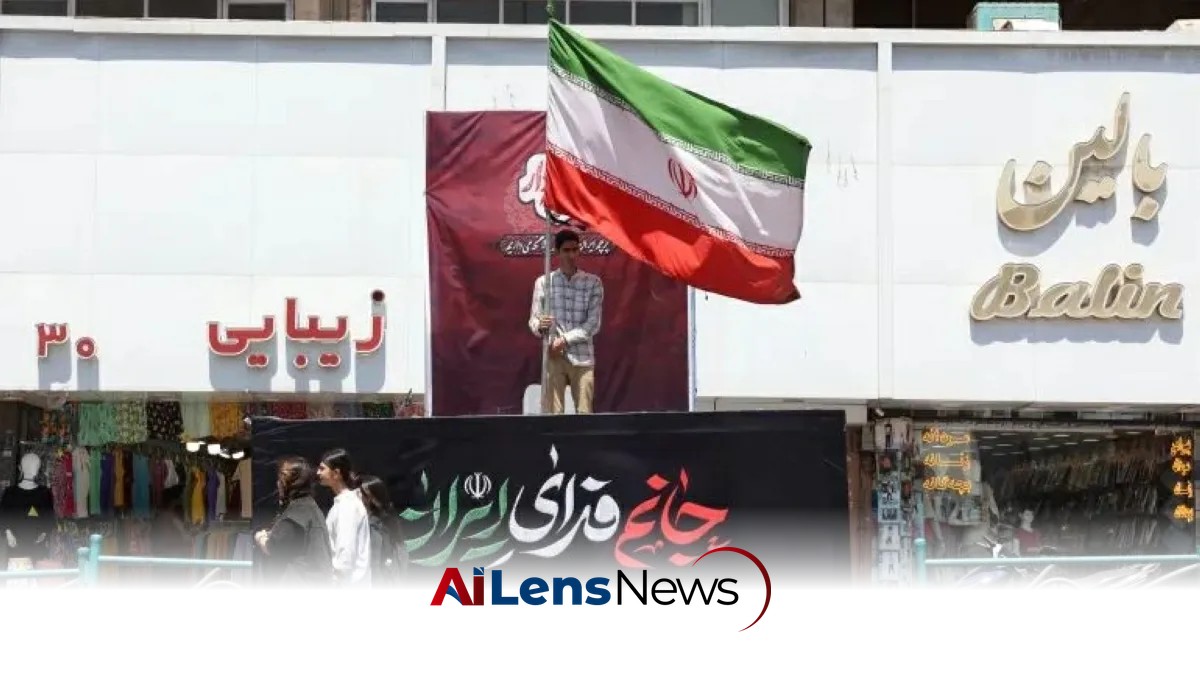


Iran has declared the Strait of Hormuz an inviolable red line, vowing severe retaliation if the US strikes its infrastructure, escalating tensions in the Gulf region.
Riyadh, Saudi Arabia Jul 17, 2026 ALN: Iran stated on Thursday that the Strait of Hormuz is an inviolable red line and vowed to respond across the entire Gulf region if the US attacked the Islamic Republic’s infrastructure. This declaration comes amid escalating tensions between Iran and the United States, which have seen renewed military confrontations and threats from both sides. The Strait of Hormuz, a narrow waterway that connects the Persian Gulf to the Arabian Sea, is vital for global energy supplies, with a significant portion of the world’s oil and gas shipments passing through it.
According to the US military, a new wave of strikes was launched, and the naval blockade of Iran’s ports was resumed, which Washington claims aims to open a path through the Strait of Hormuz, previously closed by Iran after a temporary ceasefire broke down. The ongoing military actions reflect a broader strategy by the US to exert pressure on Iran, particularly in response to its nuclear program and regional activities that Washington deems destabilizing.
Brigadier General Mohammad Akraminia, spokesperson for the Iranian Army, emphasized that the Strait of Hormuz, through which about a fifth of the world’s oil and gas shipments passed before the war, is Iran’s “red line,” and the country maintains firm control over it. This assertion underscores Iran's strategic interest in the waterway, which is not only crucial for its economy but also serves as a symbol of national sovereignty and military capability.
He asserted that Iran could exercise control over the Strait of Hormuz “from every part of its territory.” This claim reflects Iran's military doctrine, which emphasizes asymmetric warfare capabilities that allow it to project power beyond its immediate borders. The Iranian leadership has historically viewed the Strait as a critical area for both defense and offense, enabling them to leverage their position in regional geopolitics.
“The Americans believed that by attacking some of our southern bases they could gain control of this strategic waterway,” he said. This statement suggests that Iran perceives US military operations as direct threats to its sovereignty and regional influence, prompting a robust response. The Iranian military has built a network of missile systems, naval assets, and allied militias capable of disrupting maritime traffic in the Strait, which it views as essential to countering US and allied forces in the region.
Akraminia warned that continued US military operations could expand the conflict into “new arenas of confrontation,” while insisting that Iran has no dispute with neighboring countries and remains committed to regional cooperation. This narrative aims to position Iran as a stabilizing force in the region, despite its contentious relationships with various Gulf states and ongoing conflicts in places like Syria and Yemen.
Colonel Ebrahim Zolfaqari, spokesperson for Iran’s Khatam al-Anbiya Central Headquarters, stated that Tehran would not tolerate any US interference in the Strait of Hormuz, labeling it an “inviolable red line.” The emphasis on the term “inviolable” indicates Iran’s determination to defend its interests vigorously, suggesting that any perceived encroachment by the US could trigger a significant military response.
“If the recent threats by the president of the United States to target the infrastructure of the Islamic Republic are carried out,” Zolfaqari warned, “all infrastructure across the region that has so far remained intact solely because of Iran’s restraint will be crushed under the strikes of Iran’s armed forces.” This statement reflects a broader theme in Iranian rhetoric, where the country portrays itself as a victim of aggression, while simultaneously asserting its capability to retaliate decisively.
He added that Iran’s response would not be “proportional” but “superior,” cautioning that any retaliation would be “more severe, more extensive, and more devastating than ever before.” This declaration indicates a shift in Iran's military posture, suggesting that it may be willing to escalate its response beyond traditional boundaries, potentially involving a wider array of military assets and strategies.
This warning came as both sides exchanged fresh strikes for the fifth consecutive day. The ongoing cycle of violence illustrates the precarious nature of US-Iran relations, which have deteriorated significantly since the US withdrew from the Joint Comprehensive Plan of Action (JCPOA) in 2018 and reinstated sanctions against Iran.
Iran’s Islamic Revolutionary Guard Corps (IRGC) reported launching two waves of ballistic missiles against a US military base in Jordan, while the Iranian military claimed to have carried out drone attacks against US army facilities in Kuwait and Bahrain. These actions highlight Iran's willingness to extend the conflict beyond its borders, utilizing its missile and drone capabilities to strike at US interests in the region.
The IRGC stated that the strike on Jordan was in response to what it described as a US attack near a children’s cancer hospital in Iran. This narrative serves to frame Iran's military actions as defensive measures, while simultaneously drawing attention to civilian casualties, which Iran uses to garner domestic and international sympathy.
Meanwhile, the US military confirmed completing another wave of overnight strikes, targeting Iranian command centers, air defense systems, missile and drone capabilities — and for the first time in this round of fighting, targets around Tehran and further north in the country. This escalation indicates a shift in US strategy, possibly aimed at crippling Iran's military infrastructure in a bid to deter further Iranian aggression.
Iranian state-run media reported strikes near Tehran, Qeshm Island, the southern port city of Chabahar, and Semnan province, which is home to key ballistic missile production facilities and the Islamic Republic's space program. The targeting of these areas underscores the importance of disrupting Iran's military capabilities, which are seen as a direct threat to US interests and allies in the region.
US forces also claimed to have targeted a vessel accused of attempting to breach the American naval blockade on Iran. This action reflects the ongoing maritime tensions in the Gulf, where both sides have engaged in a series of confrontations over shipping routes and naval operations.
Iranian officials have increasingly framed the Strait of Hormuz as a core national security issue. The strategic importance of this waterway cannot be overstated, as it serves as a critical transit point for oil shipments that are vital to the global economy. Any disruption in this area could have far-reaching implications for energy prices and international trade.
Parliament speaker and Iran’s chief negotiator Mohammad Bagher Ghalibaf stated that Tehran had “no reason” to accept any agreement that does not benefit Iran, asserting that the country’s national security depends on maintaining what he described as “Iranian arrangements” in the Strait of Hormuz. This statement reflects Iran's hardline stance in negotiations, indicating that it is unwilling to compromise on issues that it views as essential to its national interests.
According to Ghalibaf, Iran’s new ayatollah Mojtaba Khamenei remains “the ultimate decision-maker on war or negotiations.” This centralization of authority within Iran’s leadership suggests that any decisions regarding military engagement or diplomatic overtures will be closely aligned with Khamenei's vision for Iran's role in the region.
The statement added that while Tehran does not “welcome” war, it “must always remain prepared for battle” and would continue to use diplomacy when it serves the country’s national interests. This dual approach reflects Iran's strategy of maintaining its military readiness while also seeking opportunities for negotiation, particularly when it perceives a favorable context for dialogue.
Iranian military officials have also rejected the notion that Tehran’s ability to control the strategic waterway depends solely on its southern coastline. This assertion emphasizes Iran's confidence in its military capabilities and its willingness to engage in asymmetric warfare, utilizing proxies and regional allies to project power beyond its immediate borders.
Iran’s embassy in Zimbabwe — one of the diplomatic channels tasked with spreading Tehran’s messaging abroad — reinforced that position, stating in a post on X, “The Strait of Hormuz has a master.” This statement serves to assert Iran's dominance over the waterway and send a clear message to its adversaries regarding its resolve to protect its interests.
Multiple media reports have suggested that Iran has asked the Houthis in Yemen — its proxy that is part of Tehran's "Axis of Resistance" network of militants — to be prepared to close the Red Sea shipping route through the Bab el-Mandeb Strait if the US strikes Iranian infrastructure and power plants. This potential escalation reflects Iran's strategy of leveraging its regional allies to create multiple points of pressure on the US and its allies.
According to sources cited by the reports, the proposal has been discussed within Iran’s leadership and communicated to the Houthis, who have reportedly deployed missiles and drones near the strategic Red Sea waterway. This development raises concerns about the potential for a broader conflict that could involve multiple fronts, complicating the already tense geopolitical landscape in the Middle East.
This would not be the first time that Iran or the IRGC has signaled a willingness to use regional partners to threaten access through Bab el-Mandeb, another potential pressure point for key maritime routes in the region. The strategic implications of such actions could lead to significant disruptions in global shipping and heightened tensions between Iran and the US, as well as with other regional powers that rely on these vital trade routes.
As the situation continues to evolve, the international community watches closely, aware that any miscalculation or escalation could have dire consequences, not only for the parties involved but for global stability as a whole. The ongoing conflict highlights the complexities of US-Iran relations, marked by a cycle of aggression and retaliation that has persisted for decades, with significant implications for regional and global security.
To learn more about the latest developments in Culture & Society, stay updated with our exclusive reports and analyses on AiLensNews.

