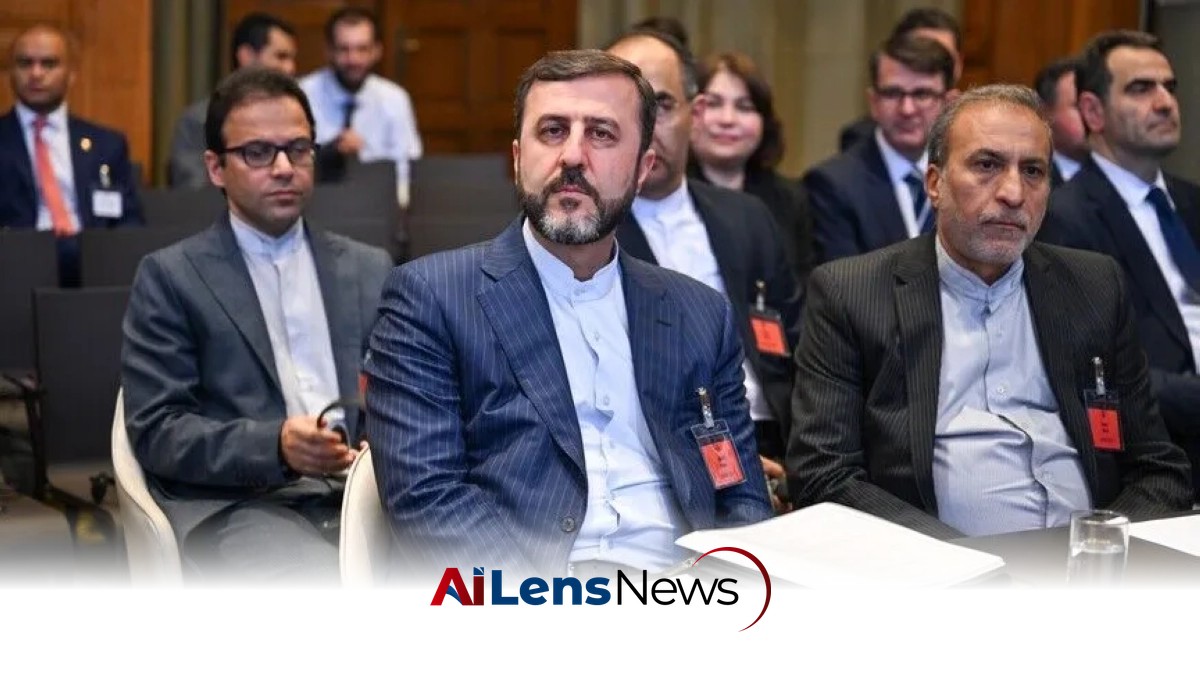


Iran has announced the suspension of its commitments under the Islamabad memorandum, citing US violations as military tensions escalate between the two nations.
Riyadh, Saudi Arabia Jul 19, 2026 ALN: Iran said on Saturday it has suspended its commitments under the Islamabad memorandum of understanding, accusing the United States of violating the agreement as military hostilities between the two countries continue.
Deputy Foreign Minister Kazem Gharibabadi stated that Washington had failed to uphold its obligations under the Pakistan-brokered memorandum. "The US has violated and suspended all its commitments within the framework of the Islamabad MoU," Gharibabadi said in remarks carried by Iran's semi-official Fars News Agency. "We have also suspended our commitments, we are not implementing them, and we are busy defending the country," he added.
The Islamabad memorandum, brokered by Pakistan and signed in June, was intended to halt the fighting between the United States and Iran and lay the groundwork for a broader and lasting peace agreement. The memorandum aimed to establish a framework for dialogue and cooperation, addressing key issues that have historically strained relations between the two nations. This included discussions on military engagements, economic sanctions, and regional security concerns.
The announcement comes as the two countries continue exchanging military strikes across the region, raising concerns that the agreement has effectively collapsed and that prospects for renewed diplomacy have diminished. The situation has escalated in recent months, with both sides engaging in a series of retaliatory strikes that have resulted in casualties and heightened tensions in the Middle East.
The Islamabad MoU was seen as a significant step in efforts to stabilize the region, particularly following years of escalating rhetoric and military confrontations. The agreement was brokered by Pakistan, which has historically maintained a neutral stance in the conflict between Iran and the United States. Islamabad's role as a mediator was crucial, given its strategic position and relationships with both Tehran and Washington.
In the backdrop of this conflict, the United States has been involved in various military operations in the region, citing national security interests and the need to counter Iranian influence. Iran, on the other hand, has accused the US of imperialism and aggression, claiming that its military actions are a direct threat to its sovereignty.
The suspension of the Islamabad MoU by Iran is indicative of the broader geopolitical dynamics at play. It reflects a growing frustration within Tehran regarding the perceived inability of diplomatic efforts to yield tangible results. The Iranian government has consistently maintained that it will not engage in negotiations under duress, particularly while facing military threats from the US.
The implications of Iran's decision to suspend its commitments are significant. It raises questions about the future of diplomatic relations not only between Iran and the United States but also among other regional players who have a vested interest in stabilizing the situation. Countries such as Saudi Arabia, Israel, and various Gulf states are closely monitoring the developments, as they have their own security concerns related to Iran's military capabilities and regional ambitions.
Furthermore, the collapse of the Islamabad MoU could lead to a further deterioration of security in the region. The ongoing military strikes have already resulted in increased instability, with various non-state actors and militant groups potentially taking advantage of the situation to further their own agendas. This could lead to a cycle of violence that complicates any future attempts at negotiation.
Analysts suggest that the suspension of the MoU may also impact the economic situation in Iran. The country has been grappling with severe economic challenges exacerbated by US sanctions and the impact of military engagements. A prolonged conflict could deter foreign investment and worsen the economic outlook for ordinary Iranians, who have already been facing hardships due to inflation and unemployment.
The broader context of the US-Iran relationship is marked by decades of tension, particularly since the 1979 Iranian Revolution, which saw the overthrow of the US-backed Shah and the establishment of the Islamic Republic. Since then, the two nations have been at odds over various issues, including Iran's nuclear program, its support for proxy groups in the region, and its role in regional conflicts such as those in Syria and Yemen.
The international community has often been divided over how to approach Iran, with some nations advocating for engagement and dialogue, while others support a more hardline stance. The United States has implemented a series of sanctions aimed at curbing Iran's nuclear ambitions and limiting its influence in the region, which Iran has repeatedly condemned as acts of aggression.
In light of these developments, the international community is urged to take a more active role in facilitating dialogue between the two nations. The situation underscores the need for renewed diplomatic efforts and a commitment to finding a peaceful resolution to the ongoing conflict. Without such efforts, the risk of further escalation remains high, with potential consequences that could extend beyond the immediate region.
As the situation continues to unfold, it remains to be seen how both Iran and the United States will navigate the complexities of their relationship. The suspension of the Islamabad MoU marks a significant turning point, one that could either lead to a reevaluation of strategies or further entrench the hostilities that have defined their interactions for decades.
In conclusion, the suspension of commitments under the Islamabad memorandum by Iran highlights the fragility of diplomatic agreements in the face of military aggression. It serves as a reminder of the importance of sustained dialogue and the need for all parties involved to prioritize peace and stability over conflict. The coming weeks and months will be critical in determining the trajectory of US-Iran relations and the broader implications for regional security.
The potential for military escalation is profound, with both nations possessing significant military capabilities that could lead to devastating consequences not only for their own populations but also for neighboring countries. The risk of miscalculation in such a charged environment cannot be underestimated, and the international community must remain vigilant in its efforts to promote dialogue and prevent further hostilities.
Looking ahead, the future of the Islamabad MoU and the broader diplomatic landscape between Iran and the United States will depend on the willingness of both sides to engage in constructive dialogue. The current trajectory suggests that unless significant changes occur, the region may be poised for an extended period of instability, which could have far-reaching implications for global security and economic stability.
To learn more about the latest developments in Culture & Society, stay updated with our exclusive reports and analyses on AiLensNews.

