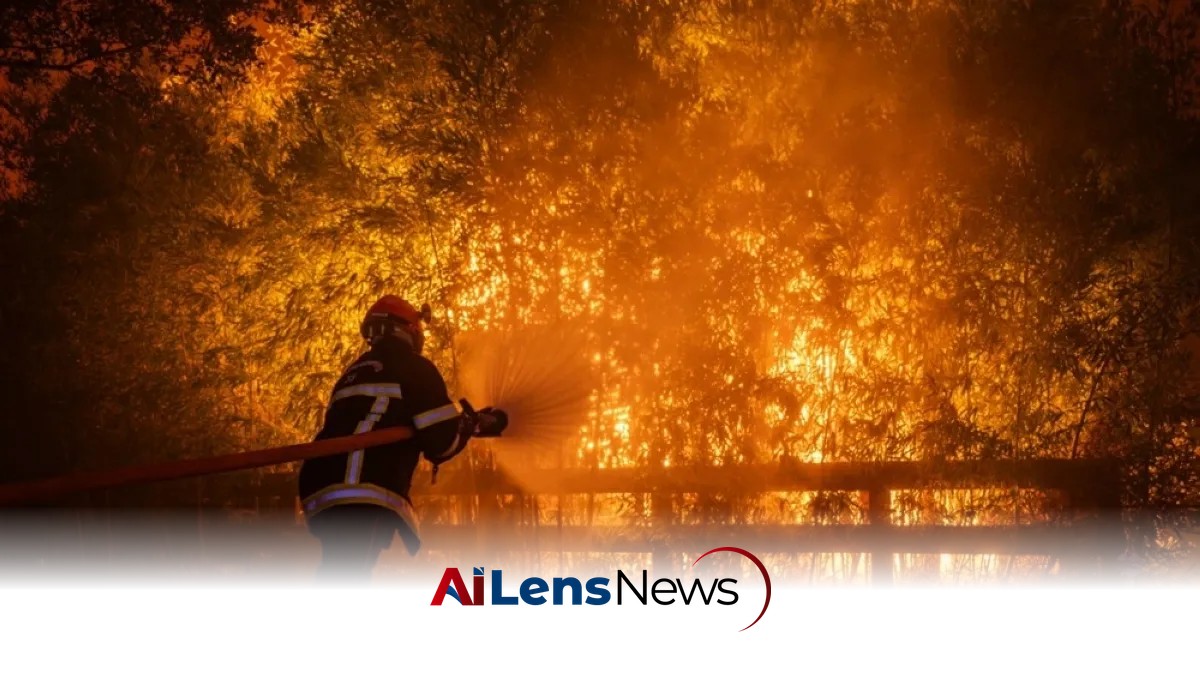


A significant wildfire in southwest France has led to the evacuation of 220,000 residents as flames approach Bordeaux, with additional evacuations occurring in Spain.
Riyadh, Saudi Arabia Jul 27, 2026 ALN: A massive wildfire in southwest France has forced 220,000 people to evacuate as flames advanced closer to Bordeaux, while fresh wildfires continued to drive evacuations in neighboring Spain. The ongoing situation highlights the increasing frequency and intensity of wildfires in Europe, exacerbated by climate change, prolonged dry spells, and shifting weather patterns.
French authorities ordered another 55,000 people to leave their homes overnight in the Gironde region, where shifting winds and dry conditions have complicated efforts to contain the blaze that has burned out of control since midweek. The Gironde region is known for its vast pine forests, which have become particularly vulnerable to wildfires due to the hot, dry summer conditions experienced in recent years. The region's topography, characterized by a mix of forested areas and urban settlements, presents unique challenges for firefighting efforts.
Interior Minister Laurent Nunez stated that conditions remained "very unfavorable" after a difficult night for firefighters. The unpredictable nature of the fire, described as "extremely virulent," underscores the challenges faced by emergency services in managing wildfires that can generate their own winds and spread rapidly. Nunez's comments reflect a broader concern among officials about the evolving nature of wildfire behavior, which has become increasingly erratic due to climate change and environmental factors.
The wildfire has now scorched an estimated 42,000 hectares (162 square miles) of mostly pine forest and scrubland, according to the Gironde prefecture. To put this in perspective, the burned area is roughly four times the size of Paris, demonstrating the scale of the disaster and the potential long-term impacts on the environment and local communities. The destruction of natural habitats not only threatens local wildlife but also contributes to soil erosion and air quality issues in the region.
More than 2,500 firefighters, supported by 18 aircraft and helicopters, are battling the blaze. France has also deployed a converted A400M military transport aircraft capable of dropping large quantities of fire retardant, a strategic move aimed at containing the fire's spread. The deployment of additional resources, including firefighting aircraft, helicopters, and personnel from several European countries, highlights the collaborative efforts across borders to combat wildfires, which have become a regional crisis.
Bordeaux Mayor Thomas Cazenave reported that the fire was now "at the gates of the metropolitan area," coming within about 15 kilometers (9 miles) of the city at its closest point. This proximity to a major urban center raises concerns about public safety, infrastructure, and the potential for widespread damage if the fire continues to advance. In response to the threat, authorities partially closed a major highway serving Bordeaux, a critical transportation route that connects the city to other regions.
In addition, the city converted its exhibition center into an emergency shelter equipped with camp beds and food for thousands of evacuees, including elderly residents relocated from care facilities. This rapid response to provide shelter and support for those displaced by the fire reflects the urgent need for local governments to prioritize community safety and welfare during such disasters. Emergency shelters play a vital role in ensuring that evacuees have access to basic necessities, including food, water, and medical care.
Despite the advancing fire, Cazenave noted that authorities were not considering evacuating Bordeaux itself, a city of about 268,000 people. This decision likely stems from a combination of factors, including the city's preparedness for emergencies and the availability of resources to manage the situation. However, the potential for a change in wind direction or an increase in fire intensity could prompt a reevaluation of this stance, emphasizing the need for ongoing monitoring and assessment of the wildfire's trajectory.
A second wildfire in France's Landes region has forced another 36,000 evacuations this week, bringing the total number of people displaced across southwest France to more than 250,000. The cumulative impact of these wildfires on local communities, economies, and ecosystems is profound, with many residents facing uncertainty about their homes and livelihoods. Another wildfire in the Mediterranean region of Var has displaced nearly 3,000 people, further compounding the crisis in southern France.
In neighboring Spain, authorities ordered new evacuations as wildfires spread through the Valencia region. The situation in Spain reflects a similar pattern of increased wildfire activity, driven by factors such as high temperatures and dry conditions. Together with blazes west of Madrid, the fires have forced about 116,000 people from their homes, highlighting the widespread nature of the crisis affecting the Iberian Peninsula.
A wildfire in the Valencia suburb of Manises resulted in the tragic death of one man on Saturday, marking Spain's first fatality in the latest wave of fires. The loss of life is a stark reminder of the dangers posed by wildfires and the devastating impact they can have on communities. Earlier this month, 13 people died in a wildfire in southern Spain, the country's deadliest blaze in recent years. These fatalities underscore the urgent need for effective wildfire management strategies and improved public awareness of fire safety measures.
The ongoing wildfires in France and Spain serve as a critical wake-up call regarding the need for comprehensive approaches to wildfire prevention and response. As climate change continues to influence weather patterns, leading to hotter and drier conditions, the risk of wildfires is expected to increase. Governments, environmental organizations, and communities must work together to implement strategies that address the root causes of wildfires, enhance preparedness, and improve response capabilities to mitigate the impacts of future incidents.
In conclusion, the current wildfire crisis in southwest France and neighboring Spain highlights the urgent need for action to address the growing threat of wildfires in Europe. As communities grapple with the immediate impacts of these fires, long-term solutions must be sought to protect lives, property, and the environment from the devastating effects of wildfires.
To learn more about the latest developments in Culture & Society, stay updated with our exclusive reports and analyses on AiLensNews.

